
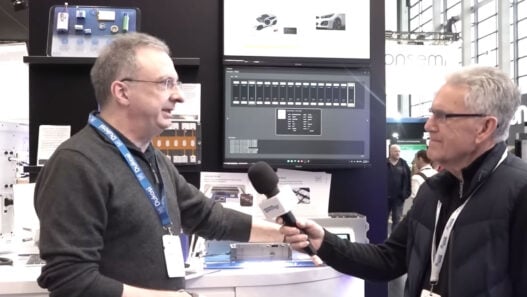

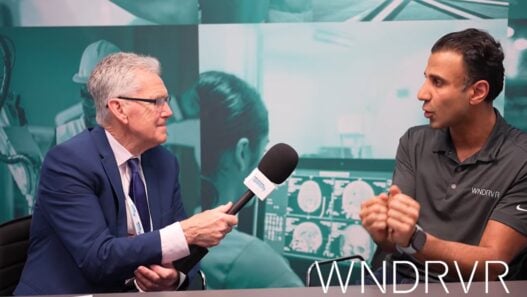

At embedded world 2026, Editor Mick Elliott speaks to Sandeep Modhvadia, Chief Product Officer at Wind River about how manufacturers are advancing towards operational excellence through IT/OT convergence and the adoption of Edge AI.
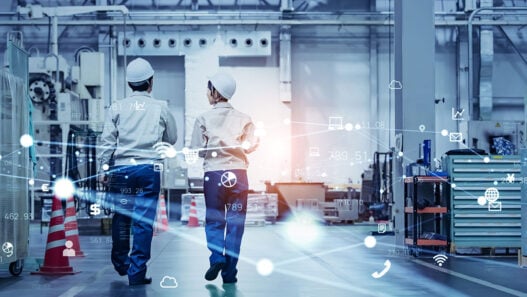
A central theme is the increasing overlap between operational technology (OT) and IT. As industrial devices become more powerful and connected, they are generating vast amounts of data and taking on more sophisticated roles. Manufacturers want to retain the deterministic, reliable nature of OT systems while layering in the flexibility of IT. This is being enabled through virtualisation and containerisation, allowing real-time, safety-critical workloads to coexist with modern, Cloud-native applications on the same infrastructure. By partitioning compute resources, organisations can run core control systems alongside higher-level analytics and AI applications.
Modhvadia emphasised that successful IT/OT convergence starts with a phased approach. Rather than attempting full transformation in one step, leading organisations begin by connecting legacy equipment, extracting data, and building visibility. From there, they progress to analytics, prediction, and ultimately autonomous operation. Projects that fail often do so because they lack a clear use case, instead chasing AI without defining practical outcomes.
Running AI alongside deterministic control systems introduces further complexity. AI models are inherently non-deterministic, which conflicts with the strict reliability requirements of industrial environments. To address this, manufacturers must establish clear boundaries using virtualisation and partitioning. AI workloads are effectively sandboxed, allowing them to operate freely within defined constraints while preventing interference with critical control functions.
Deciding where AI workloads should run – at the Edge or in the Cloud – depends on three key factors: latency, cost, and regulation. Time-sensitive applications, such as real-time production line decisions, require Edge deployment to minimise delays. Conversely, compute-intensive tasks like model training are better suited to Cloud environments. Data sovereignty and regulatory requirements can also dictate where data must reside, adding another layer of complexity.
Lifecycle management is also more demanding in industrial environments than in the Cloud. Updates to Edge systems must be rigorously tested due to the high cost of failure, such as production downtime. While Cloud environments allow for easier rollback and experimentation, industrial systems require stricter validation, smaller update cycles, and robust rollback mechanisms.
Finally, Modhvadia stressed that data governance is not purely a technical concern. Regulatory and compliance requirements must be defined at a business level and translated into technical policies. Flexibility is critical, as evolving geopolitical and regulatory landscapes may require organisations to quickly adapt where and how data is managed.
Overall, Wind River positions itself at the intersection of these trends, supporting manufacturers with platforms that integrate real-time operating systems, Linux, Cloud infrastructure, and advanced simulation tools – enabling the next generation of intelligent, connected industrial systems.