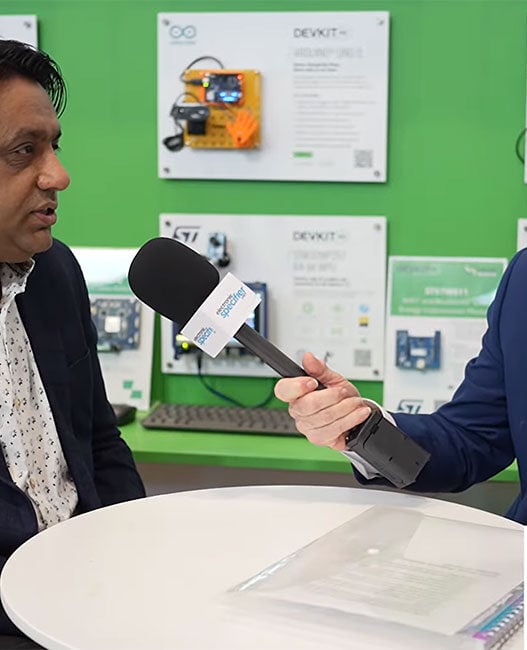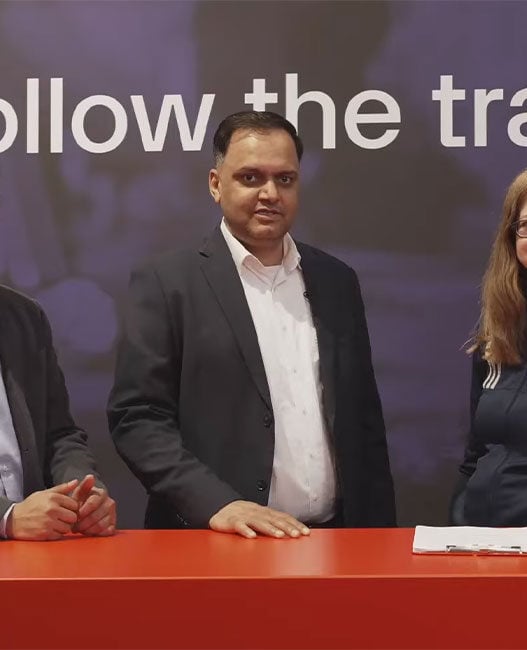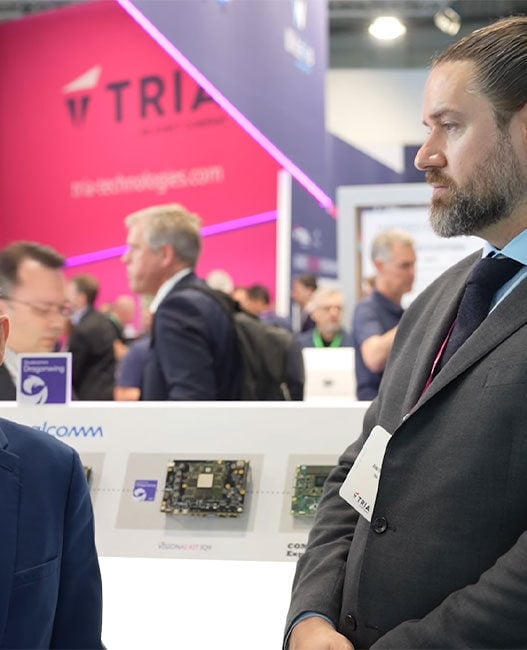



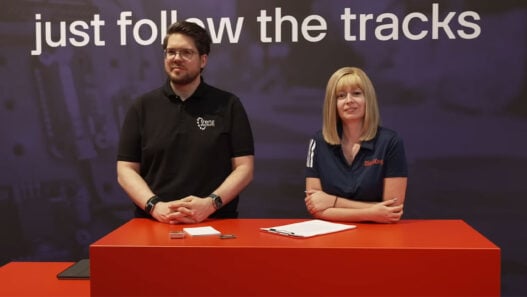


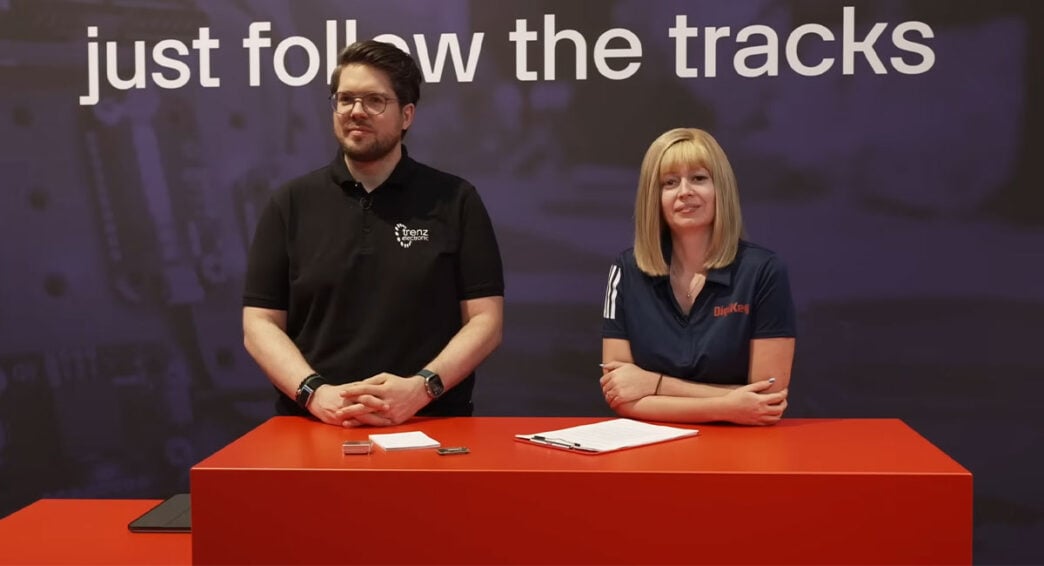
At embedded world 2026 on the DigiKey booth, Paige Hookway speaks with Thomas Brünger, COO at Trenz Electronic to discuss the company’s capabilities, customer approach, and how emerging technologies such as Edge AI influenced its product roadmap.
The company operates from a single location in northwestern Germany and employs around 100 people. According to Thomas, combining development expertise with in-house manufacturing gives the organisation significant flexibility when working with customers.
“We are a Germany based company in northwestern region of Germany. We are roughly 100 employees but even though this might seem small we have a very high degree of flexibility in-house because we don’t just have development services but we also have our own manufacturing capabilities.”
This integrated approach allows the company to adapt products quickly and respond to changing supply chain conditions. If sourcing challenges occur, engineering teams can modify designs or replace components rapidly without long delays.
Brünger also highlights the importance of supporting customers early in the design process. Using a “shift left approach”, the company provides standard modules that allow engineers to begin validating their ideas before committing to fully customised hardware.
“Customers can start validating with COTS parts. So those are always available.”
Once requirements become clearer, the company can modify existing hardware or design fully customised solutions. The process does not stop at board design, as the company also operates in-house testing capabilities.
“There are different sectors for example defence or medical sectors require a different test scope or more deep testing.”
Partnerships with major FPGA vendors play a key role in supporting this work. The company collaborates with suppliers including AMD, Altera, Lattice Semiconductor, and Microchip Technology, enabling customers to evaluate technologies across multiple platforms.
Because the company does not operate with exclusive vendor agreements, customers can explore solutions across different FPGA ecosystems depending on their requirements. This flexibility can be particularly useful when companies transition between toolchains or technology platforms.
The engineering team also works closely with semiconductor vendors during early development stages. Thomas explains that the company gains access to new silicon long before it reaches the wider market, allowing engineers to build expertise and support customers more effectively once products are released.
“We start working with silicon before it’s released usually one and a half to two years ahead of that.”
Looking ahead, Artificial Intelligence workloads are playing an increasing role in shaping product development, particularly at the Edge. Thomas highlights that AI acceleration and data-intensive workloads are increasing demand for bandwidth and processing performance.
“The big thing that everyone is talking about and I think we all know is AI.”
As these requirements grow, customers expect higher performance while maintaining cost efficiency. For companies developing FPGA-based hardware, balancing these demands is becoming a central challenge as Edge computing applications continue to expand.
Find out more in the interview below.