






A survey conducted by Electronic Specifier at embedded world 2026 has revealed that development complexity is currently the biggest challenge facing embedded engineers, while artificial intelligence and Edge computing are rapidly rising as key areas of focus.
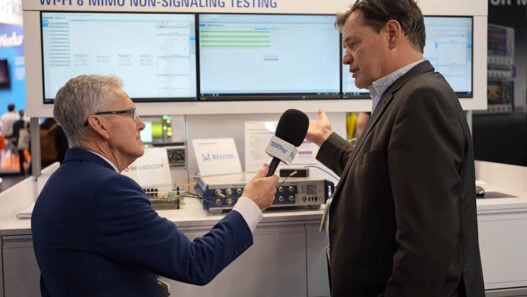
More than 100 engineers attending the show participated in the survey, providing a representative snapshot of the challenges and priorities shaping embedded system development across the industry.
Development complexity tops engineers’ challenges
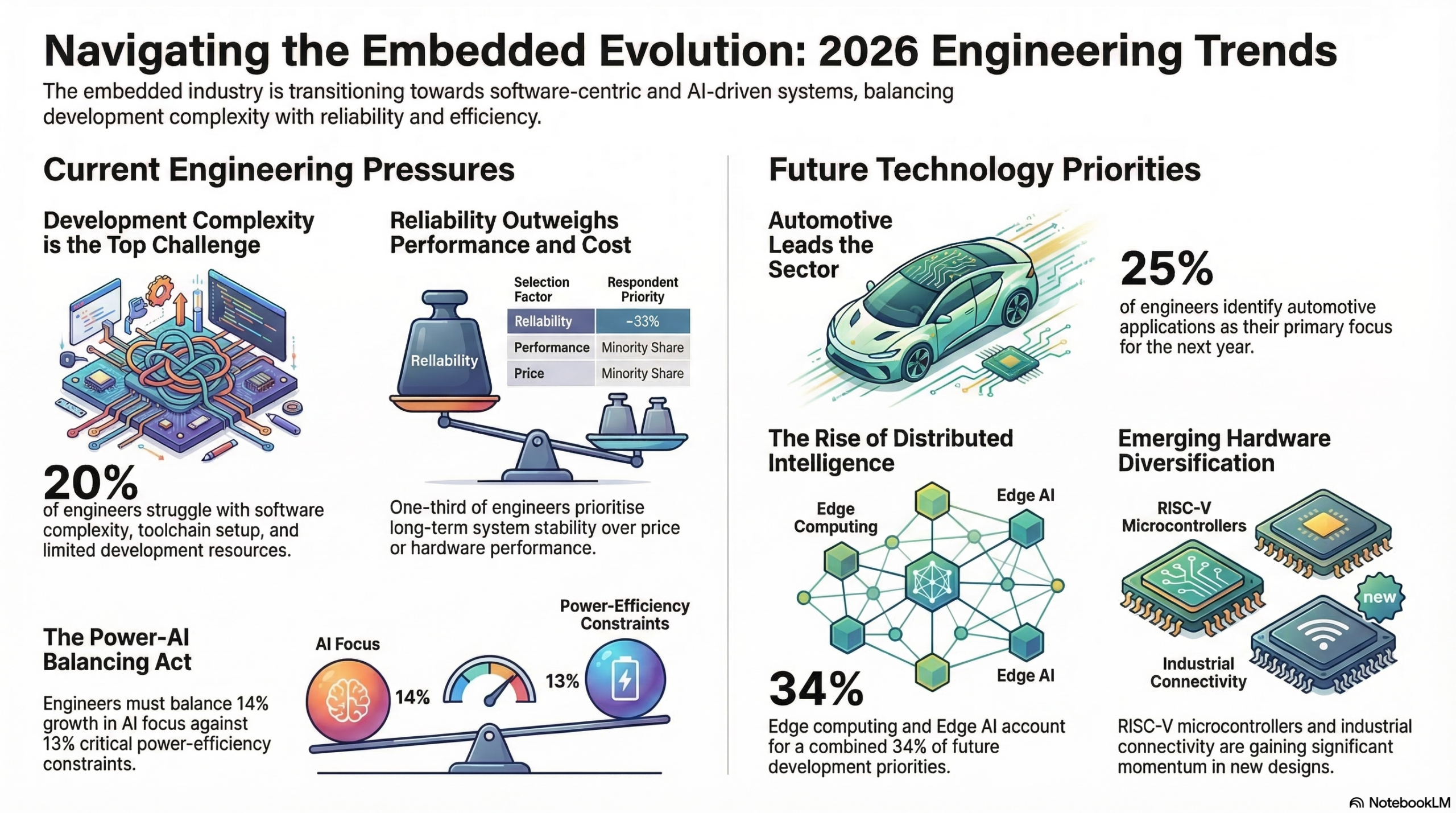
The most prominent theme emerging from the survey was the growing difficulty of embedded development itself. Approximately 20% of respondents referenced challenges related to software complexity, toolchains, debugging, and limited development resources.
Engineers highlighted issues ranging from configuring development environments to the time required to build and maintain embedded software. Responses such as “toolchain setup and reliable debugging” and “time and development resources” underline the pressure engineers are facing.
This reflects a broader shift within the embedded sector: systems are becoming increasingly software-driven, placing greater strain on development workflows and engineering teams.
AI and Edge AI gaining momentum
Artificial intelligence is now firmly embedded in design conversations, with around 14% of respondents referencing AI, Edge AI, or AI processing as a key focus area.
This aligns with wider industry trends, where intelligence is increasingly being deployed at the Edge to enable faster processing, reduced latency, and more autonomous systems.
Power efficiency remains critical
Despite the rise of AI workloads, power efficiency continues to be a fundamental concern. Approximately 13% of respondents identified power design, energy efficiency, and regulatory compliance as key challenges.
Engineers must balance increasing processing demands with strict energy constraints, particularly in applications such as IoT, industrial systems, and battery-powered devices.
The findings reinforce that low-power design remains a cornerstone of embedded engineering, even as system complexity increases.
Reliability drives component selection
When it comes to selecting components or platforms, reliability emerged as the most important factor, cited by roughly one-third of respondents.
This placed it well ahead of other considerations such as performance, flexibility, and price, which each accounted for a significantly smaller share of responses.
Additional factors included integration, availability, and lead times, but cost was not the dominant driver. This suggests engineers are prioritising long-term system stability and robustness over upfront savings.
Automotive and Edge computing lead technology priorities
Looking ahead, engineers identified several key areas that will shape embedded development over the next 12 months.
Automotive applications accounted for approximately 25% of responses to this question, making it the leading focus area. Edge computing and Edge AI followed at around 17% each, with wireless connectivity and AI also featuring prominently.
Other emerging areas included RISC-V microcontrollers, industrial connectivity, and instrumentation.
These results highlight the continued influence of automotive innovation, alongside the rapid growth of distributed intelligence and connected systems.
A shifting embedded landscape
Overall, the survey paints a picture of an industry in transition.
As embedded systems become more software-centric and AI-driven, engineers are facing increasing development complexity while continuing to prioritise reliability and power efficiency.
At the same time, technologies such as Edge AI, automotive electronics, and next-generation connectivity are reshaping design priorities.
For engineers across the embedded sector, balancing these competing demands will be critical to delivering the next wave of intelligent, connected systems.