




Novocomms, UK-based antenna specialist, has developed a state-of-the-art 5G mmWave FWA solution that will enable optical fibre data rates to be delivered to currently underserved customers in rural, maritime, and other areas.
Funded by the UK government’s Small Business Research Initiative, the next-generation CPE device delivers improved performance to existing products on the market, while benefitting from a significant reduction in unit cost.
The new solution utilises a multi-beam, multi-polarisation, dynamically Metarray patented technology, that complements current reconfigurable technology to achieve precise modulation of electromagnetic waves. This enables a much more flexible beam configuration to be achieved, with a wide coverage area of 120 degrees in azimuth / 100 degrees in elevation.
“The global market for mmWave CPE devices is expected to reach £12.5 billion by 2028, so this is certainly a high value segment that is growing rapidly right now. This new product that we have developed with the backing of the SBRI represents a real step forward in performance for the sector, but crucially at a significantly lower cost of production,” stated Dr Sampson Hu, CEO and Founder, Novocomms. “Harnessing our knowledge of advanced antenna design, component optimisation and the use of materials such as silicon differentiates our solution in a market that is so far characterised by expensive, power hungry or technically limited alternatives.”
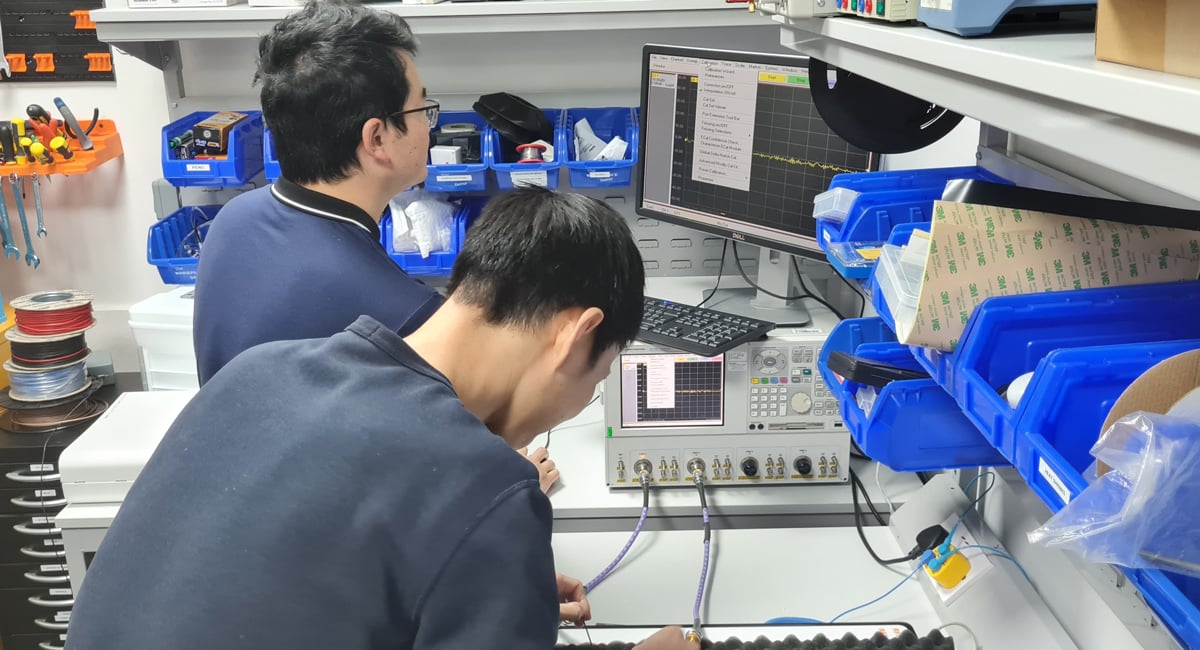
Delivering superior capabilities across all key metrics, in tests the Novocomms FR2 CPE achieved:
- A frequency range of 24GHz to 71GHz (with multiple antenna solutions)
- Support for dual linear polarisation
- Beam scanning of ±60° in azimuth and ±50° in elevation
- Up to 60% lower power consumption compared with existing industry solutions
- Up to 30% lower cost compared with existing industry solutions
The new solution is now entering its pilot deployment and early validation stage, prior to commercial launch and production scale-up, which is expected in early 2026.