



A patient with motor neurone disease was able to control a computer using only his thoughts following the UK’s first Neuralink implant surgery, performed at University College London Hospitals’ (UCLH) National Hospital for Neurology and Neurosurgery (NHNN) in October 2025.
The procedure is part of the GB-PRIME study, which is evaluating the safety and functionality of Neuralink’s robotically implanted brain-computer interface (BCI). The technology is designed to enhance independence for people who are paralysed.
The surgery went as planned, and the day after the procedure, the patient began using the BCI to move a computer cursor with his thoughts. He was also able to return home from the hospital the same day.
The first UK participant, Paul, said: “To say I was nervous about having brain surgery is a huge understatement but when I heard about this study I was drawn to see if I could make use of this technology to improve my freedom but also to contribute to research for other people with conditions like mine.”
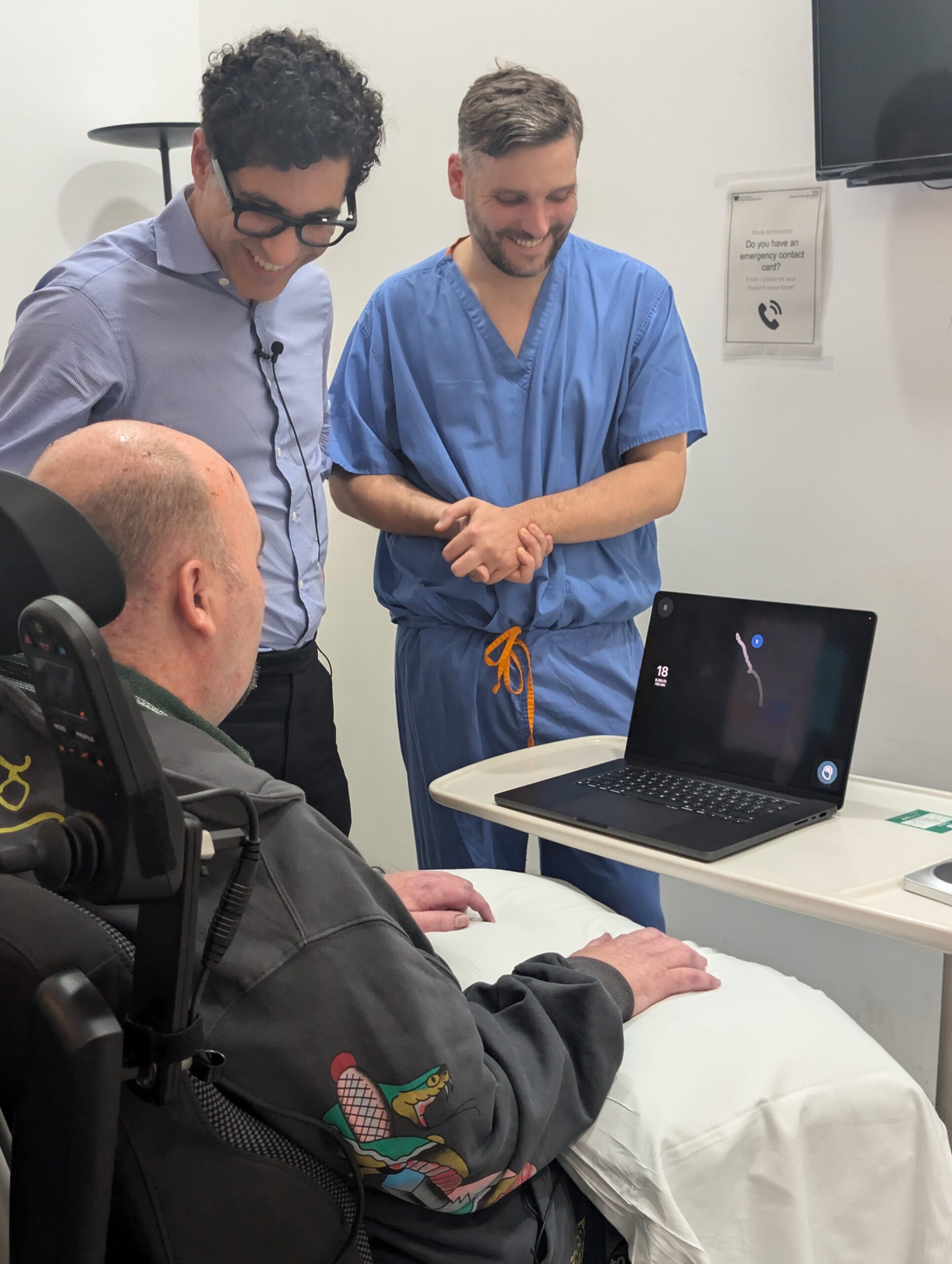
Harith Akram, Chief Investigator for the study, UCLH consultant neurosurgeon at NHNN, and Honorary Clinical Associate Professor at UCL, said: “This treatment has the potential to help thousands of patients trapped in their own bodies, for whom we have previously been able to offer very little. Patients volunteering for the study are courageous and inspiring and we thank them for their contributions to advancing healthcare.
“I’m so proud of our talented team stretching the boundaries for patients with paralysis and I want to thank them for their dedication to finding effective treatments.”
William Muirhead, Principal Investigator at UCLH and consultant neurosurgeon at NHNN, added: “It was remarkable to see Paul using his brain–computer interface on the very first day after surgery, he is now using it in his own home and working hard every day to improve his calibration and control. Using digital devices can be very challenging for people living with paralysis so to see Paul’s growing independence in directly controlling his computer is incredibly rewarding.”
Since receiving the implant, Paul has been working closely with Neuralink engineers to explore potential applications for the device, aiming to enrich and restore autonomy in his daily life. Follow-up appointments and research sessions will continue as he develops his proficiency with the technology.
The GB-PRIME study follows Neuralink’s clinical trials in the United States and Canada, where patients are using the N1 Implant to control everyday devices, including computers, smartphones, and robotic arms.
The study will involve up to seven participants who are unable to walk and whose ability to use computers, smartphones, or tablets is significantly impaired or impossible due to their condition. It is currently being conducted at two sites: UCLH and Newcastle Hospitals NHS Foundation Trust. At UCLH, the study is managed by the Leonard Wolfson Experimental Neurology Centre, part of the NIHR UCLH Clinical Research Facility, and supported by the NIHR UCLH Biomedical Research Centre infrastructure. The Joint Research Office at UCL and UCLH provided extensive support to launch the study.
Individuals interested in participating in GB-PRIME are invited to learn more and join Neuralink’s Patient Registry at neuralink.com/trials.