




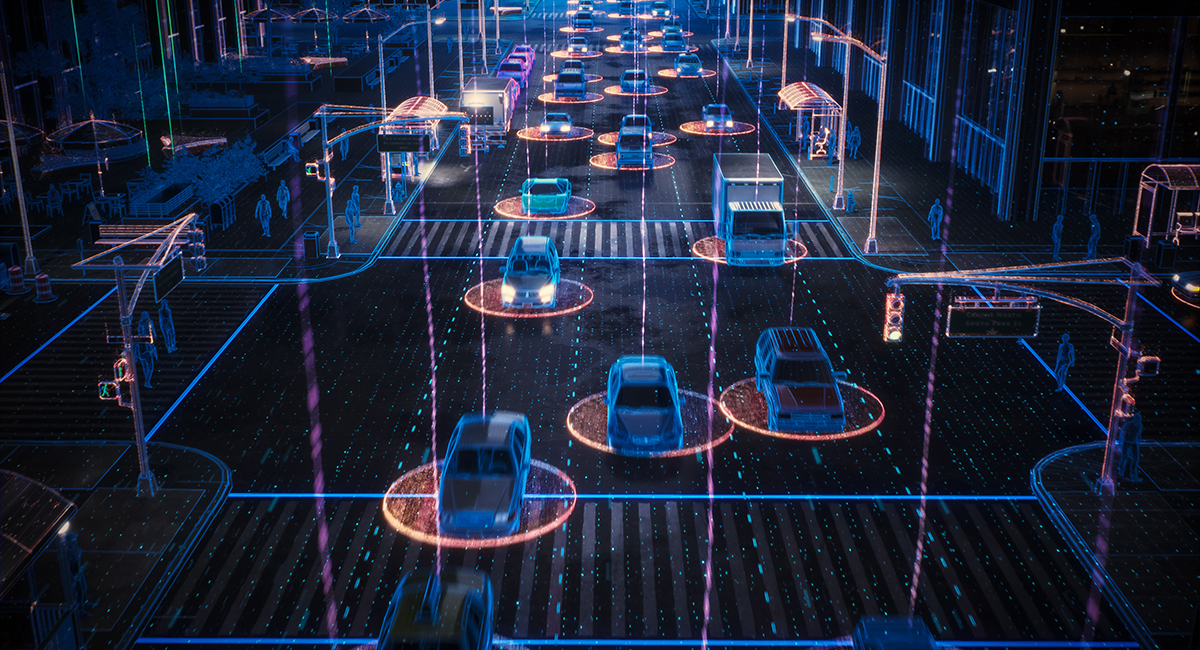
Software-defined vehicles (SDVs) are changing the way we drive. Turning everyday commuting and the movement of goods and people into smarter, safer, and more connected experiences. SDVs represent more than just a technological upgrade; they are a fundamental shift in vehicle architecture, offering improvements and customisations that were not previously possible.
Unlike traditional vehicles, SDVs are designed with a software-first mindset. By separating the software from the underlying hardware, they can receive new features and performance enhancements over time, often delivered wirelessly, much like the updates we get on our smartphones. This approach extends the life of the vehicle and enhances its capabilities without needing physical upgrades.
To make this possible, SDVs rely on robust and scalable data storage. It’s the foundation that supports ongoing updates, adaptability, and the intelligence needed for a truly modern driving experience.
SDVs: a smarter way to travel
With the advent and proliferation of automation and AI, devices are increasingly getting smarter. This applies to the vehicles we drive, just as much as the handheld devices we use and watch. SDVs, for example, have numerous benefits, from enhancing passenger experiences to improving the comfort of driving and the convenience of travel. They can help in creating safer roads and potentially reduce the risk of accidents, as they continuously monitor traffic conditions and connect with roadside sensors to provide real-time data and alerts. Thanks to their ability to constantly learn from the vast amounts of data they generate, they become more reliable with every journey, adapting to new situations and improving their decision-making over time.
This is not just restricted to cars, as we’re increasingly seeing SDVs transform the freight and goods transport sectors, potentially revolutionising these industries by enabling 24/7 operations, reducing delivery times and lowering costs. They are also set to improve supply chains and help ensure the reliability of goods reaching their destination at an accelerated rate.
Data: the fuel of SDVs
To operate effectively however, SDVs rely heavily on access to vast volumes of reliable data that when stored locally ensure it is accessible on demand to ensure rapid processing and response times. Inside each SDV, a complex network of systems like sensors, cameras, radar, and AI software is constantly collecting and processing data in real-time. This stream of information allows vehicles to perceive their surroundings, interpret complex scenarios, and make decisions in real-time for safe navigation and optimal performance. According to McKinsey & Company, SDV’s can produce up to “1 to 2 terabytes of raw data per car each day”.
However, this information is only valuable if it can be regularly updated, saved, and accessed with reliability. AI systems can learn from the data, develop enhancements, and gradually incorporate those changes back into the car if it has adequate storage in place. Establishing a closed loop learning system in which the vehicle continuously enhances its performance through updates fuelled by recorded and analysed data is key. Without reliable data storage in place, SDV development would likely come to a halt.
Meeting legal and safety requirements
It’s not just the enhancement to performance and experience which makes data storage important. Across numerous regions, minimum vehicle safety feature standards are becoming stricter, and it is important for vehicles to keep detailed logs of critical information locally.
To adhere to minimum vehicle safety feature standards, two main types of data recorders are used: the Event Data Recorder (EDR) and the Data Storage System for Automated Driving (DSSAD). The EDR captures key data points just before a major event, like a collision, providing valuable insights into what happened. DSSAD meanwhile records data continuously, including crucial details like time and location, to build a comprehensive picture of the vehicle’s activity. Both of these systems depend heavily on reliable and ample onboard data storage to make sure this information is easily accessible when needed.
The role of flash storage in enabling SDVs
With these intense data requirements, it’s crucial that storage is not overlooked in SDVs. While the focus tends to be on real-time processing and immediate vehicle performance, data storage, specifically Flash storage, is a key component in making SDVs a reality. This is because resilient, high-performing Flash storage is suitable for managing the massive data demands of SDVs reliably and efficiently and is built to withstand extreme temperatures, vibrations, and mechanical shock commonly encountered in automotive environments. Flash storage enables the real-time processing of sensor data, supporting the secure logging of critical information, and underpinning the performance of software-defined and autonomous systems.
More significantly, Flash technology makes it possible to store operating systems, apps, and AI algorithms for extended periods of time, facilitating ongoing software updates. Just like our smartphones receive regular updates that enhance features and performance, modern vehicles can also receive new capabilities wirelessly, often long after they’ve left the factory.
Additionally, Flash storage offers the scalability and flexibility that engineers require. One of the main issues facing engineers currently is not knowing how much data will be needed in the future. It is possible that subsequent updates could require hundreds of gigabytes or even terabytes of storage, even though today’s requirement is only in the tens of gigabytes. Read/write speeds and latency aren’t enough; storage must be able to expand along with the car. In that sense, just as smartphones have evolved to accommodate increasingly complex apps and software operating systems, vehicles need Flash solutions that are futureproof and scalable.
With Flash storage technology in place, SDVs can continue to evolve and achieve their intended capability.
Author: Russell Ruben – Automotive and IoT Segment Marketing Director at Sandisk