









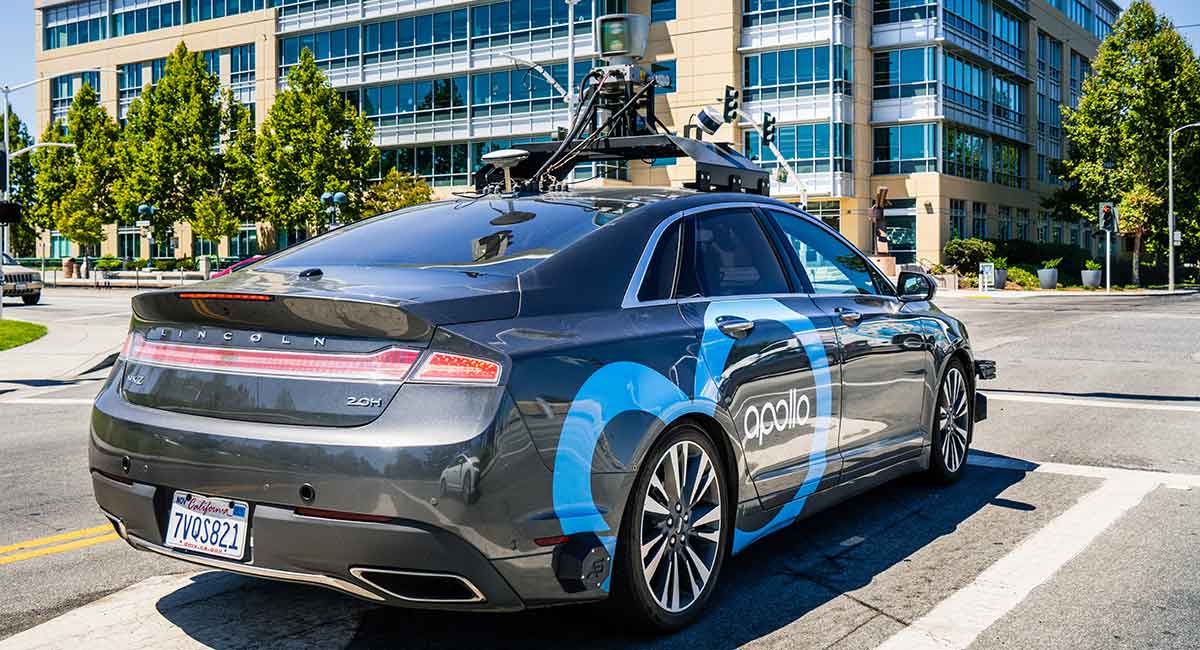
Uber and Lyft have announced a partnership with Baidu to trial Chinese robotaxis on UK roads in 2026.
Riders across the city are positioned to become the first in the region to experience Baidu’s Apollo Go vehicles. Testing of an initial fleet, comprising dozens of vehicles, is expected to begin next year, subject to regulatory approval, via the Lyft and FreeNow ecosystem, with plans to scale to hundreds thereafter.
The hybrid network, combining autonomous vehicles and human drivers, is intended to serve the full range of travel needs across London. Work continues in close collaboration with Transport for London regulators and local communities to expand the rideshare market and support broader participation across the ecosystem.
Heidi Alexandar, Transport Secretary, said on a post on X that “we’re planning for self-driving cars to carry passengers for the first time from Spring, under our pilot scheme – harnessing this technology safely and responsibly to transform travel” and that it was “another vote of confidence in our plans for self-driving vehicles”.
However, in spite of the rapid rollout of self-driving taxis, a report from Consumer Intelligence shows that UK drivers remain deeply sceptical of handing control to a computer.
The Consumer Mobility Trends Analysis – based on a survey of over 1,000 UK drivers – finds that more than half of UK drivers (54%) say they would not use a fully self-driving car, nearly three-quarters (73%) would trust their own judgement more than the car’s systems, and among drivers aged 65+, almost half (46%) say they would “definitely not” ride in a self-driving car, compared with just 16% of 25–34 year olds.
By way of contrast, cities like Phoenix, San Francisco, and Los Angeles already have self-driving taxi fleets operating daily. In the US, robotaxi operators such as Waymo are carrying thousands of passengers each week, offering a glimpse of what a driverless future might look like.
“Britain is watching the rise of robotaxis in America with curiosity but also caution. Our research shows that UK drivers are far from convinced. Trust is the missing ingredient. For many, especially older drivers, the thought of surrendering control to a machine is simply a step too far,” said Ian Hughes, CEO of Consumer Intelligence.
The research also highlights that 36% of UK cars still lack basic driver-assistance features such as lane-keeping or emergency braking.
“The UK mobility industry cannot assume that because self-driving taxis are working in the US, British consumers will automatically embrace them. Building confidence will take visible proof of safety, clear communication, and time,” concluded Hughes.


