


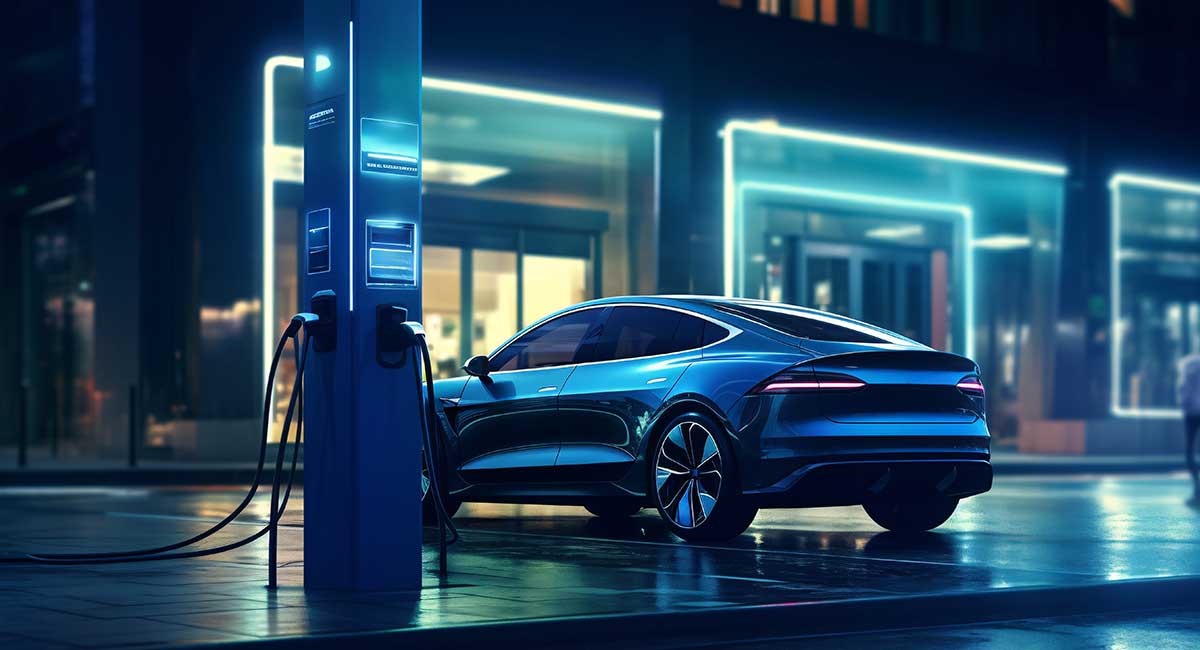
Chinese manufacturer BYD plans to introduce its ultra-rapid 1000kW EV chargers to the UK this year, bringing a level of charging capability that can supply up to 2km of range in just one second. This means an EV can theoretically be fully charged within minutes.
How this compares with today’s UK charging infrastructure
One of the main concerns among consumers switching to EVs is how long it takes to charge a vehicle compared with filling a tank with petrol or diesel. Current EV charging infrastructure in the UK allows for 50-150kW of rapid charging, meaning an EV can typically charge up to 80% in around 30-60 minutes. Ultra-rapid charging offers around 150-400kW in 10-20 minutes.
With BYD’s Super e-Platform and flash charging system, that gap is significantly reduced, bringing charging times closer to traditional fuelling methods and positioning it among the fastest publicly available charging systems to date. Having at least 600kW of additional power addresses range anxiety, charge time, and journey predictability for longer-distance travel.
Built on battery expertise
That level of performance does not come from infrastructure alone. It is also a direct result of BYD’s long-standing focus on battery technology and power electronics.
BYD has built its foundation on battery design and manufacturing. Founded in 1995 as a rechargeable battery manufacturer, the company initially supplied nickel-cadmium and lithium-ion cells for consumer electronics. That early focus on battery chemistry, manufacturing scale, and vertical integration later became the basis for its expansion into electric vehicles and energy systems. This background underpins BYD’s latest platform-level approach to fast charging.
The Super e-Platform
In March 2025, the company launched its Super e-Platform, featuring flash-charging batteries, a 30,000RPM motor, and silicon carbide (SiC) power chips. This iteration upgrades core electric components to enable up to 400km (250 miles) of range with just five minutes of charge time and operates with a 10C battery.
The Super e-Platform also delivers single-module, single-motor power of 580kW and a top speed exceeding 300km/h. It is built on a 1000V architecture and supports 1MW (1000kW) flash charging, designed for sustained high-power delivery rather than short peak bursts.
UK rollout supported by Denza
By the end of 2026, BYD plans to roll out 300 chargers across the UK to support its premium Denza brand, marking its first large-scale deployment of megawatt-class charging in the region.
Denza has been positioned as a Chinese alternative to brands such as BMW, Mercedes-Benz, and Porsche, making it a natural fit for showcasing high-power charging capabilities. While other EVs can use the chargers, only specific BYD and Denza vehicles can currently take full advantage of the full charging output due to vehicle-side architecture requirements.
Vehicle-to-grid ambitions
Alongside high-power charging, BYD is also exploring how bidirectional energy flow can coexist within future energy networks.
In 2025, the company partnered with Octopus Energy to launch a vehicle-to-grid (V2G) package. This allows EVs to export stored electricity from their batteries back to the power grid. For EV owners, this creates an opportunity to sell energy back during peak demand while supporting grid stability. Given the cost of EVs and charging, this provides a financial incentive and another step towards improving the overall cost equation of EV ownership.
With multiple developments progressing in parallel, it is clear why BYD continues to build momentum in the UK market.