


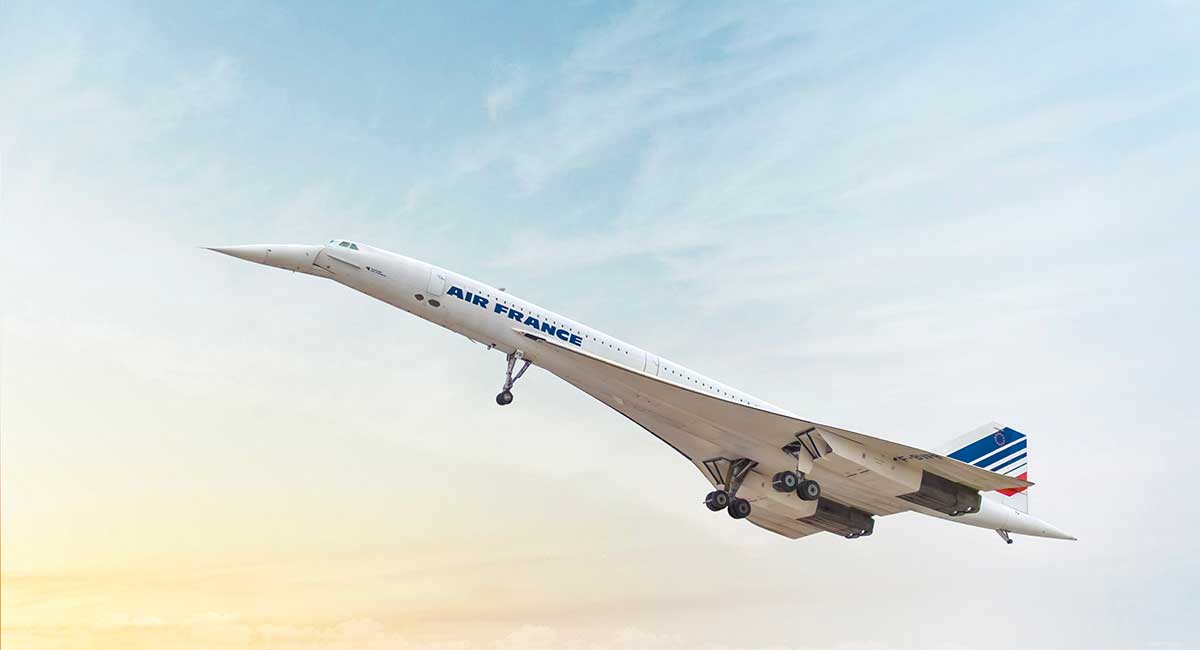
For over a quarter of a century, Concorde stood as the undisputed titan of commercial aviation. Entering service in 1976, it was an engineering marvel that cruised at Mach 2, boasting performance that even fighter jets envied. It turned the seven-hour slog between London and New York into a brisk three-and-a-half-hour hop. It wasn’t just a plane; it was a symbol of technological optimism.
However, the dream was grounded in 2003, a casualty of cold economic and physical realities. Restricted to transoceanic routes due to its thunderous sonic boom and consuming fuel at a rate that made profitability precarious, the Concorde’s business model was always fragile. The tragic crash of Air France Flight 4590 in 2000, combined with the post-9/11 downturn in air travel and spiralling maintenance costs, sealed its fate. The industry moved on to slower, more efficient wide-body jets, prioritising low-cost mass transit over supersonic speed.
Today, the aviation industry is witnessing a resurgence of interest in supersonic travel. From the sleek render reveals of Boom Supersonic to the rollout of NASA’s X-59 QUESST (Quiet SuperSonic Technology) X-Plane, the noise – both literal and metaphorical – is increasing.
But while these endeavours dominate the headlines with promises of a return to three-hour transatlantic flights, a closer look at the engineering fundamentals suggests that the barrier to entry is higher than ever. While projects like the X-59 successfully address the environmental challenge of the ‘sonic boom’ to allow overland flight, they do not solve the immutable laws of physics and economics that ended the era of supersonic passenger aircraft in the first place.
The drag problem
The primary hurdle for any supersonic vehicle isn’t just the noise; it is the drag. Flying past Mach 1 dramatically increases the aerodynamic drag on an airframe due to the formation of shockwaves (wave drag). To overcome this, an aircraft requires significantly more thrust, which translates directly to higher fuel burn.
For an industry that has spent the last three decades optimising specifically for fuel efficiency and decreasing the cost per passenger mile, supersonic flight represents a step backward. Modern airlines are businesses built on mass transit economics. It is difficult to envision a scenario where a ‘mass transit’ supersonic option becomes viable when the fundamental physics dictates a cost-per-seat that is multiple times higher than subsonic alternatives.
The ‘luxury’ paradox: speed vs. space
If mass transit is off the table, the logical pivot is toward high-net-worth individuals – passengers who value time over money. In this sector, cost is less of a concern, and the prestige associated with supersonic travel carries a premium of its own. As such, there is a potential market for supersonic business jets rather than large commercial liners.
However, potential buyers expecting a ‘flying palace’ will be disappointed. To minimise wave drag, supersonic aircraft must adhere strictly to the Area Rule (Whitcomb’s area rule), which dictates that the cross-sectional area of the aircraft must change as smoothly as possible. This necessitates a long, slender fuselage with a narrow cross-section.
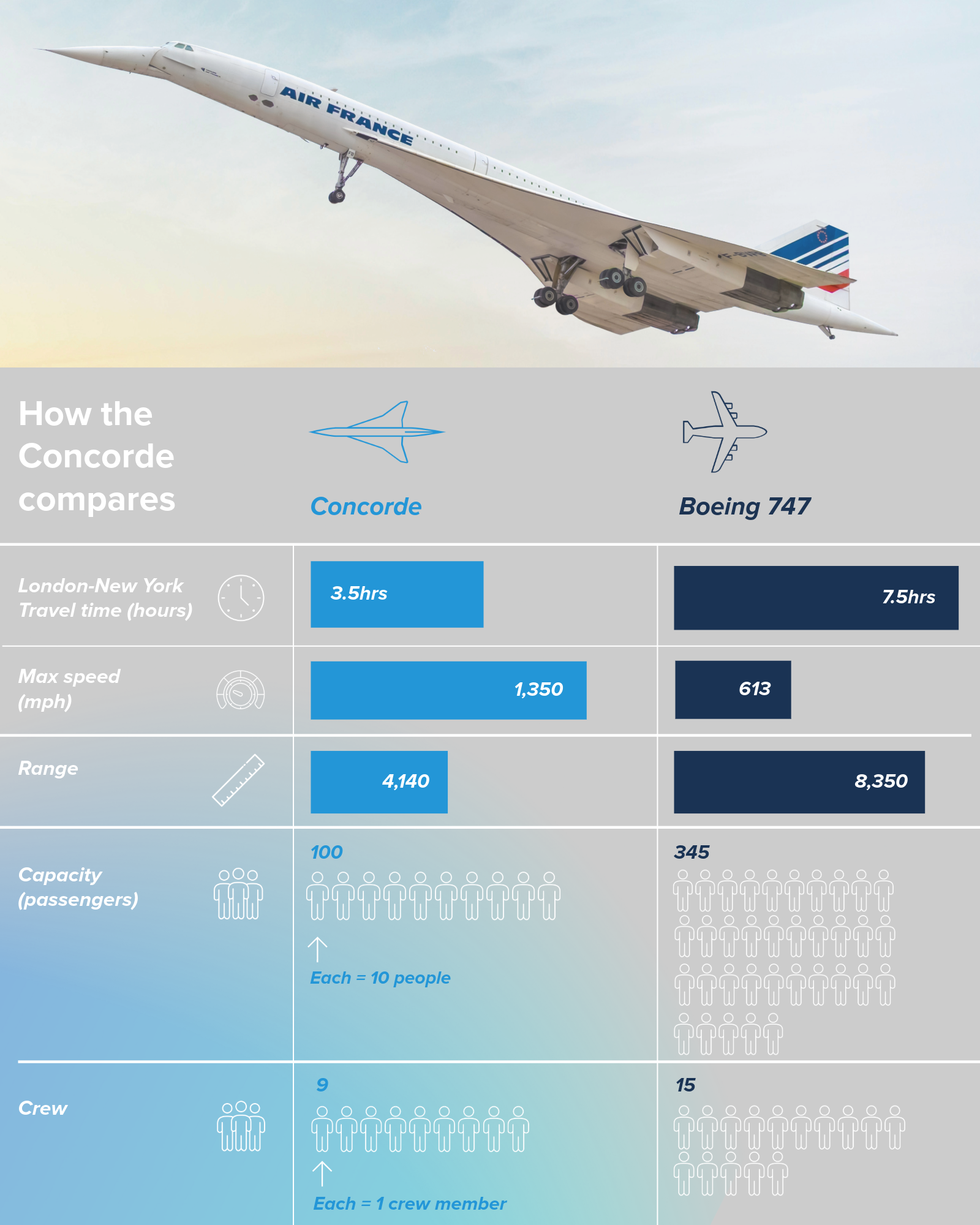
Where a modern subsonic business jet offers stand-up headroom and wide cabins, a supersonic jet is physically constrained to be narrow. ‘High-value’ passengers will ultimately face a trade-off: do they choose the luxury of space (subsonic) or the luxury of speed (supersonic)?
The propulsion predicament
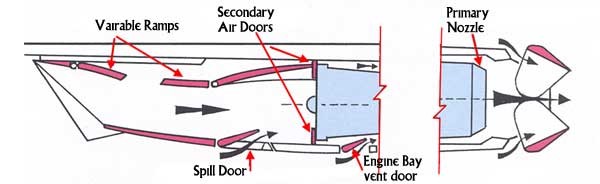
Perhaps the most significant, yet under-discussed, hurdle is the engine. Supersonic aircraft and their engines face a distinct set of challenges compared to traditional commercial jet engines. At supersonic speeds, the air cannot simply be allowed to flow into the engine; it must be slowed down through a complex engine inlet.
For example, the Concorde’s Olympus engine intake utilised complex moving surfaces (variable ramps, spill doors, and secondary air doors) to manage the airflow demands across the flight envelope (see Figure 2). While modern military jets utilise specialised Diverterless Supersonic Inlets to remove some of this complexity, these designs come with their own unique trade-offs.
Developing a supersonic engine is an immense integration challenge where the airframe designer and engine manufacturer must work in lockstep – a dynamic currently seen almost exclusively in military projects. It is telling that the major propulsion incumbents – Rolls-Royce, GE Aviation, and Pratt & Whitney – have all declined to develop an engine for Boom Supersonic.
This refusal has forced Boom to attempt to develop their own propulsion systems in-house. This path is fraught with technical risk and capital intensity. Gas turbine development is a highly specialised field with massive barriers to entry; there is a reason the global market is dominated by only three major players.
Furthermore, the regulatory hurdle is substantial. Certifying a new airframe is difficult; certifying a brand-new supersonic engine from a manufacturer with no prior track record, for use in passenger transport, will take an immense amount of time and scrutiny from the FAA, CAA, and EASA.
Conclusion
While the allure of breaking the sound barrier remains strong, the current goals of supersonic ‘mass transit’ seem unlikely to come to fruition in the near term. The economic and engineering challenges create a formidable hurdle for any company to overcome.
If a breakthrough occurs, it will likely be in the niche business jet market. However, even there, one should not bet against the legacy aerospace giants. Aircraft development is an integration game, and existing OEMs possess the certification experience, supply chain relationships, and capital resilience to navigate these hurdles.
It’s my belief that that supersonic travel will remain just over the horizon for the near future, and any aircraft attempting to achieve this goal will face considerable challenges, redesigns, and delays.
About the author:

Tim Clark is a leading expert in ejection seat technology and safety-critical systems. Through CSEC, he partners with clients to deliver the design, development, and qualification of critical systems where failure is not an option. Tim has consulted for Turkish Aerospace, Vertical Aerospace, and BAE Systems, bringing deep technical authority to the development of escape systems for diverse aircraft platforms.