




At the Women Leaders in Electronics Awards, I met Vibishna Balagopal, a UK leader, with global technology giant Thales. Employing some 83,000 staff internationally, the company excels in technological solutions for aerospace, space, defence, cyber, and digital markets and is investing in AI, big data, connectivity, cybersecurity, and quantum computing.
Nominated in several categories and securing a Highly Commended Award at this ceremony in 2025, I realised she was from Kerala in India. Keralites are known for being mathematicians, engineers etc.
Vibishna’s background from India to Scotland in pursuit of excellence in her career whilst following her personal dream for herself and her family, means I am delighted to interview her.
Vibishna, your father worked as a Chief Controller for Indian Railways. I admire this extraordinary system that transports a mind-blowing 23–30 million passengers a day. How did he influence you to become a VLSI and FPGA design specialist?
Thank you, Karen – yes, my father has had a profound influence on my career, but equally, my mother, too, was an unwavering source of strength and support. He worked as a Chief Controller with Indian Railways, and as a child, I visited his office multiple times. It left a lasting impression on me, seeing firsthand, technology transitioning from traditional signalling boards into modern computer-based systems. What impressed me was how diligently he adapted to these changes, learning new skills and embracing the technological shift with discipline and curiosity. That as a child, impacted me – planting the seed for my own fascination with electronics and complex systems.
We were two girls, and my parents created an environment centred on our wellbeing and happiness, trusting us to make our own life choices which gave us confidence.
Being the first female engineer in my family is a milestone, honouring my parents’ and sister’s support. Now, I’m married to a gifted electronics engineer with a bright young daughter. My journey – from Kerala to Scotland and from a curious child to a VLSI and FPGA specialist – has been shaped by family encouragement.
You have exceptional academic qualifications that highlight early career contributions: in India’s first X-band Active Electronically Scanned Array (AESA) radar project; medical electronics with point-of-care diagnostic systems for LumiraDx etc. Do expand on these impactful projects.
Yes, I’ve been fortunate to work on projects that challenged me technically and have meaningful results.
A defining chapter began when I joined the Defence Research and Development Organisation (DRDO) in India – a highly prestigious institution responsible for advancing India’s defence technologies. Selected after a rigorous national process and completing specialist radar training, I joined as the only digital design engineer amidst RF and antenna experts, a unique position, working across domains. My first manager at DRDO – a knowledgeable woman – greatly influenced me with her competent caring leadership under pressure.
Electronics innovation drove me while working on a multicore systems power-saving research project at the University of Southampton.
My time in LumiraDx in Stirling was transformative, working on point-of-care diagnostic devices for blood clotting and cardiometabolic markers. The COVID-19 pandemic prompted a rapid pivot to infectious disease assays – including COVID-19 and RSV (Respiratory Syncytial Virus). A game-changing moment, I rose from Senior Engineer to Vice President of Systems Integration and Hardware, leading my team through swift growth and regulatory challenges and witnessed firsthand LumiraDx’s platform adopted globally before its acquisition by Roche.
Working in both defence and medical sectors has shaped my perspective. In both fields, quality of your product matters – it directly affects lives. Whether it’s a patient depending on an accurate diagnostic result or a critical system in a defence environment, the standards we uphold must reflect the responsibility we carry. I’ve learned that true innovation isn’t just about speed – it’s about building with integrity, especially when the stakes are high.
At Thales in Glasgow, how is this facility (with a 100-year heritage) contributing towards the EU ambition to stand independently during chaotic geopolitics. Most western European countries now deploy greater percentages of GDP to cybersecurity/defence. Thales, a great French company whose stands I visit at the Paris and Farnborough Air shows, must anticipate growth within its electronics division – both in R&D and production. Would you agree?
Absolutely. Thales continues to play a critical role in both the UK’s and Europe’s defence and security landscape in today’s complex geopolitical environment. With the EU increasing their investment in defence and cybersecurity, a growing emphasis is on developing sovereign capabilities in secure communications, sensor technologies, and AI-enabled mission systems. Thales is well-placed to support this momentum, and our electronics division is certainly primed for growth.
As Head of Electronics for OME, UK – Optronics and Missile Electronics, my team is distributed across Glasgow and Reading, and I lead a highly talented group of over 50 electronics engineers working on complex and cutting-edge technologies.
Beyond day-to-day delivery – I focus on building and sustaining our talent pipeline, early careers programmes, mentoring, and continuous upskilling. With our technical experts and leadership, I align the skills roadmap with the product roadmap, ensuring we are equipped for both current and future needs. That includes identifying emerging capability areas, and driving improvements in tools, methodologies, and design processes to enable long-term success. In such a strategically sensitive domain, the responsibility we carry is significant – something I strive to instil across the team.
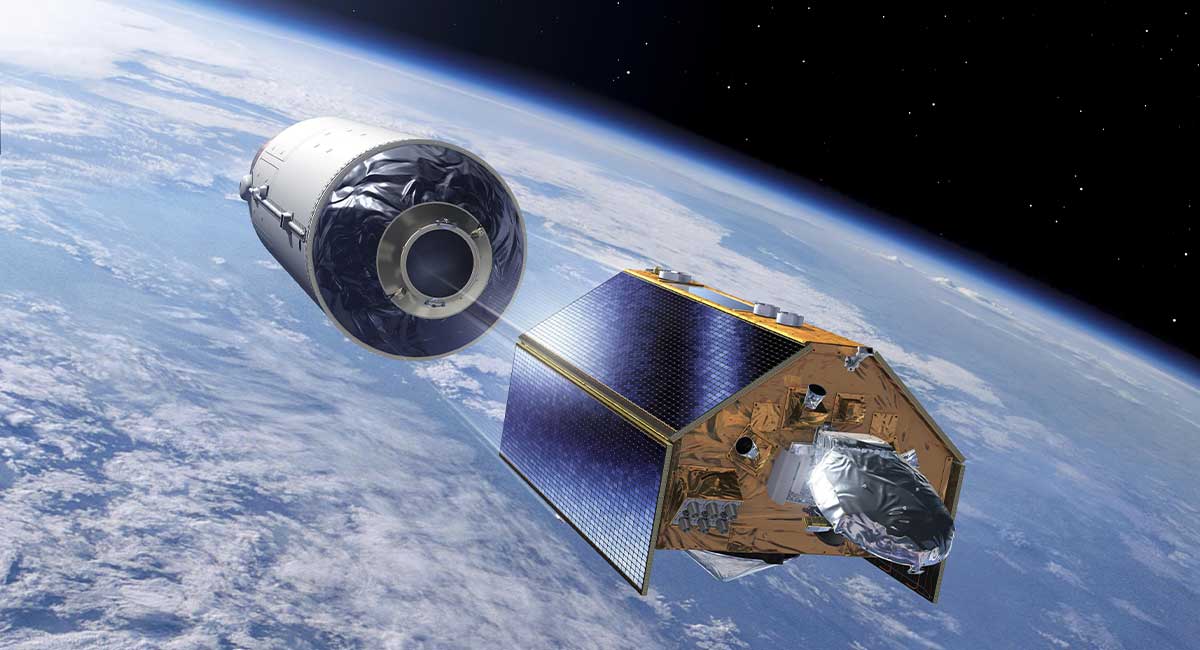
Reading about the Copernicus CO2 Monitoring (CO2M) mission, I note that Thales’ electro-optical contributions towards the development of payloads for CO2M satellites which provide vital data about emissions can contribute towards the EU meeting its climate goals.
Yes, the Copernicus CO₂ Monitoring (CO2M) mission is a great example of how space technology can support critical global challenges like climate change. Thales, through Thales Alenia Space, plays an important role in delivering the electro-optical payloads that make this mission possible by providing high-precision, independent data on carbon emissions – a vital step towards enabling accountability and supporting the EU’s broader climate goals.
While my own team within optronics and missile electronics isn’t directly involved in CO2M, it’s encouraging to see Thales applying its engineering excellence across such a wide spectrum – from defence and aerospace to environmental monitoring. It speaks to the versatility and depth of expertise across the group.
The future looks ominous with war in Europe, the Middle East, and Africa and looking to get worse. So, how do you see the future? Both in terms of the work and at a personal level.
We are living through incredibly complex and turbulent times, with conflicts spanning multiple regions and growing global uncertainty. The threats, physical, digital, or environmental – are increasingly interconnected, and that makes the role of defence and technology even more critical.
From a professional perspective, I believe our responsibility is to protect lives and assets to promote long-term security and stability with ethical, inclusive, and safe AI playing a pivotal role in this.
On a personal level, I hold onto a future vision where everyone thrives – where basic needs like food, shelter, safety, or dignity is universal. Meaningful progress requires co-ordinated commitment from governments, industries, and institutions who have the influence, resources, and reach to drive impactful systemic changes, supported by innovation and technology.
Despite the risks, I remain optimistic. I choose to focus on building solutions and making a difference.
By Karen Mascarenhas, Mascarenhas PR Ltd
This article originally appeared in the September’25 magazine issue of Electronic Specifier Design – see ES’s Magazine Archives for more featured publications.