



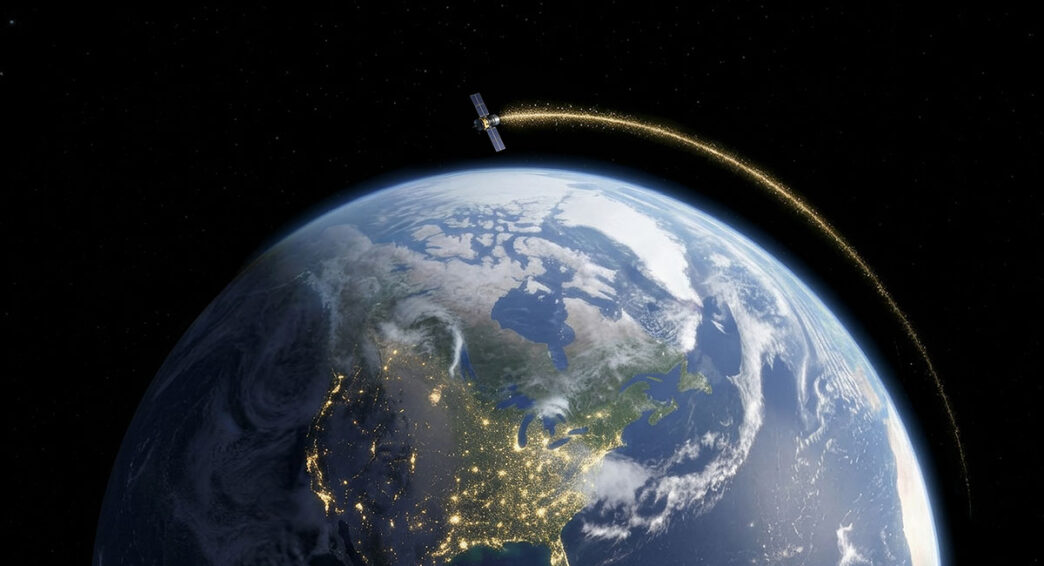
At GTC 2026, NVIDIA revealed how its accelerated computing platforms are enabling a new era of space-based AI – bringing data centre-class performance to orbital environments.
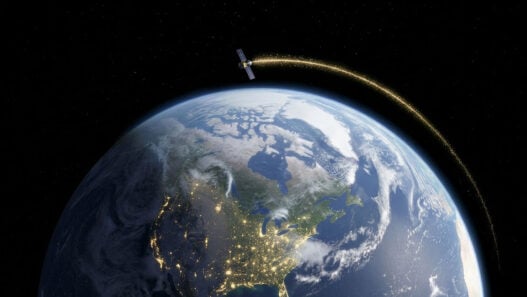
With increasing demand for real-time data processing in space, NVIDIA is addressing the challenge of operating within strict size, weight and power (SWaP) constraints. Its technologies now enable AI applications to run seamlessly across ground systems, satellites, and space-based networks.
“Space computing, the final frontier, has arrived. As we deploy satellite constellations and explore deeper into space, intelligence must live wherever data is generated,” said Jensen Huang, Founder and CEO of NVIDIA. “AI processing across space and ground systems enables real-time sensing, decision-making and autonomy, transforming orbital data centres into instruments of discovery and spacecraft into self-navigating systems. With our partners, we’re extending NVIDIA beyond our planet – boldly taking intelligence where it’s never gone before.”
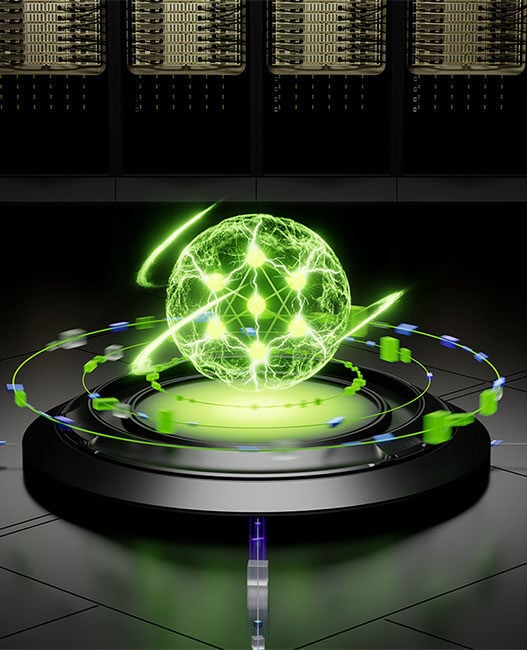
At the centre of this initiative is the Space-1 Vera Rubin Module, which brings the performance of the Rubin GPU into orbit. Compared with the NVIDIA H100, the module delivers up to 25x more AI compute for space-based inference, enabling advanced use cases such as orbital data centres (ODCs), geospatial intelligence processing and autonomous spacecraft operations.
Complementing this are the IGX Thor and Jetson Orin platforms, which provide energy-efficient, high-performance AI capabilities for Edge computing in space. These compact systems enable real-time image processing, navigation and sensor analysis directly onboard spacecraft, reducing latency and minimising reliance on ground-based systems.
On Earth, NVIDIA’s data centre platforms – including the RTX PRO 6000 Blackwell Server Edition GPU – deliver high-throughput processing for geospatial intelligence, accelerating analysis of massive imagery datasets by up to 100x compared with legacy CPU-based systems.
Powering next-generation space missions
A growing number of space industry leaders – including Aetherflux, Axiom Space, Kepler Communications, Planet, Sophia Space and Starcloud – are already leveraging NVIDIA’s platforms to power next-generation missions.
These range from enabling autonomous satellite operations and intelligent data routing in orbit, to building orbital data centres capable of processing data at the source. By integrating AI across space and ground systems, organisations can reduce latency, optimise bandwidth and unlock real-time insights from vast data streams.
The ability to run large language models and advanced AI systems directly in space represents a major shift. Rather than relying solely on Earth-based processing, spacecraft can now perform on-orbit analytics, support autonomous decision-making and even enable scientific discovery in real time.
Rob DeMillo, CEO of Sophia Space, said: “Sophia Space’s focus is on building modular, passively cooled, hosted computing platforms that give customers dedicated infrastructure to run applications directly in space. NVIDIA Jetson Orin enables us to embed AI capability into that infrastructure, supporting real-time processing and autonomous operations within strict size, weight and power constraints. This brings cloud-like flexibility to space and makes orbital computing commercially accessible.”
Philip Johnston, CEO of Starcloud, said: “Starcloud is building purpose-designed orbital data centres to deliver Cloud and AI infrastructure directly in space. With NVIDIA, we can bring true hyperscale-class AI computing to orbit – processing data at the source, reducing downlink dependency and enabling customers to run training and inference workloads in space for the first time. This is a critical step toward making space a seamless extension of the global Cloud.”
Advancing geospatial intelligence
As the volume of space-generated data continues to grow, NVIDIA is also accelerating geospatial intelligence workflows. By combining on-orbit processing with high-performance ground-based systems, organisations can analyse both real-time and historical datasets more efficiently.
This has wide-ranging applications, including disaster response, climate monitoring and infrastructure management. AI-powered analysis of satellite imagery enables faster detection of events such as wildfires and floods, more accurate weather prediction, and automated monitoring of global systems such as energy grids and transport networks.