



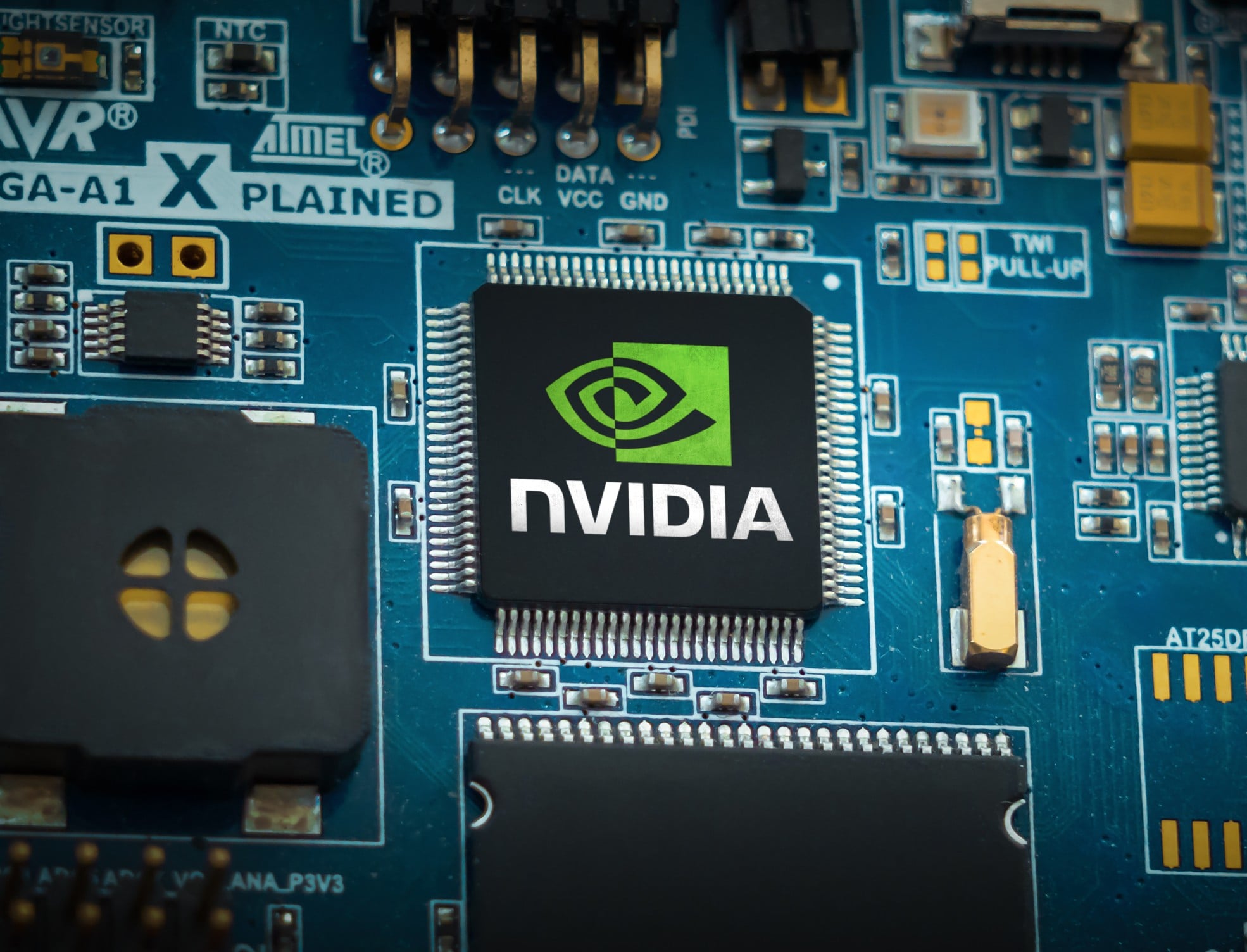
The chip-maker’s shares climbed as high as 2.4% to $164 on 10th July, bolstered by strong financial performance and ongoing demand for its graphics processing units (GPUs), which underpin the compute requirements of Cloud platforms, hyperscale data centres, and large AI model training.
In June, the company overtook Microsoft to become the world’s most valuable publicly listed firm, closing with a valuation of $3.45 trillion. Since then, NVIDIA has continued to compete for the top spot with Microsoft and Apple, having last held the position on 24th January 2024. Microsoft ended trading on 9th July with a market cap of $3.44 trillion.
The surge came on the back of robust quarterly earnings, with NVIDIA reporting Q1 revenue of $44.1 billion – a 12% rise over the previous quarter and a 69% increase compared to the same period in 2024. The results demonstrated sustained momentum in AI-related semiconductor demand.
However, the company also faced regulatory headwinds. On 9th April, US authorities notified NVIDIA that new export licences would be required for shipments of its H20 AI chips to China. The development led to a $4.5 billion charge, tied to excess stock and supplier obligations, after demand weakened in the Chinese market. NVIDIA had generated $4.6 billion in H20 sales prior to the restrictions, but a further $2.5 billion in anticipated revenue could not be fulfilled.
NVIDIA’s ascent underscores its central role in the current AI buildout, as organisations scale their infrastructure to support increasingly complex workloads. Yet, the regulatory intervention highlights the geopolitical pressures shaping the global semiconductor supply chain, particularly in the context of US-China relations and AI technology control.