







Following on from that, the Bluetooth Special Interest Group (SIG) organisation was established in 1998 to promote the standard – work that it still continues today. The first official specification, Bluetooth 1.0, was released in 1999 – the most recent version, Bluetooth 6.0, was formally released in September 2024 and introduced ultra-low latency, Channel Sounding enabling centimetre-level positioning, and improved security features to protect against attacks like distance spoofing and man-in-the middle (MITM) attempts.
The widespread adoption of Bluetooth, from consumer wearables and audio streaming, to industrial use cases like asset tracking and condition monitoring and automotive for V2X communications and infotainment, has contributed to its success: according to figures released by ABI Research, by 2028, 7.5 billion Bluetooth-enabled devices are forecast to ship annually; 8% CAGR over the next five years.
Bluetooth being embedded in key devices including smartphones, tablets, and laptops has partly contributed to its success; by making this a core capability of these devices, consumers have become more familiar with the technology, which is widely understood as connecting headsets with smartphones for audio streaming purposes.
The evolution of Bluetooth
A combination of technological challenges, market demands, and the requirements of emerging applications have all driven the evolution of the Bluetooth standard.
As audio streaming, file transfer and computing became more prevalent, Bluetooth evolved to support faster data transmission, leading to Enhanced Data Rate (EDR) in Bluetooth 2.0 and high-speed in Bluetooth 3.0.
The proliferation of battery-powered devices, both wearables and IoT devices, required a more energy-efficient protocol, which culminated in the development of BLE in version 4.0, released in 2010. BLE’s architecture allows devices to remain in sleep mode for extended periods and only waking to transmit small amounts of data.
This is especially important for battery-powered devices which tend to be small and compact, like fitness trackers, and don’t have a lot of power available.
Of all these features, Bluetooth Channel Sounding was highly anticipated, as a key enabler for high-accuracy, centimetre-level positioning. This is important because it addresses demand for precise, low-power indoor positioning. As Bluetooth extends into applications like industrial IoT, retail, logistics and healthcare, the need to determine location with high accuracy is becoming more crucial.
Examples of where Channel Sounding works best includes industrial IoT, where asset tracking, determining pallet location and mobile robot guidance benefit from this accuracy; healthcare, for locating equipment, staff or patients; and occupancy monitoring and heat mapping in retail and smart buildings.
As Neville Meijers, CEO of Bluetooth SIG explained in the announcement of Channel Sounding: “When connected devices are distance-aware, a range of new possibilities emerge.”
Designing with Bluetooth
Designing with Bluetooth involves a mixture of hardware, firmware and protocol integration, power and antenna design, and regulatory compliance. Whether designing with classic Bluetooth, BLE or dual-mode operations, engineers have to balance power, performance, and cost.
The right Bluetooth variant for the end application can be determined by studying the characteristics of Bluetooth, BLE and dual mode:
- Bluetooth supports higher-data rates (~3Mbps) and higher power
- BLE supports low energy, lower throughput (maximum 2Mbps)
- Dual-mode supports classic and BLE simultaneously
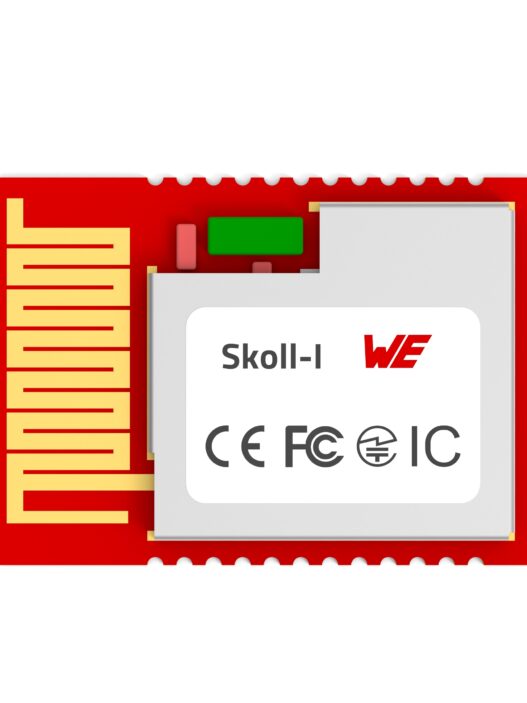
In terms of whether to use a module or system-on-chip (SoC), modules are pre-certified and well suited for rapid development or low-volume production; while SoCs offer greater flexibility and cost-efficiency in high-volume design, but may entail more complex RF work.
Engineers need to evaluate:
- On-chip memory and Flash capacity
- RF performance
- Available interfaces
- Power does
- Integrated vs external antenna
- Development ecosystem support
Poor RF design can be a major pitfall. Engineers need to consider:
- Antenna type
- Impedance matching
- Ground plan
- Keep-out zones
- PCB stack-up
The continued evolution of Bluetooth reflects the organisation’s vested interest in ensuring the protocol continues to meet the needs of the market – which are markedly different from 1999, when it was first released, compared to now. For instance, there are around 18.8 billion connected IoT devices today that depend on wireless protocols for communication.
By taking into account key design considerations for Bluetooth, engineers can ensure their device has optimum performance and leverages the key capabilities of the protocol.