





This latest news encapsulates concerns revolving around self-driving vehicles – namely, that they won’t be able to react to road situations and behave the same way as human drivers. Advocates for self-driving vehicles, such as Waymo’s co-founder Sebastian Thrun, have argued their reasoning means they will be statistically safer on the roads.
A small number of Tesla’s robotaxis were rolled out in Austin, where analysts, influencers and shareholders were invited to participate in paid rides, the BBC reported.
Elon Musk, its founder, wrote on X: “Super congratulations to the Tesla AI software & chip design teams on a successful Robotaxi launch! Culmination of a decade of hard work. Both the AI chip and software teams were built from scratch within Tesla.”
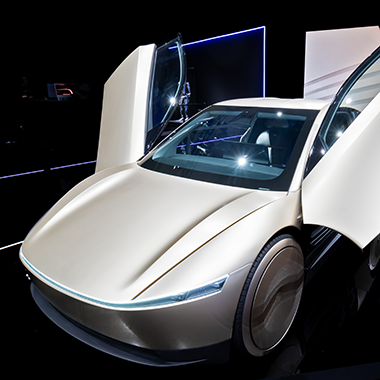
Robotaxis were officially announced at the ‘We, Robot’ event in October 2024, as a two-passenger fully autonomous prototype was showcased. Musk had previously predicted that self-driving robotaxis would be functionally ready from 2020 and available from 2024 onwards.
They were officially rolled out on the 22nd June, 2025. A Reuters report confirmed that there was no driver in the front seat, and approximately 10 vehicles were part of the trial.
However, the U.S. National Highway Traffic Safety Administration (NHTSA) contacted Tesla following footage shared on social media of the robotaxis seemingly breaking road laws. This included erratic driving, with one video showing a robotaxi stopping as it passed a parked police car. Other cars were seen speeding and swerving into the wrong lane, according to TechCrunch.
To mitigate risk, Tesla reportedly restricted rollout to a geofenced area of Austin, operating under Level 2-3 autonomy, and stated that a Tesla employee would be in the front passenger seat.
Participation of the robotaxis remains invite-only and limited to early-access users, with no public availability just yet.
It paints a wider picture of how Tesla is keen to capitalise on the self-driving market, which is currently populated by names such as Waymo and Wayve, who announced in recent news that they would be trialling robotaxis with Uber in London, UK.
General Motors announced last year it would no longer be funding its Cruise subsidiary due to the “considerable time and resources” required to scale.