







Solid-state electronics have brought benefits to everything from kitchen appliances to motor vehicles. In recent years, one of the most fundamental elements of electrical systems, the tried and-true electromechanical circuit breaker, has finally become electronic. New smart circuit breakers are more robust, last longer, and most importantly, create opportunities to use power more efficiently and cost-effectively in smart factories, smart buildings, and smart homes.
Smart benefits
Smart circuit breakers, being solid-state circuit devices, replace mechanical relays with electronic parts. The devices include wireless connectivity that transmit both operational and control data, enabling breakers to be monitored and turned on and off remotely. Zigbee and Thread are commonly used connectivity solutions.
Smart circuit breakers can also respond to short circuits a hundred times faster than their electromechanical counterparts, clearing faults in just a few microseconds. Smart breakers also have longer operational lifetimes.
The increased robustness and performance improvements are enough to justify the use of smart circuit breakers, but smart breakers can also do things their electromechanical precursors simply cannot, such as acting as electrical submeters – providing power consumption data at the circuit level.
Facilities managers in industry can use this data to create accurate power usage maps and devise more efficient configurations for their power distribution networks: “Is this circuit at capacity? If not, do I have enough capacity to support more equipment?”
Smart breakers can also contribute to a predictive maintenance programme, revealing anomalies in power consumption that might provide early indication that tuning, repairs, or equipment replacement might be needed.
That connected smart breakers can provide usage data, combined with the ability to turn them on and off (on-site or from remote) makes them useful tools for commercial building owners and production facilities managers looking to curb energy consumption and save costs. Data from the breakers can be relied on to provide accurate insight into energy usage at any given moment, as well as over time, and since they are two-way it is possible to turn off loads not needed at any given time.
These capabilities have led to the widespread adoption of smart circuit breakers in industrial applications. In factories and other industrial settings, only a few machines (sometimes even just one) will be on any given circuit. This makes it easy to correlate power conditions and power consumption trends with the behaviour of anything from a specific production bay to a single machine, depending on what is being powered via any given circuit.
The same benefits can be realised in smart buildings and smart homes.
Residential smart circuit breakers
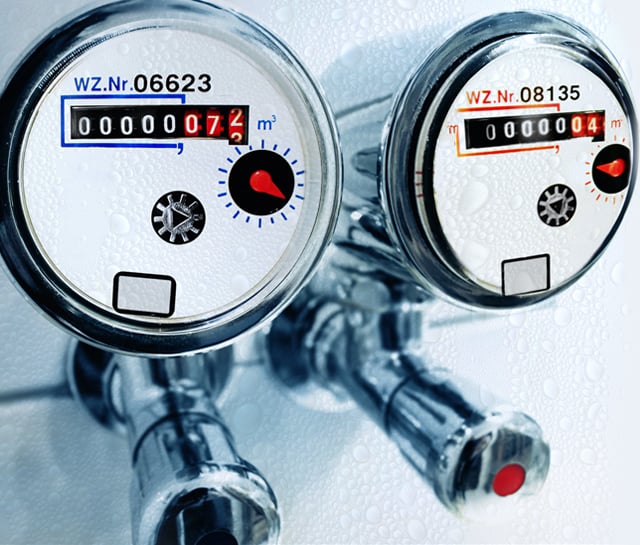
There are only a few household loads that draw significantly more power than most others. These include heating, ventilation, and air conditioning (HVAC) systems, washer-dryers, dishwashing machines, pool pumps, and EV chargers. It is no coincidence that these systems all tend to have their own household circuits.
Historically, homeowners rarely needed to monitor or control specific circuits in their homes; monthly household power bills sufficed. That is beginning to change as various factors compel homeowners to be more aware of their power consumption patterns.
Some stressors are general, such as mounting environmental concerns, while others are specific, such as experiencing rolling brownouts or being surprised by the expense of upgrading a household electrical system to support an EV charger.
Additionally, monthly household power bills are becoming increasingly unpredictable as utilities adopt variable pricing strategies.
To manage rising demand, increasingly severe spikes in demand, and other grid factors that make grid management an ongoing challenge, utilities are adopting pricing strategies designed to smooth out consumption. By charging more for residential electricity during peak hours (for example, in the evening hours after people return home from work) and less during off-peak hours (very late at night and through the early morning), utilities incentivise residential users to delay using their most power-hungry appliances until after peak usage hours.
In response to increasingly severe heatwaves, more people are installing air conditioners (AC) and running them for longer periods. Utilities may increase prices to encourage customers to moderate their AC usage as a way to avoid or mitigate brownouts.
For homeowners, installing smart circuit breakers is one of the only practical mechanisms available to understand their power usage in real time, enabling them to take control of their own power consumption.
Residential market dynamics
The characteristics of the residential smart circuit breaker market vary from one geographical region to another.
In Europe, support for smart homes is growing, particularly for the adoption of decentralised energy systems such as rooftop solar and battery storage, which require compact, smart circuit breakers. This trend dovetails well with smart grid efforts adopted by regional utilities. The data provided by smart homes, including information from smart circuit breakers, is of great use to utilities as they work to manage power loads more effectively.
The embrace of smart grid technology and renewable infrastructure will likely be a key driver of growth in the European market, but there are inhibiting factors. For example, the cost of upgrades and the difficulty of upgrades (including lack of installer familiarity with new smart circuit breaker technologies) will be a factor for some time.
In the United States, meanwhile, public embrace of green technologies is not as strong. Nor can utilities compel the use of smart circuit breakers because residential circuit panels are almost always owned and controlled by the homeowner. The question, then, is: how will the US residential market develop? Will socio-economic factors combine to create mass-market conditions that will make residential a more dynamic market segment?
Utilities clearly have an interest in residential adoption of smart circuit breakers. Currently, the metering accuracy of smart breakers isn’t sufficient for electric utilities to use for billing purposes, although it is close. Improving the accuracy is an achievable near-term goal. Even once this goal is met, however, it is not certain that utilities would need power consumption data at the circuit level for billing. Nonetheless, as noted above, this data can still be extremely useful to power utilities as they try to balance loads on their distribution networks.
US utilities can also adopt pricing strategies to encourage residential customers to alter their usage patterns. Thus far, public response has not been commensurate with utilities’ needs. Some utilities have taken the next step of offering services that allow customers to monitor and even control household systems and appliances – capabilities that justify the installation of smart circuit breakers. With a sufficient subscription rate, this could provide utilities with a powerful tool for grid management, but adoption rates are not yet high enough to move the needle significantly.
It is possible that US utility regulators could step in to encourage smart breaker adoption. The overt mission of regulatory bodies is to ensure that electricity rates remain reasonable for their constituents, and smart circuit breakers have a clear and demonstrable role in supporting that mission.
Home builders could also potentially stimulate the residential smart circuit breaker market. In practice, however, impetus is unlikely to come from this quarter, as smart circuit breakers are more expensive, and home builders are extraordinarily price sensitive. Additionally, as in Europe, installers are generally less familiar with the new smart circuit breakers.
The only other institutional interests that might encourage the use of residential smart circuit breakers are standards bodies involved in home safety regulations. So far, the advantages of smart circuit breakers have not been decisive in terms of home safety.
Conclusion
Growth in the residential sector is likely to be gradual in some markets, and fitful in others – notably the US – until some external factor becomes sufficiently compelling, or until smart versions achieve price parity with electromechanical versions.
Either way, however, there is no question smart circuit breakers are appropriate in residential settings and vital to making homes more energy efficient. As with most advancements, the last word rests with the market forces needed to tip the technology into mass adoption. But the case for smart circuit breakers moving beyond the factory floor and into the home is compelling, and already revolutionising grid infrastructure and monitoring in many countries.
This article originally appeared in the May’26 magazine issue of Electronic Specifier Design – see ES’s Magazine Archives for more featured publications.