





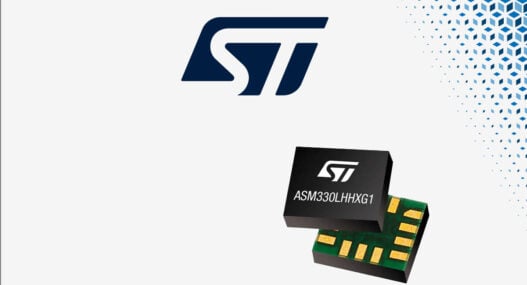
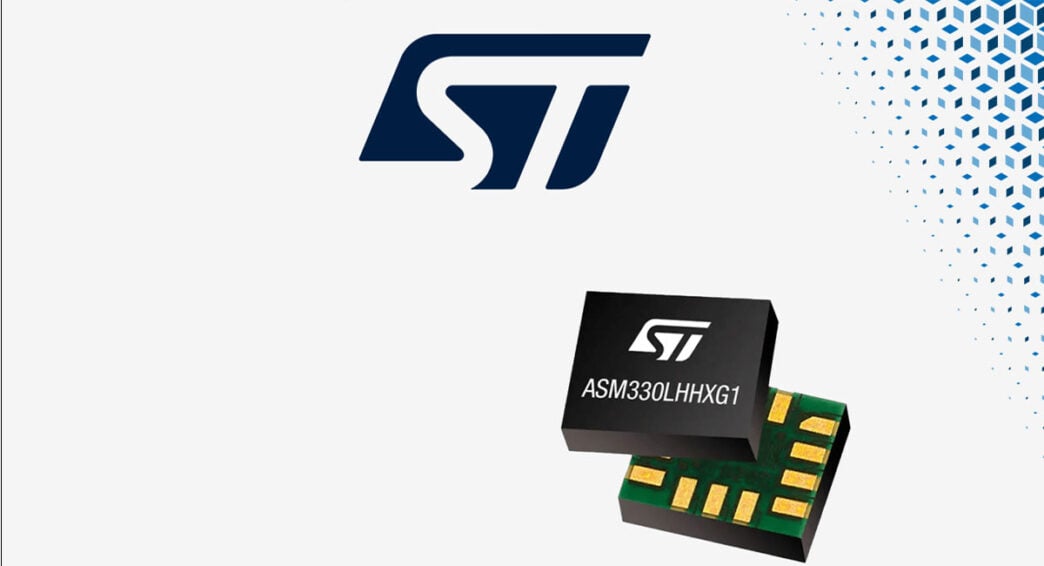
Mouser Electronics is now stocking the ASM330LHHG1 6-axis inertial measurement unit (IMU) from STMicroelectronics. The ASM330LHHG1 sensor features a 3-axis digital gyroscope and a 3-axis digital accelerometer and operates over an extended -40°C to +125°C temperature range. The ASM330LHHG1 provides accurate data for dead reckoning (DR) and non-safety automotive applications, including vehicle-to-everything (V2X), telematics, e-tolling, anti-theft systems, vibration monitoring and compensation, and general motion-activated functions.
The ASM330LHHG1 IMU, now available from Mouser, is AEC-Q100-compliant and industrialised using a dedicated MEMS production flow to meet automotive reliability standards. The ASM330LHHG1 IMU’s sensing elements are manufactured using STMicroelectronics’ proprietary micromachining processes, while its IC interfaces are developed with CMOS technology. All design aspects of the ASM330LHHG1 IMU have been optimised to achieve superior output stability, extremely low noise, and full data synchronisation.
The ASM330LHHG1 IMU features a full-scale acceleration range of ±16g and a wide angular rate range of ±125 to ±4000dps, making it suitable for a variety of automotive applications. With dual operating modes that cover high-performance and low-power system requirements, the ASM330LLHG1 supports flexible utilisation of the vehicle’s power budget. Digital interfaces, including I2C, MIPI I3C, and SPI, ease system integration, while a 3KB built-in FIFO provides buffering to offload the host processor and save power. The ASM330LHHG1 is available in a compact over moulded 14-lead plastic, land grid array (LGA) package and is ECOPACK and RoHS compliant.
The STEVAL-MKI254A adapter board, also available from Mouser, enables easy evaluation of the ASM330LHHG1 IMU. The STEVAL-MKI254A features a pre-mounted ASM330LHHG1, along with the required support circuit. The adapter board is supported by the STEVAL-MKI109D evaluation platform, which includes a high-performance 32-bit microcontroller that serves as a bridge between the sensor and a PC, enabling use of the MEMS Studio graphical user interface or dedicated software routines for customised applications.