






Free Whitepaper
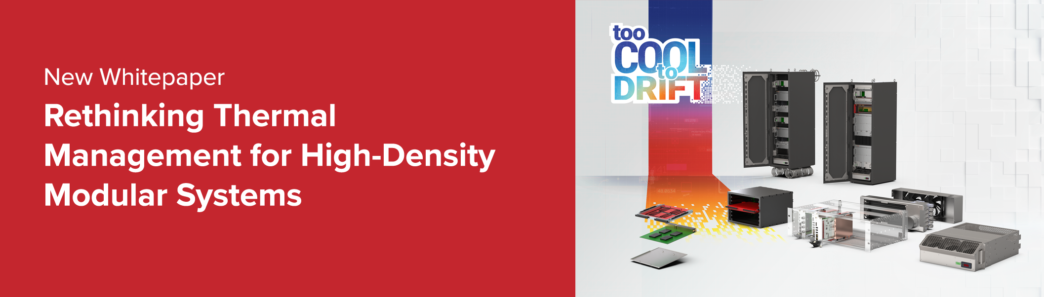
Rethinking thermal management for high-density modular systems
As electronic systems become smaller, more powerful and more densely packed, heat is no longer just a byproduct of performance. Small temperature differences, localised hotspots and uneven airflow can gradually push systems away from their intended operating conditions.
This process, known as thermal drift, may not trigger an immediate alarm or system failure. Instead, it can slowly reduce efficiency, accelerate component degradation, increase maintenance requirements and shorten the operational life of critical equipment.
In collaboration with:

Spot hidden thermal risks before they become failures
Learn how small temperature variations can quietly reduce system performance, reliability and lifespan long before equipment fails.
Build stable, high-performance systems
Discover why consistent thermal control is becoming just as important as cooling capacity in today’s high-density electronic systems.
Explore the future of precision cooling
See how modern air and liquid cooling technologies help improve efficiency, reliability and long-term system performance.
From cooling to control
Traditional thermal management has often focused on maximum temperatures and overall heat-removal capacity. However, a system may dissipate heat effectively and still experience inconsistent temperatures across individual components.
nVent SCHROFF’s approach focuses on:
- Targeted heat removal at the source
- Controlled airflow paths
- Reduced temperature gradients
- Scalable air and liquid cooling integration
Together, these approaches help engineers create more predictable thermal behaviour under changing workloads and real-world operating conditions.
Are your systems too cool to drift?
Download the whitepaper to explore the engineering principles behind more stable, reliable and resilient high-density electronic systems.