


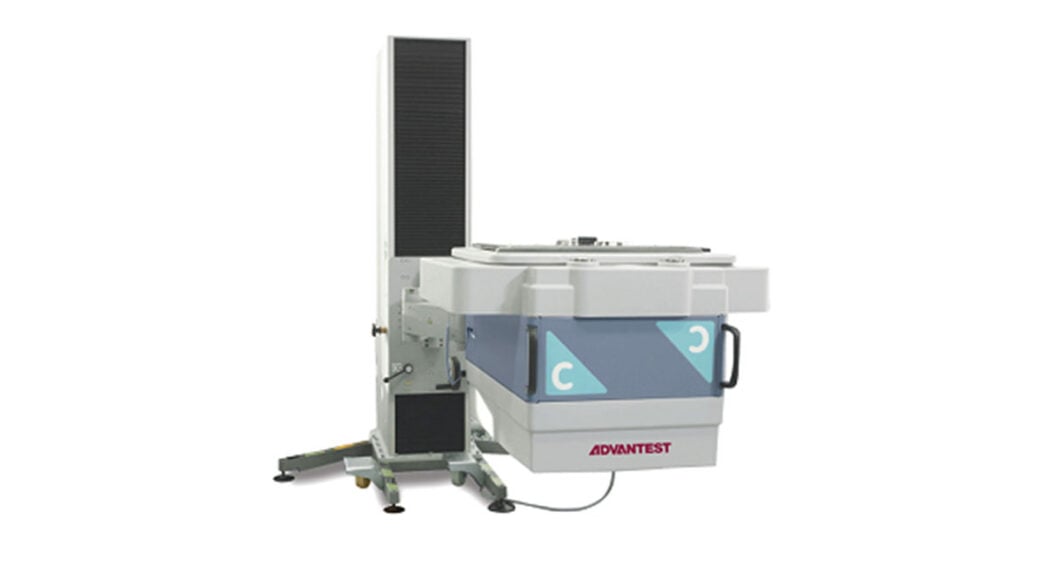
Advantest is showcasing the integration of AllianceATE’s flagship Velocity software platform with Advantest’s V93000 SoC test system at the VOICE 2026 Developer’s Conference in Scottsdale, Arizona on the 18-20th May 2026.
Since Advantest’s acquisition of AllianceATE in September 2025, the two teams have been working closely to strategically integrate AllianceATE’s software capabilities into the V93000’s software ecosystem. This effort demonstrates a long-term strategy to ensure a seamless customer experience.
Velocity, AllianceATE’s flagship electronic design automation (EDA) platform, is a best-in-class solution for design-to-test automation. For many customers, converting test programs from design sources requires weeks of developing custom code and tools. Velocity is specifically designed for Advantest’s V93000 SoC test platform to enable massive, parallel processing for streaming design files directly into Advantest testers, leveraging Velocity’s REPLAY technology to generate “first-time-right” test patterns. This allows for faster validation and deployment driven by design data.
By combining the V93000 SoC test platform with Velocity’s automation and REPLAY-enabled validation capabilities, Advantest delivers a solution purposely optimised for the scale, complexity, and pace of modern artificial intelligence (AI) and high-performance compute (HPC) devices.
Advantest Group CEO and Representative Director Doug Lefever commented: “The success of last year’s acquisition reflects over 20 years of collaboration, positioning AllianceATE’s EDA tools as a natural fit for Advantest’s leading test solutions. Coupling these EDA capabilities with our leading product portfolio will further streamline the semiconductor development lifecycle for our customers, with greater integration between design and test organisations. Velocity enables true design-to-test convergence, allowing our customers to shift quality and validation earlier than ever before while unlocking new levels of automation, efficiency, and scalability.”
Arm, a long-time user of Velocity, underscored the value of this integration. “As AI and advanced compute systems grow more complex, the need for more efficient design-to-test workflows is critical across the industry,” said Raghudhar Maddali, Senior Director of Product and Test, Arm. “Our collaboration with Advantest to integrate Velocity with the V93000 platform simplifies how teams generate and validate test content, improving efficiency across the development process.”
AllianceATE will showcase these enhanced capabilities at VOICE 2026. As part of the Technology Kiosk showcase on Monday and Wednesday, AllianceATE will host an interactive kiosk demonstrating how Velocity enables advanced design flows for the AI era. As Advantest’s premier user conference, which welcomed over 300 attendees last year, VOICE provides a valuable platform to engage with key users, demonstrate innovation, and foster meaningful industry connections.