






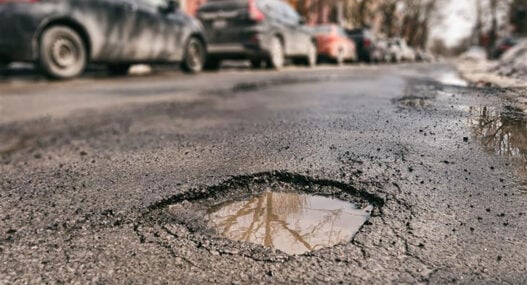
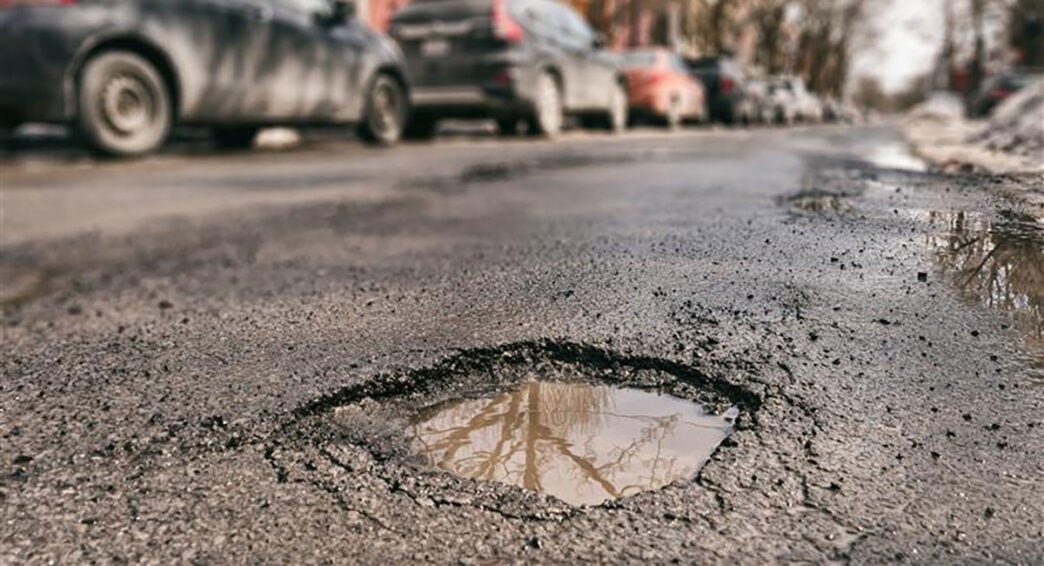
Hands up if you’re fed up with seeing those white chalk marks around a pothole that have been there for ages. And hands up if you know that if your car is damaged because of a pothole, there’s very little you can do about it except pay for the repairs and hope the hole gets fixed sometime within the same year.
Potholes are a huge deal in the UK. It is estimated that there are more than a million of them on our roads, and in January 2026 alone, the AA responded to almost 69,000 call-outs related to pothole damage. That is not a typo. 69,000.
Why are UK roads so bad?
The problem boils down to a trio of factors: weather, traffic, and ageing infrastructure. Together, they are not only causing concern for the safety of drivers, who either have to swerve to avoid a big hole or have no option but to plough right through. It is also costing those drivers more than £645 million a year in vehicle repairs.
The reason these holes appear is that the surface of the road develops tiny cracks, and through these cracks, water makes its way in. In cold weather, that water freezes, expands, and widens the crack. This weakened structure is further exacerbated by traffic, which turns these cracks into holes. Snow, although less common, also has a lot to answer for, particularly when heavy lorries spin their wheels trying to gain traction, tearing up the tarmac in the process. Not only this, but the weight from large vehicles is considerably more than that of a car and puts far more strain on road surfaces. Electric vehicles are also notably heavier than their petrol and diesel counterparts, and are likely adding to the problem, though exactly how much remains to be properly quantified.
How much will it cost to fix?
The UK government has set aside £1.6 billion to tackle the pothole problem, which sounds significant until you learn that bringing roads in England and Wales up to an acceptable standard is estimated to cost £16.8 billion. In other words, the funding falls roughly £15 billion short. Clearly, we can’t spend our way out of this, so what we need are smarter solutions.
The technologies taking on the pothole problem
We can’t do much about the traffic on the roads, and we can do even less about the weather, but the ageing infrastructure – that’s where engineers, scientists, and tech companies on both sides of the Atlantic are working on innovations that could change how roads are built, monitored, and repaired.
With that in mind, let’s take a peek at some pothole prevention.
Self-healing road materials
One of the most exciting developments is the creation of road surfaces that can, essentially, repair themselves. Researchers are developing new types of asphalt made from biomass waste, an organic material that would otherwise go unused. This material has the ability to mend its own cracks without any human intervention.
The science involves engineering the material at a molecular level so that when cracks form, the components within the asphalt are activated, either by heat, moisture, or other environmental triggers, and then they work to “stitch” the surface back together. Artificial intelligence is also being incorporated into the design process, helping to optimise the material’s composition and predict how it will behave over time.
If successfully scaled, self-healing roads could dramatically reduce the frequency of maintenance cycles, lower long-term repair costs, and improve road safety by preventing cracks from ever developing into full potholes in the first place. Wouldn’t that be nice!
AI-powered detection and autonomous repair
Another big area of development involves using artificial intelligence and robotics to catch damage before it becomes a problem. Autonomous systems that can travel along road surfaces are being designed and tested. Using imaging technology, they aim to identify and assess cracks and then carry out immediate repairs on the spot, hopefully sealing them at an early stage so they don’t have the chance to worsen. The result, in theory, is safer roads, faster turnaround, and a big reduction in repair costs.
Several trials of this kind of technology are already underway in the UK, with local councils beginning to explore how autonomous detection tools can be integrated into road maintenance programmes.
Data sharing and connected infrastructure
But what about another way of looking at things? What if the vehicles already on our roads could continuously collect data about road conditions and feed that information directly to the people responsible for fixing them?
This is the idea behind data-sharing platforms that link fleets of vehicles, including autonomous cars, with city and government infrastructure. Rather than waiting for potholes to be reported by frustrated drivers, road maintenance teams could receive real-time information about where damage is forming, how severe it is, and which areas need urgent attention.
In the US, this kind of programme is already being piloted, with autonomous vehicle operator Waymo partnering with navigation platform Waze to share pothole data with city authorities. Sadly, the UK’s pothole problem is arguably more acute than America’s. Our infrastructure is older for a start, and we are prone to some lovely and persistently damp weather, and whilst we have similar approaches here, they are focussed on local council trials as opposed to a nationwide approach.
So why aren’t our roads fixed yet?
With all this technology hitting the headlines with aplomb, the question remains. Why aren’t our roads fixed yet?
As with anything, scaling innovation takes time. Moving from a successful pilot to nationwide deployment involves funding decisions, procurement processes, regulatory approvals, and cultural shifts in how local authorities approach road maintenance.
But between self-healing materials, autonomous repair systems, and intelligent data networks, the tools to tackle the pothole crisis are closer than they have ever been. Whether they can start to be deployed at scale before another million holes open up across the UK remains to be seen. But at least we know there are people out there, trying to solve this problem using the latest technology.