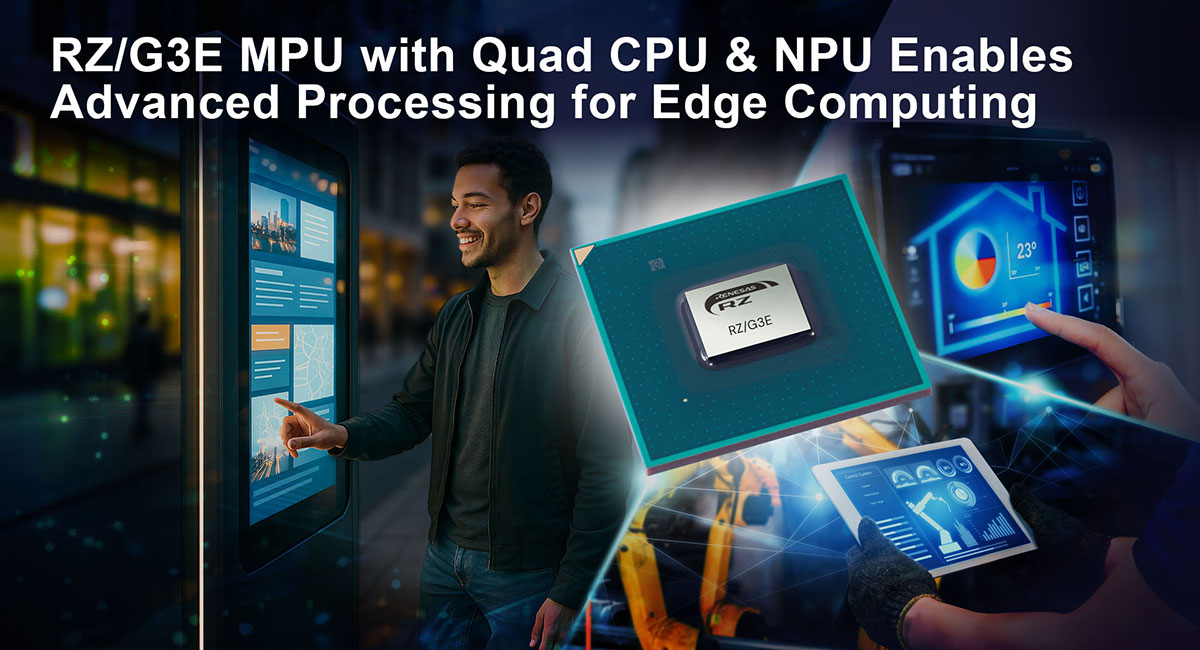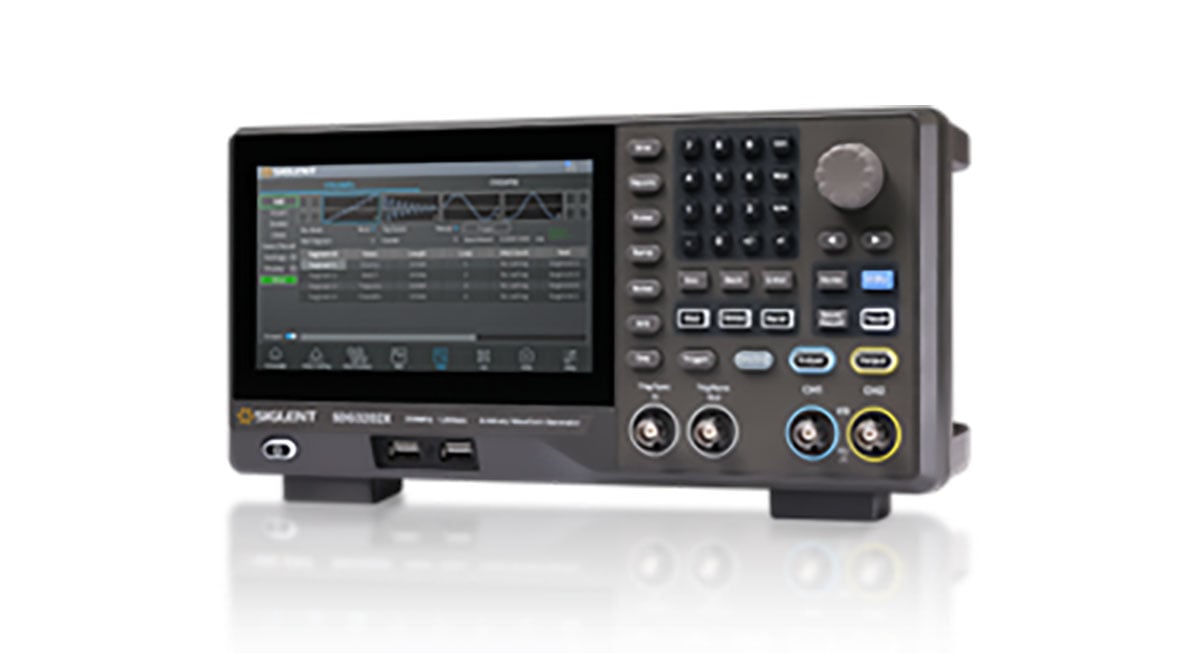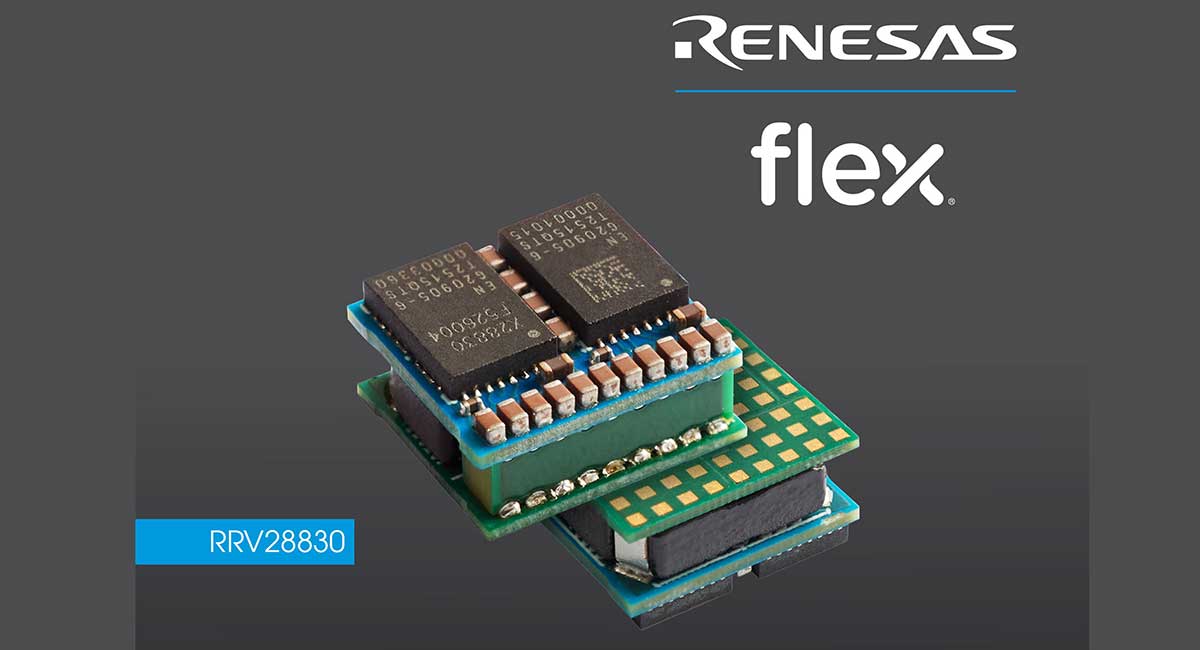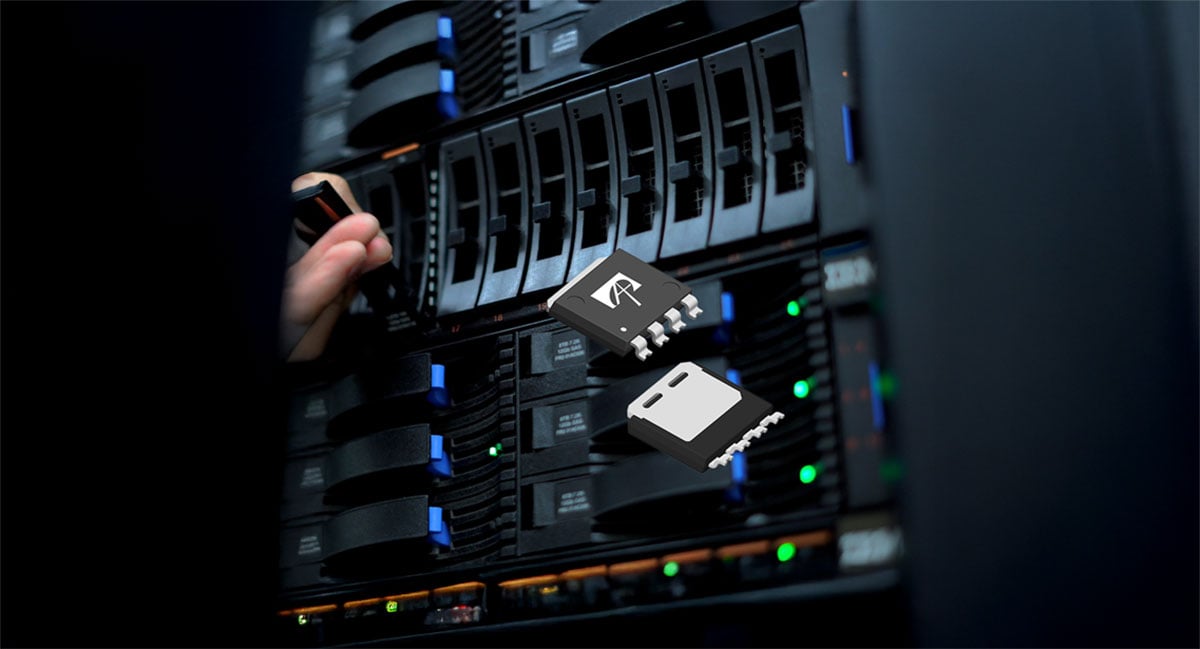





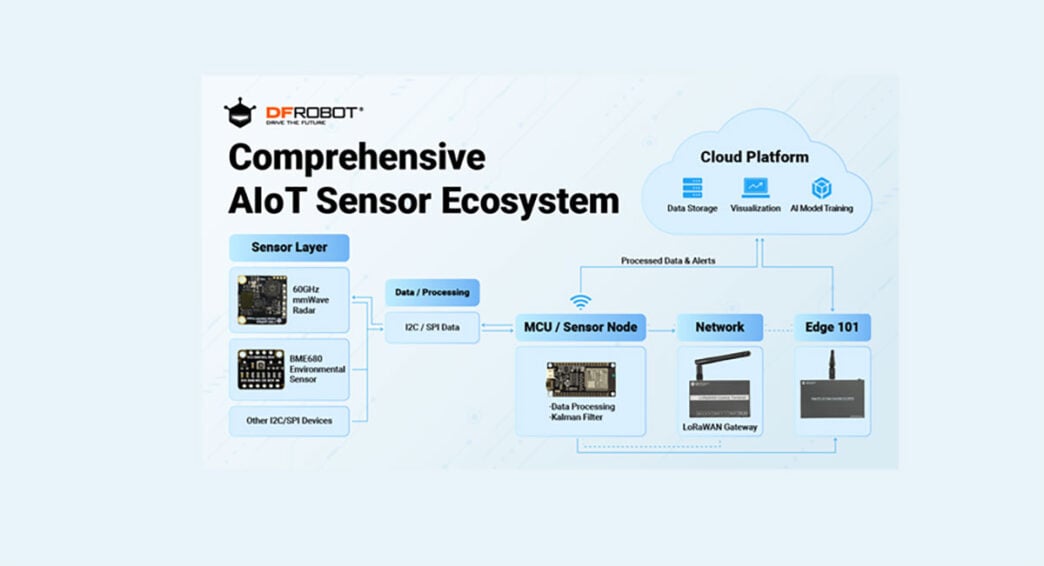
The convergence of advanced sensors and AI models enables smart factories to process data at the Edge, optimising real-time decision-making and drastically reducing operational latency.
Introduction
In today’s industrial systems, the challenge is no longer collecting data, but using it efficiently. Multiple sensors, incompatible protocols, and reliance on Cloud processing often lead to complex integration and high latency – limiting responsiveness in applications like smart factories and industrial automation.
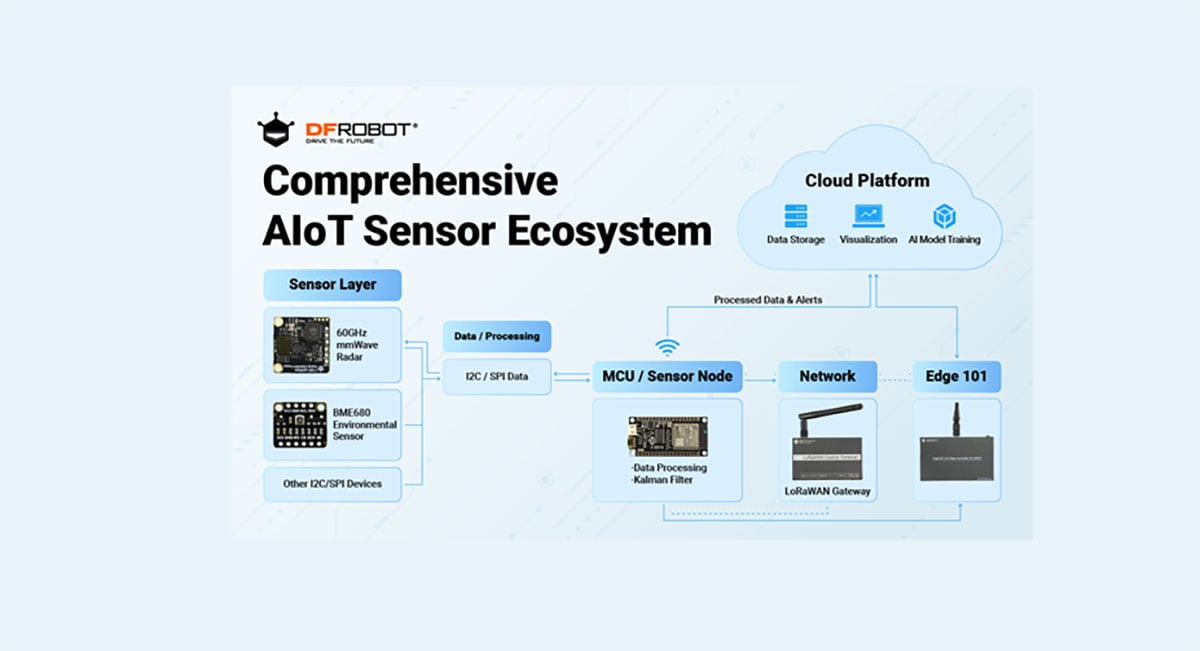
A more effective approach is to unify the system architecture. By bringing together data from 60GHz mmWave radar and environmental sensors into a common data layer, and processing it at the Edge, systems can operate with lower latency and greater efficiency. Edge nodes (e.g., Edge 101) enable local filtering, protocol conversion, and basic AI inference, while LoRaWAN supports scalable, low-power connectivity. This allows distributed sensors to work as a coordinated system, enabling faster and more reliable real-time decisions.
Multimodal data fusion into a unified architecture
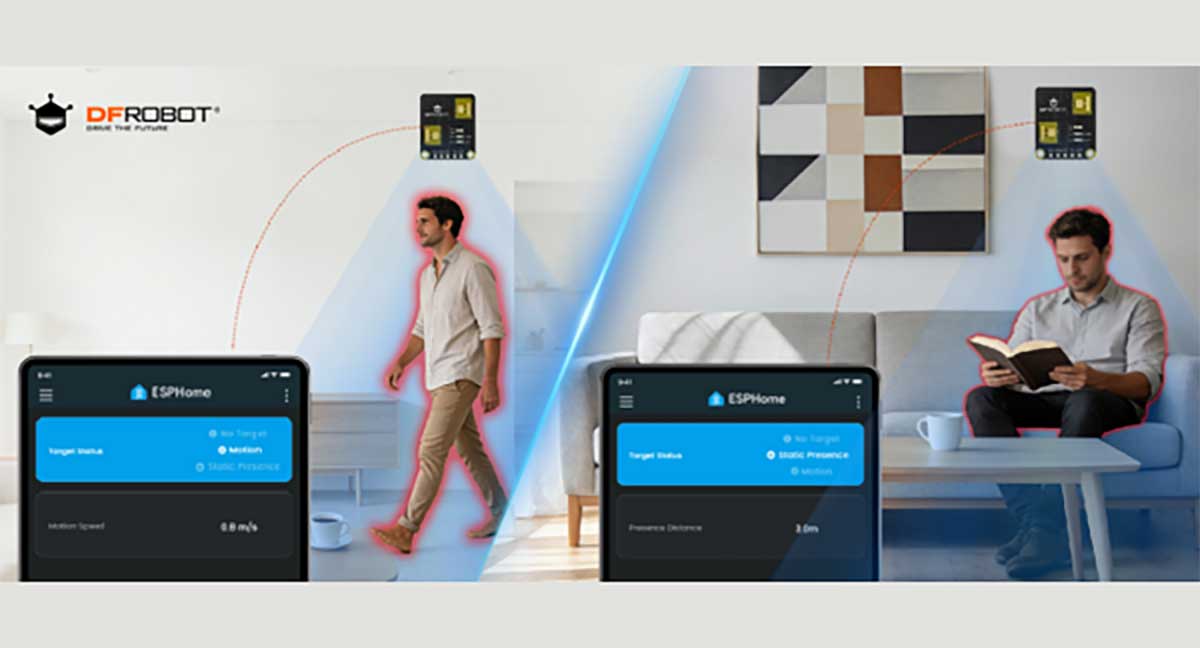
The potential of an industrial AIoT ecosystem is unlocked by fusing data at the communication bus (I2C/SPI) level. By integrating DFRobot’s 60GHz mmWave radar – capable of detecting micron-scale displacements in a robotic arm – with its Gravity: BME680 gas sensors, engineers gain a real-time operational map. The technical challenge is not just the physical connection, but synchronising signals with conflicting sampling rates: while the radar generates megabit-per-second bursts to detect micro-vibrations, environmental sensors may only transmit a few bytes per minute.
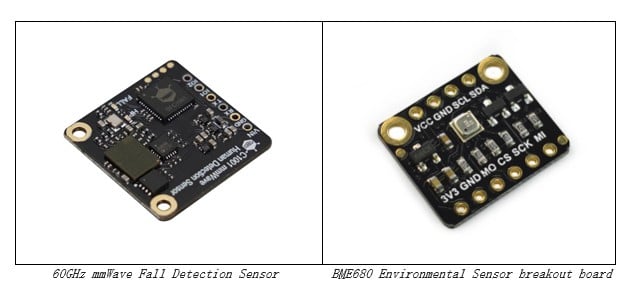
To solve this, the architecture must move away from independent polling loops. Instead, engineers implement a shared circular memory buffer where temperature and pressure readings act as ‘steady-state’ metadata. The mmWave radar is configured to trigger hardware interrupts (GPIO IRQ) that wake the processor only for critical events. This integration allows for running Kalman Filters directly on the microcontroller to cross-reference telemetry: if the radar detects a structural vibration but the pressure sensors report no leak, the system discards the false positive before the Gateway saturates the plant’s bandwidth.
Implementing Edge 101 as the integration layer for industrial AIoT
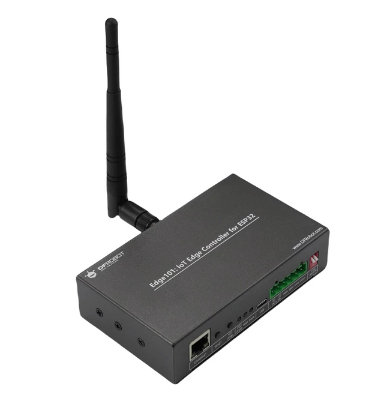
In an industrial AIoT ecosystem, the Edge is not merely a pass-through point but a critical normalisation layer. Platforms like DFRobot’s Edge 101 act as the orchestration node, providing the necessary compute power to run TinyML models locally while managing heterogeneous data streams through a unified interface. Consequently, only processed metadata or critical alerts are sent to the Cloud, optimising bandwidth for LoRaWAN or NB-IoT networks.
Beyond analytics, the Edge layer serves as the control plane for both data processing and large-scale fleet management. Leveraging Docker containers or lightweight microservices, engineers can deploy OTA (Over-the-Air) firmware updates and manage security provisioning through TPM 2.0 chips embedded in the Edge hardware. In real-world applications – such as data centre thermal monitoring or automotive assembly lines – this architecture ensures that control logic (e.g., an emergency motor shutdown) remains independent of Cloud latency, maintaining system determinism even if the backhaul connection fails.
Leveraging LoRaWAN for long-range, low-power connectivity
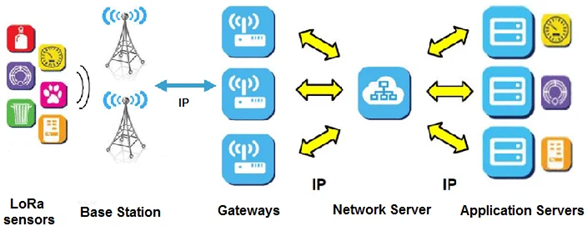
Unlike 2.4GHz technologies that suffer from high attenuation in metallic structures, LoRaWAN operates in sub-GHz bands (such as 915MHz in North America or 868MHz in Europe), allowing for exceptional penetration in industrial basements or water treatment plants with multiple obstructions. In mining asset monitoring or precision agriculture deployments, a single gateway can receive signals from soil moisture sensors or tank level meters located over 15km away in line-of-sight (LoS), effectively eliminating the need for costly repeaters or structured cabling.
The true advantage of LoRaWAN lies in its ability to manage thousands of end-nodes using an Adaptive Data Rate (ADR) scheme. By utilising different Spreading Factors (SF), the network minimises packet collisions, enabling smart parking sensors or ANSI C12.20 energy meters to transmit short data bursts without saturating the spectrum. This architecture, combined with end-to-end AES-128 bit encryption, allows developers to cost-effectively scale from ten to ten thousand devices while maintaining a battery life of up to 10 years on nodes powered by lithium thionyl chloride (Li-SOCl2) cells.
Reducing integration complexity with system-level design
A system-level approach replaces fragmented integration with a cohesive workflow spanning from silicon to the end-user application. Instead of isolating the debugging of LoRaWAN node firmware only to later encounter latency issues at the network server, engineers leverage unified development environments that integrate DFRobot’s pre-validated sensor libraries and native cloud connectors. By utilising advanced PDKs (Process Development Kits) and digital twin simulation models, it is possible to predict the power consumption of a vibration sensor on a conveyor belt before manufacturing the first unit, drastically reducing physical prototyping iterations.
Real-world implementation is accelerated by using reference architectures and technical ‘building blocks’, such as Docker containers at the Edge or TPM 2.0 security modules. For instance, in deploying a smart street lighting network, a system-level approach allows for the reuse of proven AES-128 encryption schemes and Class C device profiles, avoiding the re-engineering of core communication protocols. This modularity not only shortens time-to-market in critical sectors like automotive and energy but also ensures the system remains scalable and maintainable, enabling a solution to transition from a Proof of Concept (PoC) to high-volume production in months rather than years.
Conclusion
Orchestrating the future of industrial intelligence requires the transition from fragmented sensor deployments to a unified AIoT ecosystem. By integrating high-performance hardware – such as 60GHz mmWave radar – with an orchestration-ready Edge layer like Edge 101 – developers can finally bridge the gap between raw telemetry and actionable intelligence.
This system-level approach does more than just reduce latency or optimise LoRaWAN bandwidth; it creates a robust, deterministic architecture capable of autonomous decision-making in the most demanding environments. Whether it is reducing specific on-resistance in power stages or deploying TinyML models via Docker containers, the goal remains the same: eliminating integration silos to accelerate the path from silicon to a scalable, market-ready solution. In an era where efficiency defines competitiveness, leveraging DFRobot’s pre-qualified process blocks and standardised communication protocols is no longer just an advantage – it is the blueprint for the next generation of industrial automation.