



Engineering used to move in seasons, with requirements one quarter, schematics the next, and boards and firmware last. Today, things accelerate more quickly. New ideas can move from the whiteboard to a working proof-of-concept in days, sometimes hours.
By removing silos and barriers, today’s innovation landscape is fundamentally different. The fusing of rapid prototyping practices with AI-assisted workflows that shorten the distance between idea and implementation, along with more cost-effective ways to work have accelerated development. The result is a new operating model for innovation with iteration speed as the differentiator, where the best teams design their processes to learn faster than the problem evolves.
The new era of rapid prototyping
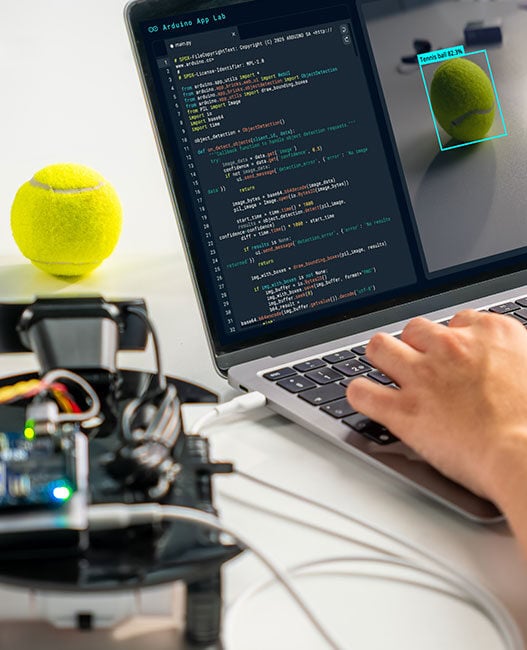
For decades, access was the gatekeeper. Specialised tools, expensive licenses, and limited supply chains made electronics prototyping only accessible through well-funded labs. That’s no longer the case. Open-source software and pre-developed code through companies like Arduino and Raspberry Pi have turned prototyping into something any resourceful designer can do. Low-cost boards and community-backed ecosystems mean engineers and makers rarely start from zero; they begin at ‘step five’, building atop proven libraries, reference designs, and demo projects.
Speed has become the competitive advantage. In markets where requirements shift with every software release and hardware cycle, slow development time is a strategic risk. Whether you’re troubleshooting a sensor fusion stack or exploring a novel radio architecture, the ability to assemble a prototype quickly and make necessary adjustments determines how soon you discover what works and what doesn’t. Modular hardware, Cloud-based IDEs and plug-and-play stacks for connectivity and data handling make that possible. The payoff is not just faster time-to-prototype; it’s faster time-to-decision.
How AI is fuelling the prototyping revolution
AI is now the fabric of day-to-day engineering practice. The most visible impact is at the code-and-debug layer, where AI can surface logic gaps, refactor functions, propose test scaffolds, and pinpoint the one misconfigured register that evaded three rounds of code reviews. Tasks that once consumed afternoons, such as tracing a compile error across unfamiliar libraries, translating pseudocode into a working driver, or generating boilerplate for a new microcontroller, are now shrinking to minutes.
However, the real value here isn’t just speed; it’s scope. AI broadens the space of designs that a small team can explore. Instead of narrowing the scope early because “we don’t have time to test that approach,” teams can ask AI to sketch multiple architectures, compare trade-offs and generate candidate implementations to trial in simulation before the first board order. This is where prompt engineering emerges as a genuine skill. The quality of results depends on how precisely you describe constraints, define interfaces and encode assumptions. In effect, engineers are increasingly designing both systems and the queries that create them.
Unlocking access in the world of engineering
Unlocking access to engineering tools and information has opened up countless possibilities. When the barrier to entry falls, participation rises, along with the pace of collective learning. Open tutorials and maker-friendly documentation turn domain mysteries into repeatable recipes. Community forums like DigiKey’s TechForum compress troubleshooting cycles by connecting people who have already solved the problem you’re seeing with those encountering it for the first time. That matters in practice: sharing not only finished code and schematics but also “what didn’t work and why” is often what unblocks the next team.
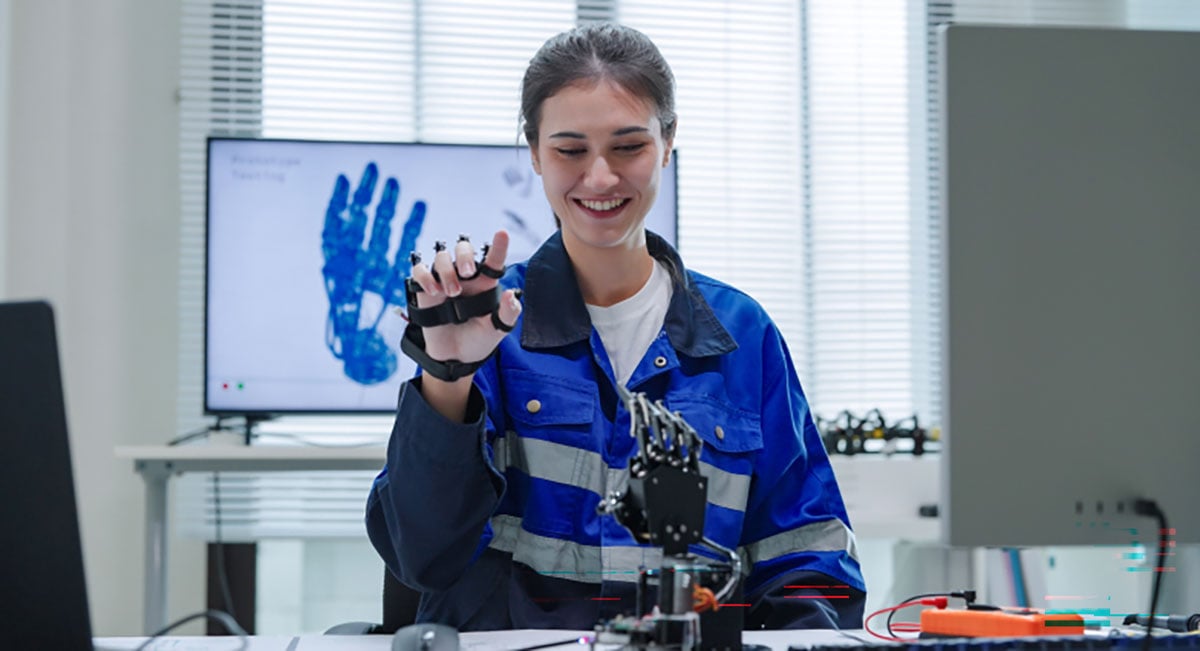
This community dynamic is equally transformative in education. Simulators teach principles and hardware teaches persistence, intuition, and the joy of that first success. Put a programmable robot or a simple microcontroller kit in a student’s hands, and you watch curiosity become confidence. With affordable kits and guided curricula, educators can move beyond passive instruction to active making. Learners see cause-and-effect in real time and connect abstract concepts to tangible outcomes. The pipeline effect is significant: more students see themselves as builders earlier, and more of them carry that mindset into advanced programs and industry roles.
The future: wireless, autonomous, and instrumented
Look a decade ahead and three trends in rapid prototyping come to mind. First, wireless will be an expectation. Whether consumer, industrial, or scientific, most prototypes assume connectivity and Edge intelligence from day one. Second, autonomy as a design target. Systems are increasingly expected to perceive, decide, and act with minimal human intervention, which pushes requirements for sensing, local computation, and robust failure handling. Third, instrumentation will be prevalent. As prototypes become complex systems, observability like structured logging, telemetry, and health monitoring will help understand behaviour under real conditions.
AI will aid development across all three trends. Expect toolchains that not only generate firmware but also suggest optimal sensor placements, synthesise synthetic datasets for Edge models, flag abnormal power signatures during development, and propose board revisions based on field behaviour. Before hardware exists, richer, AI-augmented simulations can catch integration issues early. After hardware ships, AI will mine operational data to predict failures and recommend updates. The engineering loop doesn’t end at release; it becomes an ongoing, data-driven dialogue with the product in the wild.
Practical advice for teams building now
Treat failure as an element of your process, not a flaw. The velocity of learning is your true metric, and each non-working attempt is information that brings you closer to a successful result. You can learn 100 ways how something doesn’t work on your way to learning how it does. Capture those lessons explicitly – in brief post-mortems, annotated comments, and shared forum posts – so the next iteration (and the next teammate) benefits.
Use the community. Ask questions early and contribute answers when you can. The fastest path through a driver issue or obscure toolchain behavior is often a conversation with someone who has been there. Likewise, publish your references and partial solutions to help accelerate the next generation of advancement.
Lean into AI as a partner. Automate the tedious and amplify the exploratory. Build prompt libraries tied to your codebase and architecture patterns. Set guardrails through style guides, test harnesses, linting and CI, so that speed never compromises quality. As AI-generated code enters your collection, your verification discipline becomes more, not less, important.
Finally, cultivate a beta mindset. New toolchains, updated firmware, and emerging modules won’t always behave on day one, but that’s where insights live. Teams that adopt early, test responsibly and share what they learn help shape the tools they depend on, often gaining an edge in capability and influence.
A future built by those who learn fastest
Rapid prototyping, energised by AI, is more than a way to build faster; it’s a way to work. It privileges curiosity over certainty, feedback over assumptions, and collaboration over isolation. As hardware, software, and data converge, the teams that thrive will be those who design for acceleration: compressing cycles, instrumenting everything and turning every result, success or otherwise, into forward motion. The future of engineering belongs to the organizations that learn the fastest. With modern prototyping practices and AI woven into the workflow, that future is within reach.
About the author:

Kevin Walseth is a Manager, Technical Marketing for DigiKey, the global leader and continuous innovator in the cutting-edge commerce distribution of electronic components and automation products worldwide. DigiKey provides more than 17.5 million components from nearly 3,000 quality name-brand manufacturers.