

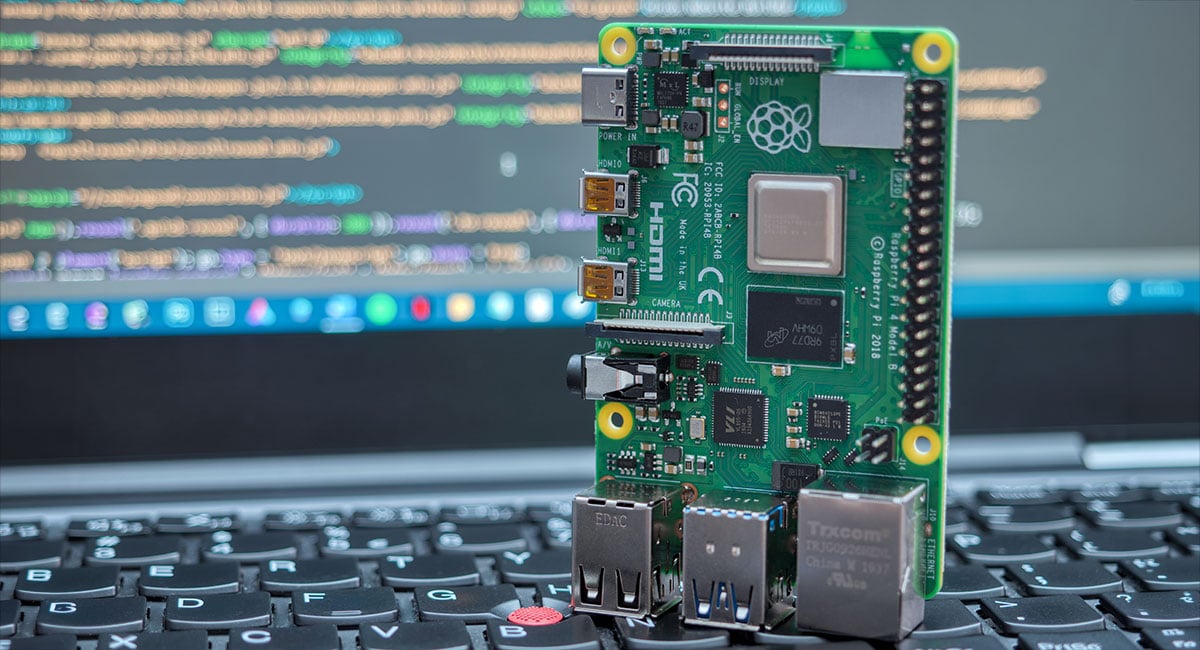
In its latest financial report, Raspberry Pi has reported a revenue growth of 25% taking it to $323.2 million.
Total units shipped rose 9% to 7.6 million, with H2 stronger than H1 (4.0M vs 3.6M). Notably, for the first time semiconductor device volumes exceeded boards and modules, with 8.4 million semiconductor units sold – a sign of the business maturing beyond hobbyist hardware.
Gross margin held steady at 24.1% (vs 24.4%), a solid result given rising DRAM costs, which the company managed through supplier diversification, pricing adjustments, and inventory buffers.
Fewer product launches, but strategic focus
Only 13 products launched vs 22 in 2024, reflecting a more deliberate approach. The post-period launch of AI HAT+2 adds the ability to run LLMs and vision-language models, pointing toward an AI Edge computing push.
Raspberry Pi Connect finished the year with nearly 400,000 connected devices, with over-the-air update capability added in Q4 – a key feature for OEM customers.
Cautious but confident outlook
Strong momentum has continued into early 2026. DRAM cost pressures are expected to persist, limiting H2 visibility, but the company says full-year profitability will be in line with market estimates and revenue will be “materially higher.”
Eben Upton, CEO of Raspberry Pi said: “2025 was a year of strong execution for Raspberry Pi, with accelerating demand across our global markets and adjusted EBITDA ahead of expectations. We also passed an important milestone as semiconductor shipments exceeded those of our boards and modules for the first time, reflecting our progress towards a two-franchise business.
“Our performance in FY 2025 amid DRAM inflation speaks to the strength and agility of our supply chain and the resilience of our operations. Our team has delivered new products, strengthened our software platforms, and broadened our reach across industrial and embedded markets globally.
“We have entered FY 2026 with strong momentum, underpinned by growing demand and continued progress in direct customer engagements. Combined with strategic hiring, rapid uptake of new products, and a channel whose capabilities are well aligned with the opportunities ahead, I am more confident than ever in our long-term growth trajectory.”
Alex Pugh, Analyst, Freetrade, said: “Raspberry Pi beat on profitability, grew volumes, and kept momentum up through the second half. The firm’s flagship single-board computer is increasingly helping to make the world go round, finding a place in everything from industrial automation to digital signage.
“What’s interesting is the business is starting to look broader and more industrial. Semiconductor shipments overtaking boards and modules for the first time is a meaningful milestone. Raspberry Pi’s are moving out of garages and workshops into elevators, moving walkways, industrial control and automation, digital signage, smart buildings, and energy management.
“The firm is graduating from maker culture and hobbyist fan fave to something more mature: a business with growing semiconductor scale, stronger OEM and Authorised Reseller demand, and a wider commercial footprint.”
What next?
Pugh continues: “There is plenty to like in the rear-view mirror: revenue, EBITDA, profit before tax and shipments all moved higher. But the line that may unsettle investors is the one on outlook. It’s all about margins. Management says strong sales momentum has carried into 2026 and that full-year revenue should be materially higher, but profitability is only expected to be in line with market estimates.
“Growth is still there, but DRAM inflation – Dynamic Random Access Memory (DRAM) chips, driven up by overwhelming demand from AI – and cloudy second-half visibility remain the key things investors will worry about. The firm says it has managed DRAM pressure through supplier diversification, pricing adjustments and substantial inventory buffers.
“More revenue is good. But if profit only tracks in line, the obvious question is how much of that extra growth gets absorbed by memory costs or pricing pressure.”