



This article originally appeared in the July ’22 magazine issue of Electronic Specifier Design – see ES’s Magazine Archives for more featured publications.
Sam Holland covers the ratios of female-to-male employees in various STEM-friendly industries – and asks why engineering has the widest gender gap of them all.
While it is clear that statistics can be arbitrary and misleading, it is important that the said ‘common knowledge’ – namely that there are far more male engineers than their female equivalents – can be quantified. This brings me to the question of what people may mean when considering something to this effect:
‘There are not enough female engineers – but there are so many who are men.’
This is certainly a valid concern, but again, it needs to be quantified before a criteria can be established to define such an issue. To provide more specificity to the above emboldened terms – ‘not enough’, and ‘so many’ – I’ll now quote from Engineering UK’s recent news report: “New research … has shown that 16.5% [emphasis added] of those working in engineering are female, compared to 10.5% as reported in 2010.”
This draws on some key points: there is, at least, some rather encouraging news that – from the last decade to this decade – 2022 has seen the female engineering workforce increase by over 6%. But we are nevertheless left with the far less encouraging claim of there being ‘not enough’ (16.5%) women in engineering in contrast to the ‘so many’ (83.5%) men in the industry.
The problem is, as with so many statistical arguments, that all of this information may be arbitrary without first asking the definitive questions. I believe that such questions, in this case, are as follows:
- How do other industries fare when you consider the ratio of men to women who are working in them?
- What factors have determined such a stark gender disparity in engineering, and to what extent (if any) can those factors inform the reason for an over 6% increase in the female engineering workforce over the last decade?
- Having considered the above two questions, are there even enough UK engineers – regardless of their gender – in the first place?
To approach the first question, I chose a professional field that, like engineering, calls for a strong understanding of any combination of the qualities that fall under STEM (science, technology, engineering, and mathematics): the medical industry. To my surprise, a search online led to Statista’s figures that show, in mid-2020 (when there were 300,000 registered UK doctors) the female-to-male ratio of those medical professionals was 36:64.
While that is far from a 50/50 split, it is certainly promising as it is close to a relatively well-balanced 40/60 divide. Plus, doing a search for another undersubscribed industry, namely education, leads to the reverse effect: female teachers heavily outnumber their male counterparts at approximately 76:24.
Again, this is encouraging, but it still highlights just how large the gender gap is in engineering. And this begs my second question introduced above: what factors have determined such astark gender disparity in engineering? The gender statistics of the medical and education industries reflect that female interest in three out of the four entries in the field of STEM are thankfully in no short supply. But engineering remains the sticking point.

There are of course an impossible number of factors that have made this gender gap a reality, but I reiterate my view that ultimately women are perfectly interested in gaining skill sets relevant to engineering. The problem, instead, may be down to the UK’s perception of engineering itself. As Engineer Diane Boon writes in the IET (Institution of Engineering and Technology): “It’s not that women don’t think they can be engineers … Perception of ability isn’t the problem. Perception of engineering as a desirable career, however, is certainly in play.”
Nevertheless, the gradual closing of the engineering gender gap suggests that the appeal of the industry is increasing with time: as covered earlier, there has been a 6% increase in female engineers since 2010, and there certainly isn’t a shortage of the female STEM talent that may well continue to close the gender gap further still. Again, there are an impossible number of factors that cause the ebb and flow found in any statistics, but I don’t find this 6% statistic an arbitrary one: I largely put it down to an increase (for both women and men alike) in the long-awaited acceptance of engineering as an attractive career prospect in the UK.
At the time of writing, Women in Engineering Day took place just six days ago, at which time it was a joy at Electronic Specifier to see the boom of both in-house and contributed ‘Women in Tech‘ stories of women’s engineering accomplishments. This celebration of the industry is of course helping, but I’m now going to consider the gender gap a secondary problem.
So, what about the skills gap itself? Earlier I asked my third and final question: ‘Are there even enough UK engineers – regardless of their gender – in the first place?’ This has a far less ambiguous answer: engineering is vital to the point that we may never have enough engineers – regardless of whether they’re male or female.
This brings me back to the earlier statement of ‘common knowledge’:
‘There are not enough female engineers – but there are so many who are men.’
My answer to both my final question, and this above statement, is presented with my own statement:
‘There are not enough engineers – but there are so many men and women who are both interested in having, and already equipped with, all the right STEM talents to close that engineering skills gap.’
As an editor of this engineering publication, I receive plenty of engineering news stories every day that show how exciting the industry really is. I think that continuing to publicly celebrate and promote industry accomplishments is vital to closing both the gender gap and the very skills gap itself.
The Women in Tech column

Like (CEO) mother, like (CEO) daughter…
AND Technology’s CEO, Nicola Thorn, shared her experience of growing her consultancy which focuses on product development in the IoT. Nicola was joined by her mother Valerie Lynch, who is the founder of AND Technology. Diverging from traditional companies that use the patriarchal suffix ‘& Sons’, Beatrice O’Flaherty offers a refreshing account of this female-led...
Growth of women in the field of technology
The digitalisation of workspaces is prompting more women to join tech companies. In addition, the growing demand for pursuing STEM courses in developing countries has generated a plethora of opportunities for women at tech companies. Aditi Basu, Marketing Head at Future Market Insights, discusses the rising dominance of women in tech roles.
A rising star within the field of technology
Tulika Agarwal, Assistant Manager at KPMG, recently won the Rising Star Award at the everywoman in Technology Awards. Electronic Specifier’s Paige West spoke to Tulika about her career and the work she is doing to encourage young girls into the industry.
An alley-oop for women in tech!
Sue Harnett, a former professional basketball player, is the Founder, President, and Board Chair of Rewriting the Code – an organisation striving to support and empower college, graduate, and early career women in tech, through intersectional communities, mentorship, industry experience and educational resources.
Questioning ‘common knowledge’: the gender gap
It is considered common knowledge that there are many more male engineers than there are female members of the industry. As Electronic Specifier’s Sam Holland considers, the points that are less understood, however, are how the ratios of female-to-male employees fare in other STEM-friendly industries – and the reasons why engineering has one of the widest...
Encouraging the next generation of women to join the technical workforce
Susan Roche was born and raised in Boston, Massachusetts. She first came to England as a teenager for a year at the University of East Anglia during her degree. Needless to say, she loved it and after going back to the US to complete her degree, she came back to the UK to start her...
Women thriving, on and off the pitch
The UEFA Women’s Euro 2022 marked an incredible milestone. March 2022 saw the largest attendance ever for a women’s football match, with a record crowd of 91,533 in Barcelona. The final at Wembley sold out three months before the tournament even kicked off.
Transport for a Lifetime of career progression
Charul Gupta is the Senior Product Manager at Transport for London (TfL). She has won two awards, taught English and Maths to underprivileged children, built two robots, and is raising a family.
A woman’s superpower is to be seen and heard
Glenda Roberts, Global Projects and Marketing Director at Trifast Plc, is a woman with her finger on the pulse and her eyes on the future.

Growing support for women in tech
The word STEM is a symbolic one. It resonates with people for many different reasons. It is a banner for progression, forward thinking, fast paced innovations, and even faster innovators. Electronic Specifier's Sheryl Miles further discusses.

Technology allows us the time to be human
When working in a fast-growing company, there needs to be clear direction and structure. It’s not about dictatorship, but a network of equals, a conglomeration of adults. Technology is an enabler that affords users the time to focus on what’s important to their business – and that’s the people.

Believe in yourself, and anything is possible
It was whilst interning as an assistant teacher in a STEM school that Mengmeng Shi, AI Customer Solutions Architect at GrAI Matter Labs, first realised how accessible programming and robotics were to everyone. It was a realisation that changed the trajectory of her career.

Be the change you want to see
Suzy Dean, CEO and Founder of Addin365, and winner of the 2022 everywoman Athena award, has vision and ambition, as well as the drive and determination to be the best provider of internal communications technology.

Tipping the scales of inequality in engineering
Head of Engineering Change at XP Power, Sarah Mlundira, had always been academically inclined. Her passion for science and engineering was a prevalent force as she was growing up. However, at a time when she should have been applying to universities, Sarah was plagued by doubts on what she should study, and her place in...
The mother figure of engineering
Shi Marcos is a product engineer at onsemi, an intelligent power and image sensing technology company, where she has worked for the past 15 years – spending her first seven years in the Philippines before transitioning over to the US.

Building bridges to diversity
Molly Bakewell Chamberlin is a B2B strategic growth marketing, PR, and business development professional, and a subject matter authority in sensors and electronics. She is the Founder and President of Embassy Global, LLC, a 100% woman-owned consultancy, and a long-time advocate for small businesses, women in tech, and diversity, equality, and inclusion (DEI).
Engineering the future for generations to come
The engineering industry is undergoing a transformative shift toward diversity and equality, and inspiring from the front is Dragica Kostic-Perovic, Chief Engineer of Automotive at Ricardo, a global engineering company.

Fincrime prevention needs women to thrive!
Last year, fraudsters across the UK stole over £1.2 billion through authorised and unauthorised fraud.

Empowering girls in tech
Bolor-Erdene Battsengel is a Research Fellow at the University of Oxford, she was the youngest and first female to hold the position of chairwoman of the Government of Mongolia’s Communication and Information Technology Authority, and she is helping young girls in tech to shine.

21st-century women shaping the future of STEM
Women have been shaping the STEM landscape for centuries, and for centuries their contributions have been often overlooked. A trend that, unsettlingly, seems to still be evident even in the 21st-century.

What’s one thing you’d like to see change in engineering for women in 2024?
Electronic Specifier’s Sheryl Miles reached out to women engineers, asking them to envision the year ahead and inviting them to share their perspectives on what they’d like to see change in engineering for women in 2024.
Celebrating pioneers: the women who shaped our world
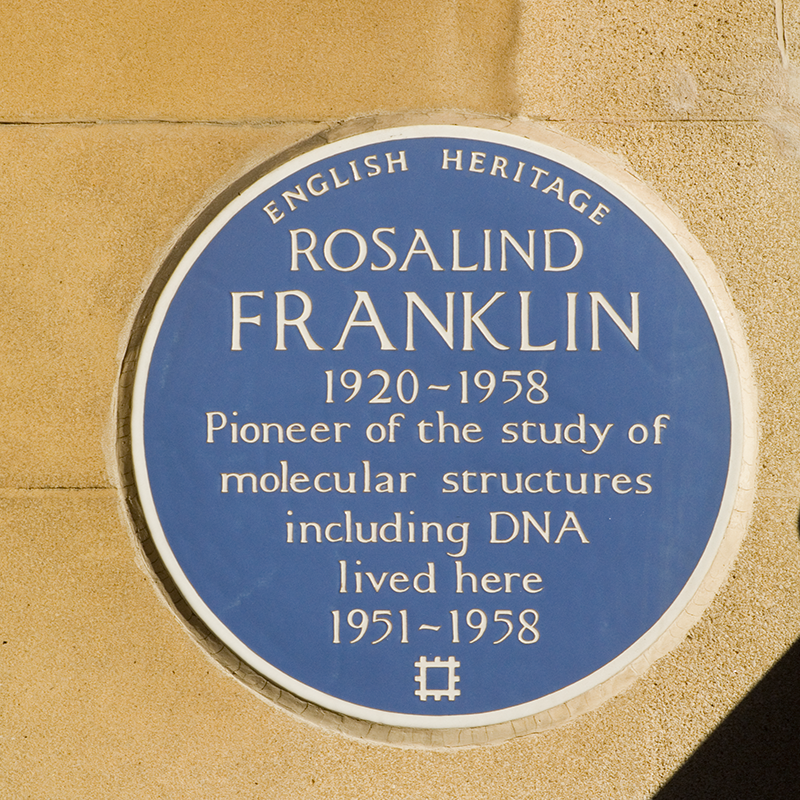
This article originally appeared in the March'24 magazine issue of Electronic Specifier Design – see ES's Magazine Archives for more featured publications. A blue plaque is steeped in history – starting in the late 1800s, the scheme is now run by the English Heritage, and is a symbol of how history has shaped progress.
everywoman and Bupa: championing Women in Tech
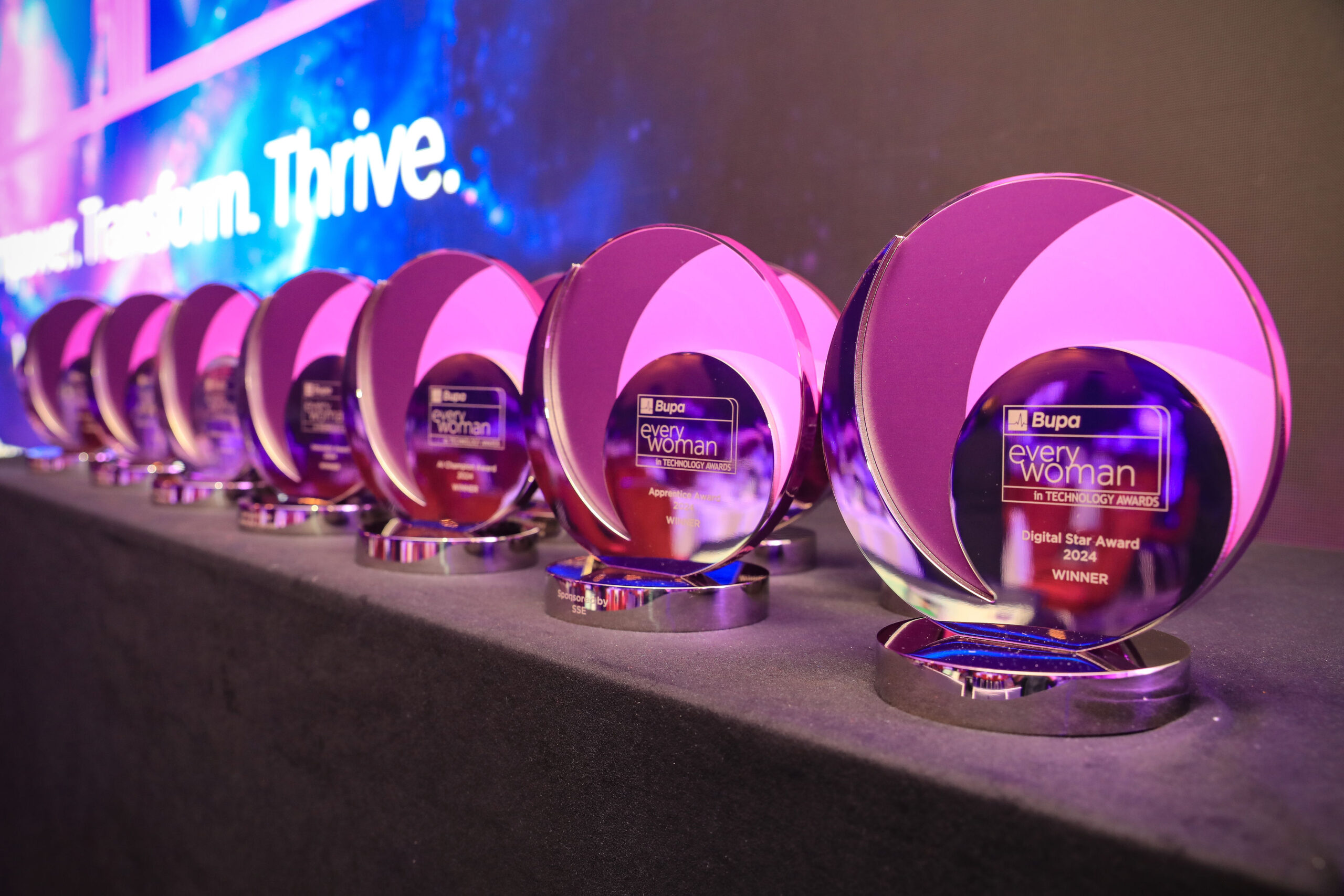
everywoman and Bupa have unveiled a report titled: ‘The Wellbeing/Advancement Equation: Solving for a Gender-Balanced Workplace,’ which spotlights the fundamental challenges and opportunities for women in technology.