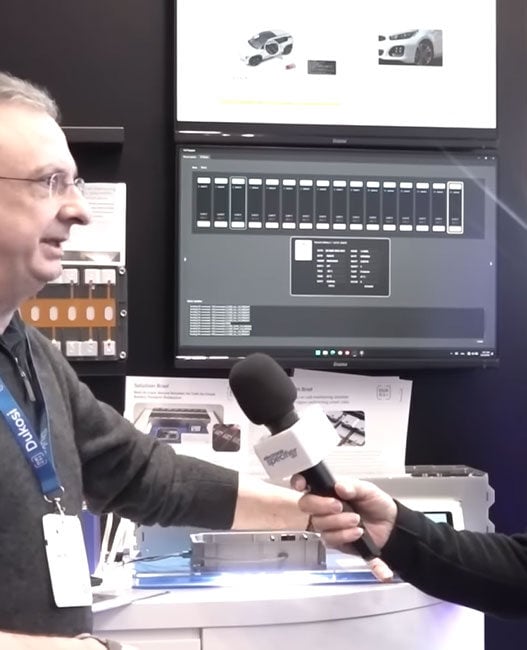






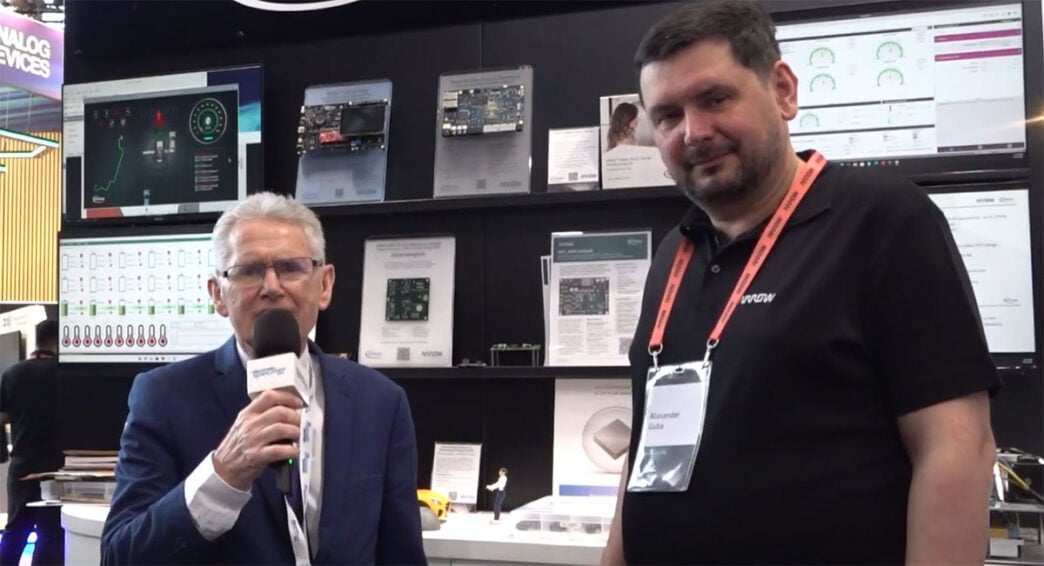
Editor Mick Elliott speaks with Program Manager Alexander Guba from Arrow Electronics about its latest developments.
Arrow’s ongoing collaboration with Infineon Technologies has produced a series of increasingly sophisticated reference designs, tracing the evolution of USB power delivery from early high-wattage charging solutions through to integrated motor control and battery management platforms – with a brand new single pair Ethernet design hot off the press.
USB power delivery
The partnership with Infineon took shape around the growing demand for USB solutions capable of handling serious power loads. The first joint reference design was built to support USB power delivery up to 240 watts, targeting applications such as e-bikes, scooters, power tools, and smart speakers – essentially any device requiring up to 240 watts for battery charging or motor control functions. Based on Infineon’s PMG1-S3 controller, this design gave customers a ready-made foundation to accelerate development and reduce R&D expenditure.
Engagement with those customers quickly revealed a need to go further. Engineers working on motor control and battery-powered applications wanted more than just a power delivery framework – they needed a more complete reference covering the full design chain. Arrow’s response was a second reference design, again anchored by the PMG1-S3, but this time incorporating battery charging circuitry alongside motor control functionality using Infineon’s CoolGaN devices.
A brand new board
Just days before embedded world, both Arrow and Infineon simultaneously unveiled their latest collaboration. Infineon launched what it described as the industry’s first 55-volt buck-boost integrated high-voltage microcontroller – the PMG1-B2 – designed to support USB applications up to 240 watts. In parallel, Arrow released a new reference design built around this device.
The new board pairs the PMG1-B2 for battery charging with Infineon’s PSOC C3 microcontroller handling motor control duties, again supported by CoolGaN devices for efficient power switching. Compared to its predecessor, this platform is oriented towards applications demanding higher motor speeds and greater drive currents. The target market has expanded accordingly, encompassing light electric vehicles, power tools, kitchen and garden appliances, robotics, and beyond.
Guba said that the design isn’t just a hardware deliverable. “Along with the reference design, along with the schematics, and the free software code, we also provide engineering services,” he said, as he explains that Arrow’s support extends to helping customers identify the most appropriate solution for their specific requirements – from selection through to implementation.
Single pair Ethernet makes its debut
Rounding out Arrow’s embedded world showcase was a single pair Ethernet reference design. Developed in collaboration with Bourns, Microchip, and Amphenol, this design is based on the 10BASE-T1S specification – one of the key variants of the emerging single pair Ethernet standard.
The design targets industrial applications, where single pair Ethernet is increasingly positioned as a successor to legacy wired interfaces such as RS-485 and CAN. The technical focus of this particular reference is on improving system performance through the use of integrated magnetics, rather than conventional capacitive isolation methods. The approach delivers meaningfully better common-mode noise rejection and galvanic isolation, particularly at lower frequencies, with knock-on benefits for overall system robustness and connection stability.
The design made its first public appearance at embedded world, though at the time Guba noted that the formal press release was still a few weeks away. Target applications include factory automation devices, industrial controllers, and any platform currently relying on older serial communication standards.
Watch the full interview here: