









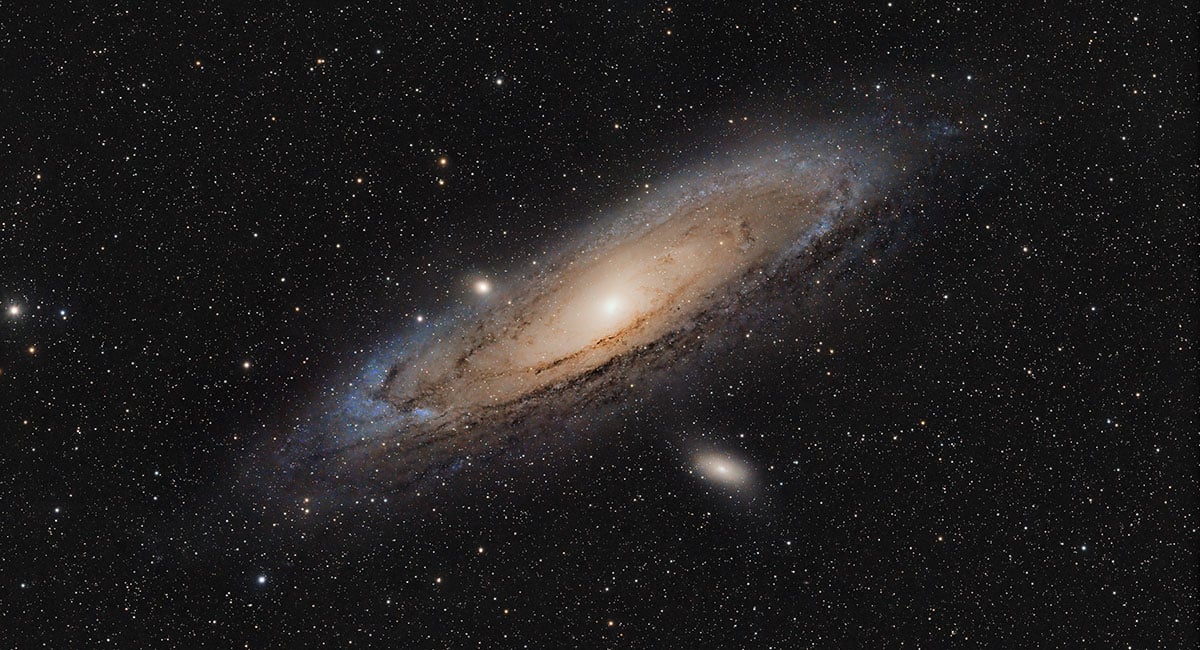
Dark matter makes up most of the mass of the universe; it holds galaxies together, and yet it remains a complete mystery.
Humans have been looking to the skies for an age to answer some of the most burning questions about the creation and evolution of the world. There is also the mind-bending concept that the universe is expanding. And dark matter could be the key to unlocking some of these mysteries.
Detecting dark matter is one of the greatest challenges in physics. It cannot be seen or touched. It does not glow or shine, and it barely interacts with anything else – barely. However, it is not an absence of light, nor is it a hole or an empty space. It is real, but it behaves very differently from the things we are used to.
Scientists still do not know what dark matter is made of, but they believe it leaves weak signals, and that those signals could be captured by highly sensitive quantum devices.
A study into quantum dark matter
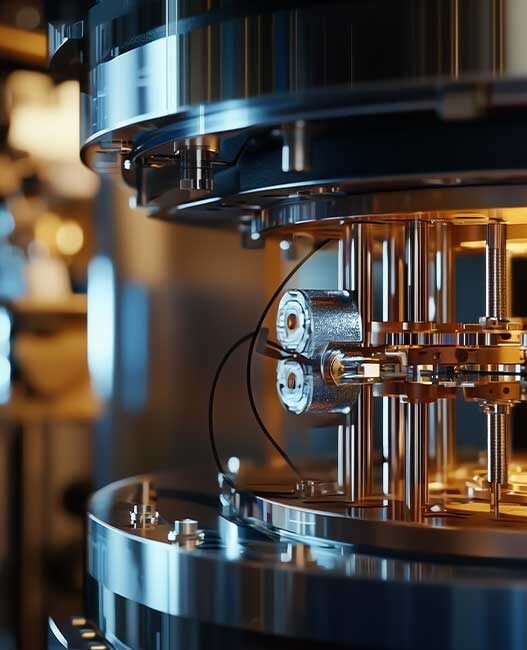
A team of researchers from Tohoku University set out to improve how dark matter is “listened” to by using special quantum sensors made from superconducting qubits. These are tiny electrical circuits cooled to near-zero temperatures. Qubits are normally used in quantum computers, but here the team are using them to act as extremely sensitive detectors.
A single qubit can pick up very faint signals. However, when several work together in an optimised network, the team found that they could detect weak dark matter signals far more effectively than a single sensor alone. The researchers connected small groups of qubits in different arrangements, like shapes made of dots and lines: a ring, a line, a star, or every qubit connected to every other one.
They then trained these qubit networks, in a similar way to training a computer program, to listen for the tiniest hints of dark matter. To clean up the results, they used a method called Bayesian estimation, which they describe as being like sharpening a blurry image, allowing the real signal to stand out from background noise. The team found that when the qubits were linked in the right pattern and tuned in the right way, their performance improved. Even with the imperfections found in today’s quantum devices, these networks still outperformed older, more conventional approaches.
To infinity and back to Earth
Although the study focused on dark matter, the team believes that the same approach could be useful for other technologies that require extreme precision, such as quantum radar, gravitational wave detection, or more accurate timekeeping, even suggesting that it could one day support applications such as GPS, medical imaging, or detecting hidden structures underground.
What’s next?
The researchers now want to test larger networks and find ways to make the sensors cope better with noise, so they can be used in practical tools outside the laboratory.