







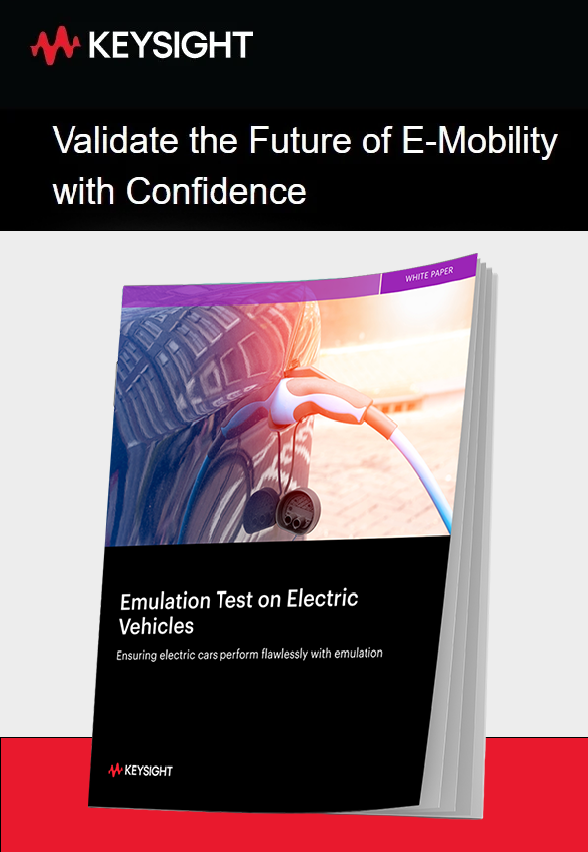
 Validate the Future of E-Mobility with Confidence
EV failures surface fast. Validation needs to move faster. Rapid electrification, higher voltages, and growing global charging standards bring new complexity and cost to EV development. Traditional physical testing often uncovers battery, charging, or interoperability issues only after prototypes are built, which slows time-to-market and increases risk.
Emulation changes this model by moving critical validation earlier. It gives engineering teams a safe and flexible environment to explore high-power behavior, test charging communication, and uncover performance issues long before real hardware is ready.
What You Will Learn:
- How early-stage emulation shortens R&D cycles and improves productivity
- How man-in-the-middle testing ensures global charging interoperability and reduces field failures
- How battery cell-to-pack emulation accelerates BMS validation and supports safer, more repeatable testing
- How emulation lowers the overall cost of tests by reducing reliance on high-voltage prototypes and dedicated infrastructure
Why It Matters
High-voltage systems introduce new risks and rising development costs. Relying only on physical testing limits visibility, slows innovation, and increases the likelihood of failures reaching customers. Emulation helps you validate EV performance from blueprint to production and supports market demands around range, reliability, and affordability.
See how leading EV teams are using emulation to reduce risk, speed development, and deliver better-performing electric vehicles.
Download the white paper: Emulation Test on Electric Vehicles
This download promotion has now completed.
Terms & Conditions
By downloading this whitepaper, you agree that ElectronicSpecifier and Keysight can use the information you provide to access the whitepaper and to send you related updates about products, services, and events.
Your data will be shared with Keysight for follow-ups and relevant communications, handled in line with privacy laws. You can opt out or change your preferences anytime. For more details on how we protect and use your data, see our Privacy Policy.