




The quantum computing industry reached an inflection point in 2025, the ‘Year of Quantum’. The first quarter saw over $1.25 billion invested in the sector, more than double the previous year. That was later dwarfed by the more than 3.5 billion invested just in the month of September 2025.
Yet a fundamental question looms: when will these investments deliver meaningful returns? The answer hinges on the industry’s ability to scale quantum computers dramatically larger to justify the capital flooding into the sector. Until the logical qubit counts are much higher, the massive potential of quantum computing will remain largely elusive.
The scaling challenge
Most of today’s quantum computers operate with fewer than 1,000 qubits. Industry leaders IBM and Google have committed to building industrial-scale machines by 2030, but experts agree that practical quantum advantage for most commercial applications requires systems approaching one million qubits. This thousand-fold scaling presents engineering obstacles at least as challenging as anything the industry has confronted to date.
The obstacles in the way are formidable and multi-dimensional. Material defects limit qubit performance. Crosstalk interference increases exponentially with system size. Error correction requires linking multiple physical qubits to create each logical qubit, multiplying resource requirements. Control infrastructure alone would demand thousands of high-precision microwave generators, amplifiers, and isolation systems, scaling super linearly due to calibration and error correction overhead.
This is a physics problem, and no one is immune from it. IBM, Microsoft, Google and all the others have acknowledged grappling with this challenge. Google has estimated that reaching a million-qubit scale would require component costs to fall tenfold just to keep a complete system near $1 billion.
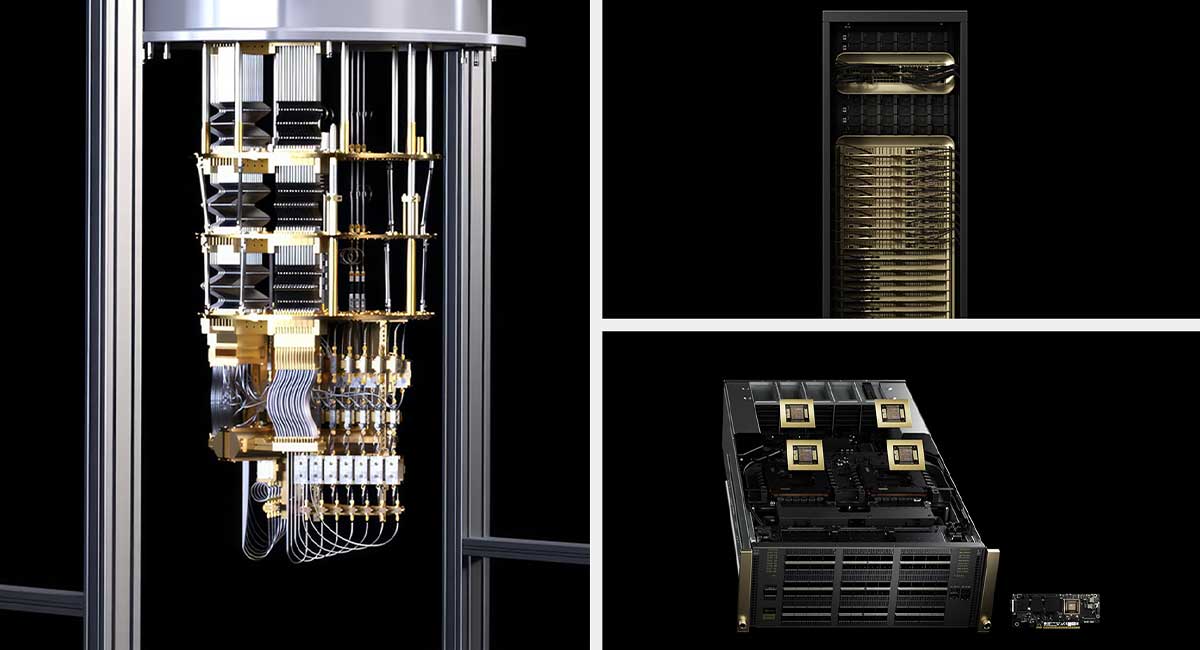
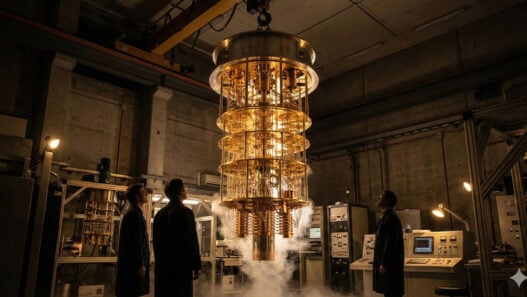
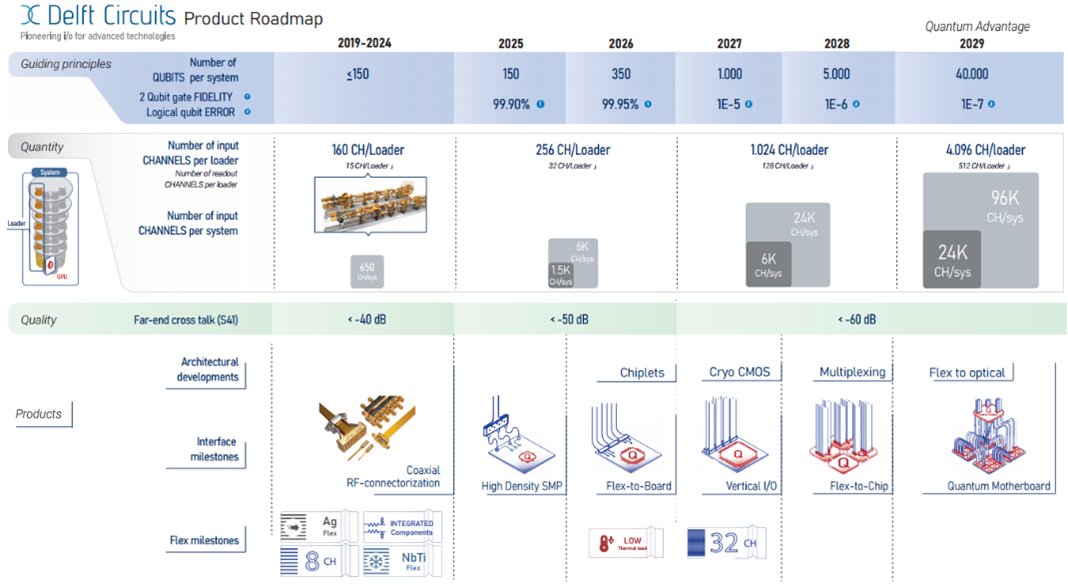
Each qubit requires multiple control lines operating at near absolute zero temperatures. These connections must not affect quantum coherence while minimising thermal load and electromagnetic interference. The wiring solutions that worked for ten-qubit systems become physically impossible to build at thousand-qubit scale. Early superconducting systems use dense cable bundles that cannot replicate at larger scales, demanding fundamentally new approaches through integrated chip modules, distributed architectures, and massively scalable input/output solutions.
The investment stakes
Recent stock market returns in quantum have been impressive, but this enthusiasm reflects expectations of near-term commercialisation that has yet to materialise.
Quantum computing companies generated between $650 and $750 million in 2024 and are projected to surpass $1 billion in 2025. McKinsey forecasts the market will reach $28 billion to $72 billion by 2035, with broader quantum technologies approaching $97 billion. This represents tremendous growth, but only if the technology can scale to deliver on its promise.
Without successfully bridging the gap to million-qubit systems, much of the invested capital may never generate meaningful returns. Current quantum computers can demonstrate quantum effects and solve specific optimisation problems, but they cannot yet tackle the drug discovery, materials science, cryptography, and artificial intelligence applications that would justify multi-billion-dollar valuations.
JPMorgan Chase’s substantial recent commitment to investing in quantum computing signals sophisticated institutional recognition of quantum’s strategic importance. Similarly, BlackRock, Temasek, and NVIDIA backing PsiQuantum’s $1 billion funding round at a $7 billion valuation demonstrates that leading capital allocators view quantum as foundational infrastructure. However, these investments are predicated on successful scaling – without it, they represent billions in stranded capital.
Multiple paths, same destination
The quantum computing industry stands at a crossroads. Billions in investment capital have flowed into pure-play quantum companies, driven by spectacular stock performance and credible technical milestones like Google’s Willow chip achieving below-threshold error correction and IBM’s multi-chip processors approaching 4,000 qubits. Government backing has accelerated, with Japan announcing $7.4 billion in quantum investment and Australia committing $620 million for PsiQuantum’s utility-scale computer.
Yet technical reality demands humility. Google Quantum AI researchers have called for industry-academic collaboration comparable to building CERN or LIGO, acknowledging that fault-tolerant quantum computers require rethinking everything from materials science to system integration. Microsoft’s bet on topological qubits through its Majorana 1 processor represents an alternative path that might shortcut some scaling challenges, but here again this remains to be seen.
Multiple qubit technologies remain viable, each with distinct scaling barriers. Superconducting qubits from IBM and Google show the most practical progress but require ultra-cold temperatures and sophisticated control. Trapped ions from IonQ offer stability but face challenges in laser control at scale. Neutral atoms, photonics, and topological approaches each present their own trade-offs between coherence, connectivity, and manufacturability.

Each approach confronts the same fundamental problem: control systems must operate with nanosecond precision across vast arrays while maintaining quantum coherence at temperatures close to absolute zero. Cryogenic facilities must expand from laboratory refrigerators to industrial installations. Integration challenges extend from materials science through manufacturing to system architecture. These infrastructure requirements represent enormous technical challenges that will determine which quantum computing companies can deliver returns on invested capital.
The verdict for investors
For the billions invested in quantum computing throughout 2025 to generate meaningful returns, the industry must successfully scale from today’s hundred-qubit prototypes to tomorrow’s million-qubit systems. This scaling challenge encompasses hardware stability, error correction, control infrastructure, cryogenic facilities, and manufacturing processes. Each represents a formidable engineering obstacle and must be solved before quantum computers can tackle the commercial applications that justify current valuations.
To help address these challenges, a new network of vendors has emerged which make up a new quantum supply chain, designing and delivering advanced technologies which will help propel the development of quantum computing forward. These innovators are delivering the building blocks the industry needs to unlock the full potential of quantum computing. This supply chain did not exist 5 years ago and is a major driver in the maturation of quantum as an industry.
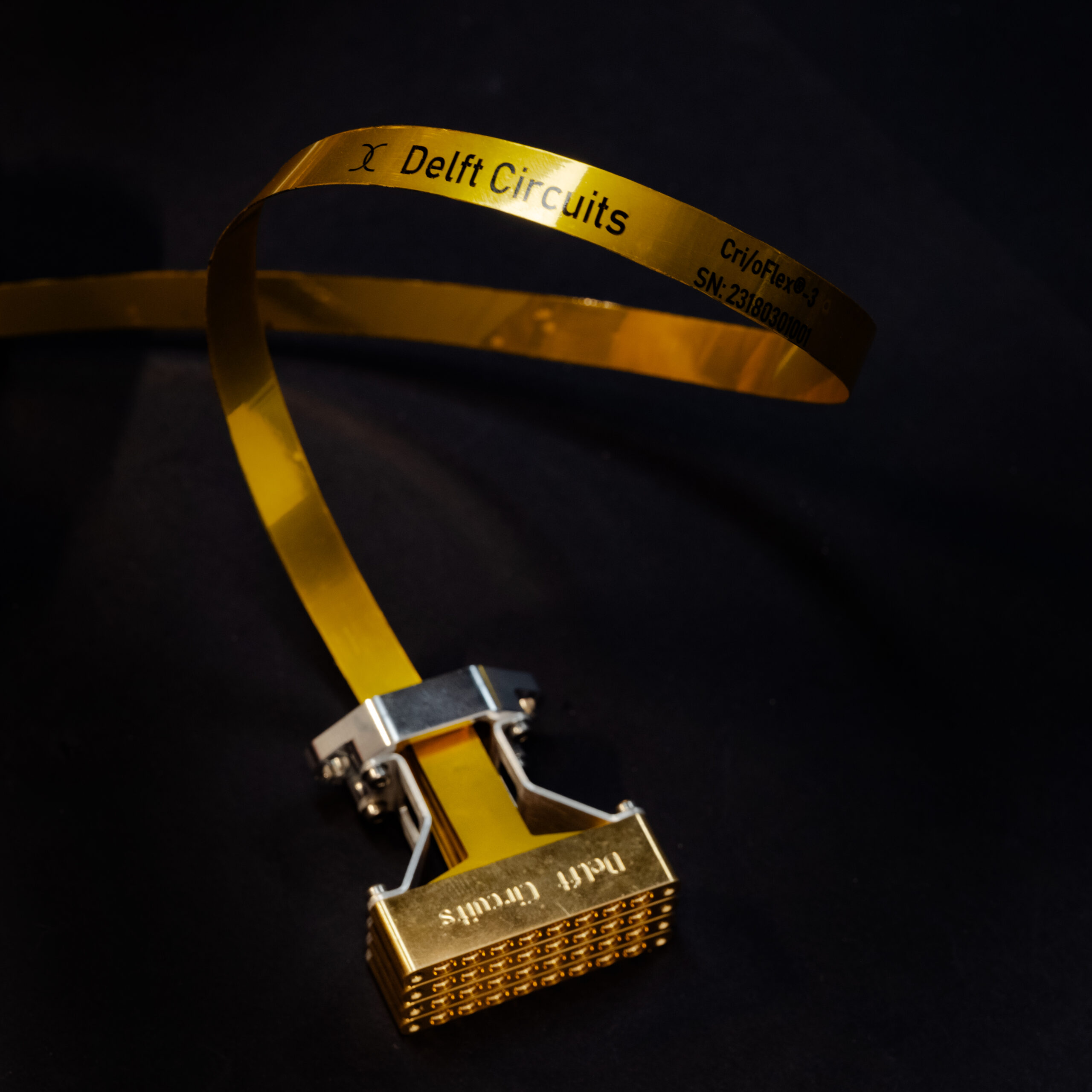
Some of these new products cut down on active heat dissipation (the kind that comes from transistors or amplifiers inside a quantum computer), which inversely increases the cooling power of a dilution fridge. Others, such as our company, are proposing dense multi-channel cabling solutions which perform optimally in cryogenic conditions and significantly cut down on system failures. While not necessarily in the wheelhouse of a quantum physicist, innovations like these are necessary to overcome the barriers to scalability the industry is facing. And with so much money invested, the pressure to find solutions quickly has never been higher.
We believe that the quantum computing revolution will indeed materialise in the coming years, transforming drug discovery, materials science, artificial intelligence, and cryptography, among other sectors. McKinsey’s projection of $72 billion in quantum computing revenue by 2035 could prove conservative if additional breakthrough applications emerge.
The race is on. The stakes are measured in billions. And success hinges on solving problems that didn’t exist before we started building quantum computers. These devices cannot scale without solving fundamental infrastructure challenges at every layer of the technology stack. Without scaling, the billions invested in 2025 will never deliver the expected returns that justified such bold commitments.
About the author:

Dan Kuitenbrouwer, Chief Product Officer, Delft Circuits