








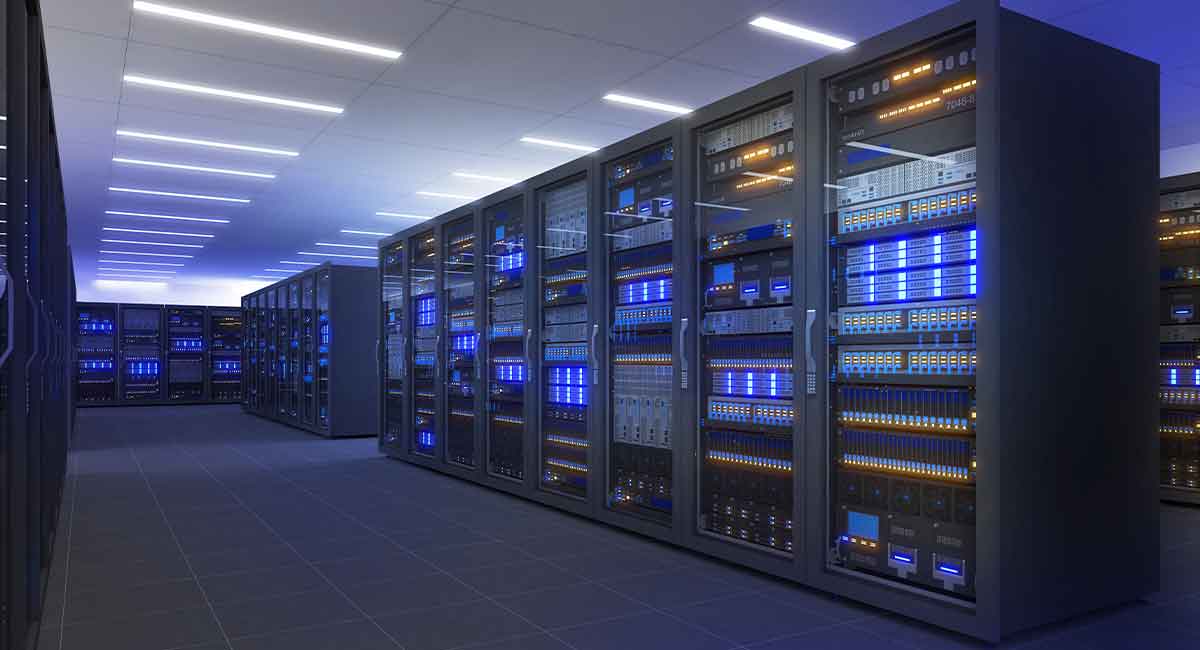
New data has shown that data centres in Scotland are using enough tap water to fill 27 million half-litre bottles a year, originally reported by the BBC. Data has also shown that the volume of water used by Scotland’s data centres has quadrupled since 2021.
Scotland currently hosts sixteen of these data centres, a figure that is expected to rise steadily in the coming years. For years, these facilities have quietly powered the digital economy – supporting everything from film streaming to online banking – yet the rapid growth of generative AI tools has sharply increased their consumption of both energy and water.
Data centres are power-hungry, consuming large amounts of energy, and need a lot of water in their cooling systems to stop servers from overheating. They rank among the top 10 most water-intensive commercial sectors, so the increasing amount of data centres is becoming an international concern.
Plans for more in Scotland
Recently, Scottish infrastructure developer ILI Group has announced ambitious to construct a trio of hyperscale green data centres, designed to connect East, Central, and West Scotland through a unified digital network.
The initiative, titled The Stoics – with each site taking the name of a philosopher, Cato, Aurelius, and Rufus – aims to establish facilities in Fife, Lanarkshire, and Ayrshire. Together, the developments will form the digital backbone that Scotland needs to support the rising demand driven by AI, Cloud computing, and next-generation data services.
This news is only adding to concerns about data centre water usage. Currently the majority of data centres in Scotland use ‘open loop’ systems, which require a constant supply of mains water. This is the method preferred in US data centres. However, a lot of UK data centres use ‘closed loop’ cooling systems, which run without the need for constant water supply.
What can be done?
Currently, with the demand for more data centres due to ever-increasing AI usage, it is time to look at alternative ways to cool data centres.
One that Anglia Water has been looking into is the possibility of cooling data centres using “treated sewage effluent”, rather than using fresh drinking water. For this to work, data centres should be located near water recycling plants in order to have easy access to the coolant they need. Looking at options such as treated sewage to cool data centres can take the strain off the demand for drinkable tap water by a significant amount, especially in water scarce areas.
There have also been innovations to use the heat that data centres produce to heat other things. Greentech startup Deep Green is on a mission to roll-out its innovative solution in swimming pools across the UK to slash their heating costs, by recycling heat generated from computer data processing centres. Deep Green has established small-scale Edge data centres capable of redirecting their excess heat to warm leisure centres and public swimming pools. This initiative was initially trialled at Exmouth Leisure Centre in Devon and is now set to expand nationwide.