






Telstra and Silicon Quantum Computing (SQC) have reported encouraging results from a year-long collaboration aimed at applying quantum technology to one of the telecommunications industry’s most complex challenges — predictive network analytics.
The partnership, announced today, marks one of Australia’s first attempts to take quantum computing out of the laboratory and apply it directly to digital infrastructure.
Over the past 12 months, a joint Telstra-SQC team has tested how quantum machine learning could improve the accuracy and efficiency of predicting fluctuations in network performance.
Telstra currently uses machine learning and AI systems to monitor latency, bandwidth, and other metrics to detect anomalies before they affect customers. These models can trigger automated network reconfigurations or deploy technicians pre-emptively.
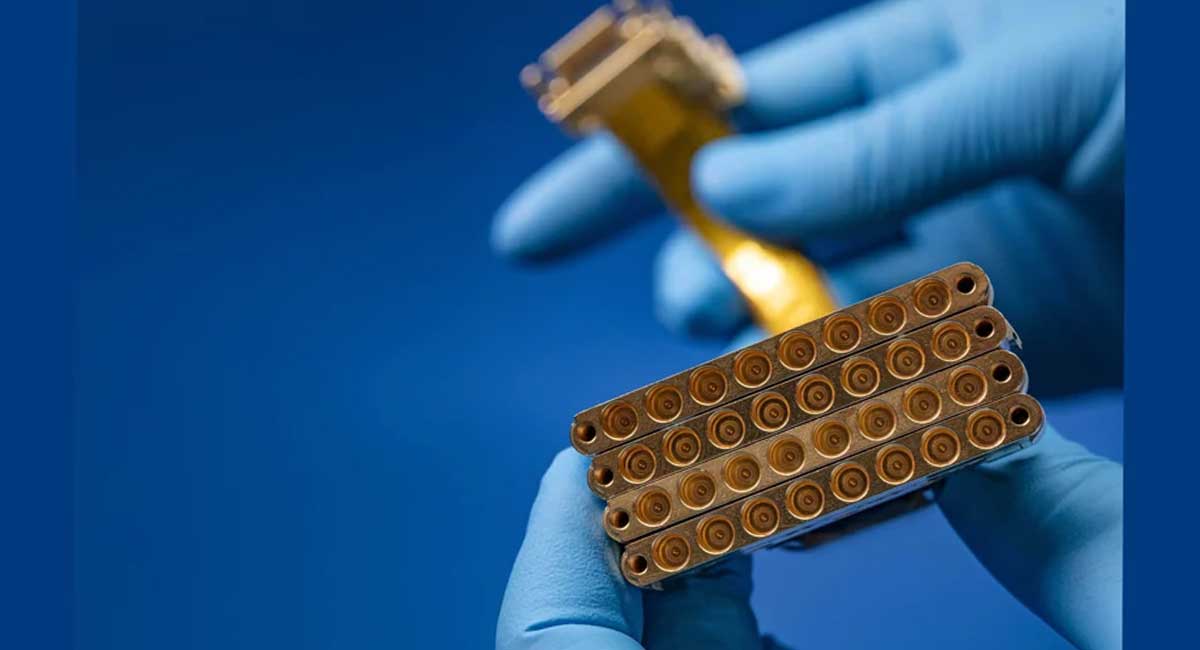
SQC’s contribution was a quantum-enhanced machine learning system dubbed Watermelon, which uses a “quantum reservoir” to generate features that feed into AI models. The joint team set out to determine whether Watermelon’s quantum-generated features could predict network metrics as effectively as a conventional deep learning model — and whether they could do so more efficiently.
The results suggest they could. According to both companies, the quantum reservoir achieved comparable accuracy to Telstra’s existing deep learning models while requiring only days of training, rather than weeks. It also ran without the heavy GPU hardware typically needed for such AI workloads.
Shailin Sehgal, Telstra’s Group Executive of Global Networks and Technology, said the findings demonstrate how combining Telstra’s expertise in complex connectivity with SQC’s quantum technology could yield tangible improvements for customers.
“We’re constantly looking ahead to technologies that can help us create smarter connectivity experiences — from increased personalisation to issue prevention,” Sehgal said. “Quantum computing is a promising frontier. Working with SQC allows us to explore its real-world potential in an Australian context.”
SQC’s Founder and Chief Executive, Professor Michelle Simmons, said the results highlight how quantum processors can deliver commercial value. “This is an exciting and important step forward in the commercial adoption of quantum technologies,” she said. “Watermelon’s quantum feature generation helps reveal complex relationships in data while dramatically reducing training time. It shows how quantum processors have moved beyond theory into practical, scalable solutions.”
The companies said the trial lays the groundwork for further exploration of how quantum technology could underpin Australia’s future digital infrastructure.