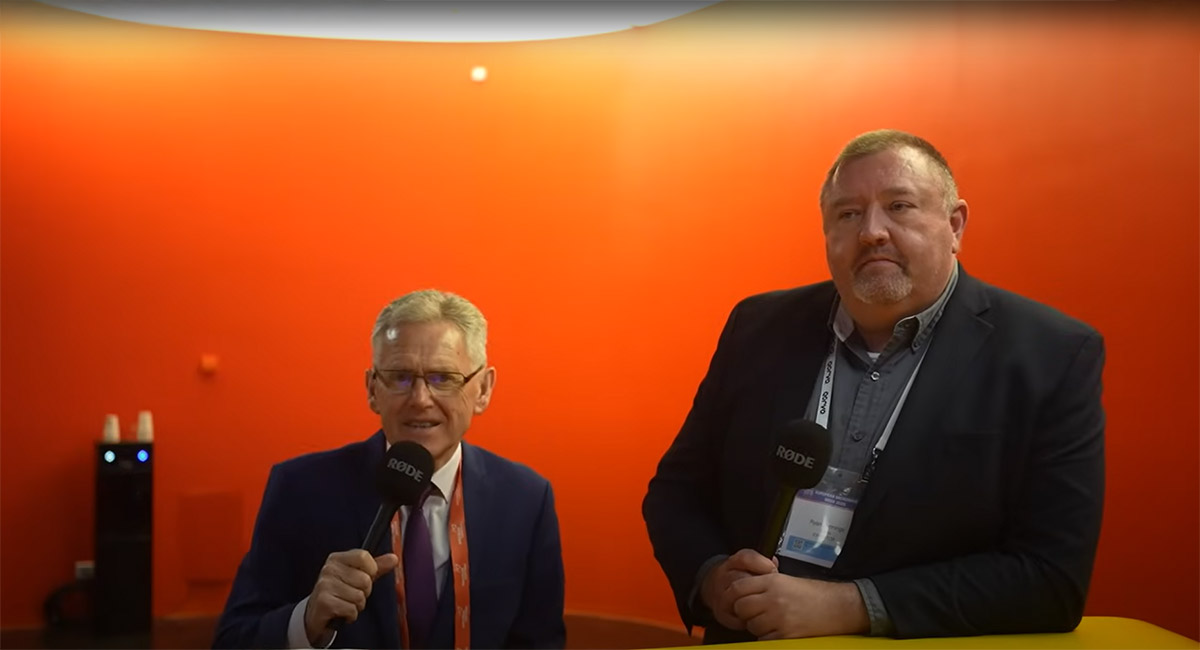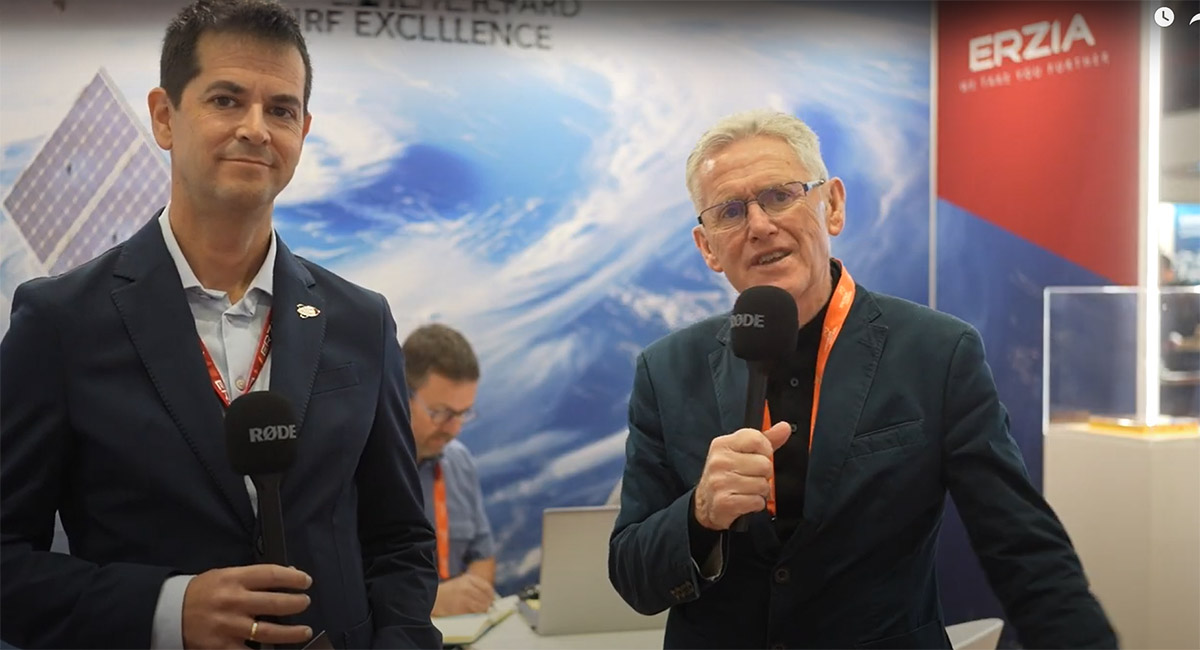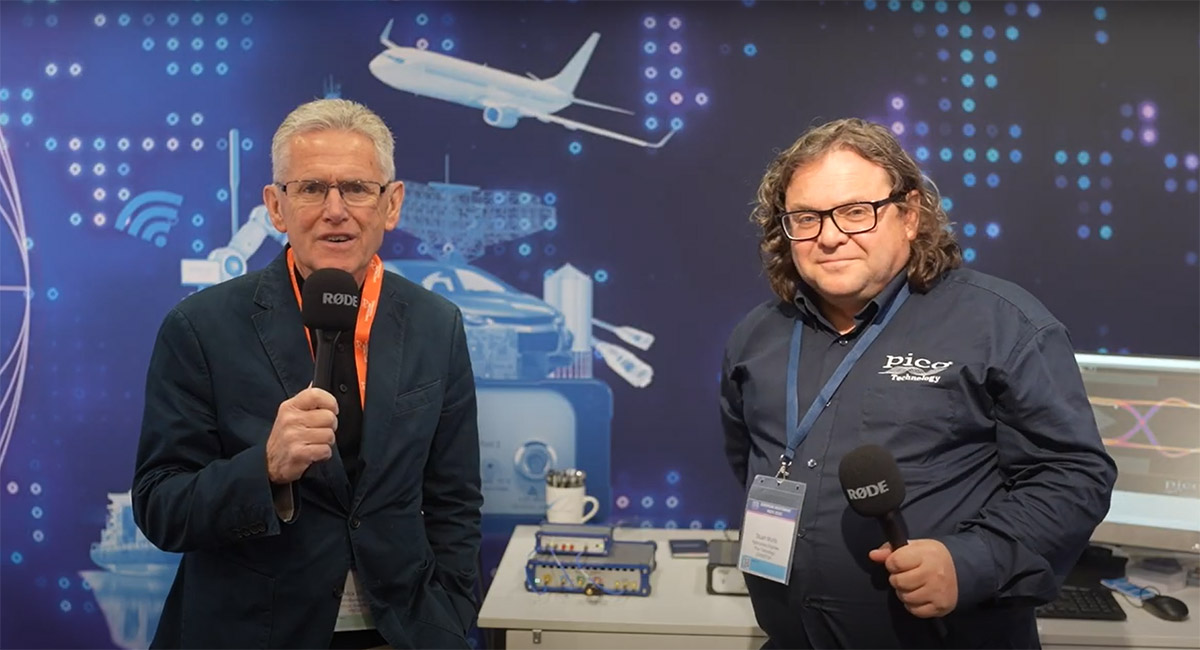








Smiths Interconnect arrived in force at European Microwave Week in Utrecht. In interviews with Electronic specifier, William Wilson, Senior Technical Project Manager, gives an overview of the company’s activities in RF and microwave, followed by Product Line Manager Alan McNeill’s revelation of Smiths Interconnect’s latest advance to support deep space technology.
A heritage in high-reliability components
“Smiths Interconnect has a great heritage of high-rel products and developing components for space and defence. We have a number of facilities across the globe, namely in Dundee, serving the European market, and then we’ve got our manufacturing site in Costa Rica and our design team in Montreal,” explained Wilson, when talking about the company’s long-standing history in supplying high-reliability products, particularly to space and defence.
Each of Smith Interconnects’ global facilities caters to a different aspect of the company’s operations. “We’ve got our design and manufacturing facility in Dundee that makes our waveguides, circulators, isolators, and some passive components for space and defence. In Stuart [USA], we then have our design facility that make our board level components and our cables, where you can see some of our mini lock products coming out in our K2TVA, and those are manufactured in Costa Rica. And then we’ve got our Montreal team that do the optimal transceivers.”
Although Smiths Interconnect has commercial, industrial, and medical customers, its core strengths remain in the space and defence sectors. Pointing out the changing landscape in space as a driver of innovation, Wilson said: “We see most of our expertise and our heritage in both defence and space … [there’s more happening in satellite communications], the emergence of new space, and more movement into LEOs, so we’re seeing an uplift in the need for our components to be smaller, more high-rel components, high-rel screening, qualification, testing, and serving that market.”
A UHF system for deep space missions
After speaking to Wilson, McNeill then gave a detailed technical presentation, where he introduced a prototype UHF transmit and receive system designed for next-generation deep space missions, including manned and unmanned vehicles such as lunar rovers.
Talking about the device, McNeill said: “[The device] looks pretty large. And it’s large because it operates at a low frequency, UHF, and it comprises a circulator, so it’s acting as a duplexer, and transmit and receive filters. And this is an integrated assembly using our own components, designed and manufactured in Dundee, Scotland … this is the prototype for the coming generations of deep space exploration, specifically on manned exploration, on manned vehicles.”
Highlighting the important, life-preserving role of the system, McNeill said: “For example, this would be part of the emergency transmit/receive system on moon rovers … the idea is that when the explorers are in trouble (this is their backup radio) call and get some help. That’s what it’s for.”
The prototype currently weighs about three pounds, and reducing its mass will be a priority in future iterations. For now, the focus is on demonstrating functionality and preparing the system for rigorous qualification.
Testing for space conditions
In space systems, reliability is vital. McNeill explained how Smiths Interconnect’s Dundee facility is equipped for demanding qualification tests.
“We can do the Shake and Bake. The shake simulates the launch and the mechanical shock when the solar sails deploy … then, of course, when you’re actually on the planet, the temperatures can go from extraordinarily low to extraordinarily high very, very quickly – it depends on if it’s in the sun or in the shade – so we can do a simulation of that. We can also do a simulation of does it work in a vacuum … we’ve got chambers that we can evacuate down to … a hard vacuum. And we can apply RF power, because under vacuum conditions, [it] does really strange things, so we have to make sure that it works.”
Once the system completes qualification, every production unit will undergo 100% testing: “This equipment, when it’s used, is actually for the preservation of life, so [it] doesn’t come with any higher demands than that.”
Integration and timelines
The process from prototype to mission deployment involves close collaboration with customers and agencies, and is a lengthy process. McNeill said: “This is produced in Dundee … The next stage is we would ship it to our customer. They would bolt it onto their transmitter receiver, there could be feedback … there will be perhaps a minor development phase, and then we go into the production phase. Typically from start to finish that would be anything from a year to three years, and it might be 12–15 years until it’s launched. So it doesn’t happen overnight … it’s a long game.”
Market realities and global collaboration
McNeill explained that, though global, the market for deep space systems is small because the missions involved are enormously costly. “When you look at these missions, these missions are multi-billion. The planned mission, the Mars recovery mission … I think the last ticket price was $50 billion, so it’s not something that any one country does. It tends to be a global effort. And of course, with the situation in the world right now, cooperation is difficult to achieve, but it is a global effort.”
Funding support for this project comes indirectly from the European Space Agency via Smiths Interconnect customers, as well as from Smiths Interconnect itself.
Looking to the future
The UHF system supports both voice and data in a full duplex mode, enabling telemetry, astronaut, health monitoring, and emergency communication.
“Back in the old days when the radios were voice only … this is a full duplex system. These days, voice is obviously still important … but data from the rover to the base telemetry, data, temperature, astronaut, health … would come back through a data signal,” said McNeill.
Currently, the prototype is at technology readiness level (TRL) four or five. However, with qualification, it could reach TRL six or seven. Deployment on the Moon or Mars will depend on mission funding cycles.
“You’re probably talking about within a decade,” McNeill said. “The technology is more or less in place … It’s all about the funding. These are not cheap missions, but this is ready to go anyway.”
Watch the video below to learn more.