





Consumer wearables have become part of daily life. Nearly half of all Americans own wearable health tracking devices like smartwatches, fitness trackers, and smart rings, which makes it easier than ever to count steps, check heart rate, and stay mindful of our wellbeing. In Europe, adoption is also strong, with nearly 30% of people using smartwatches or fitness trackers as part of their daily routine.
Yet for the millions of people living with serious cardiac conditions, these devices can fall short. They are not engineered to deliver the clinically actionable insights physicians need to diagnose, manage, and prevent life-threatening events. And the stakes are enormous: 37.5 million people worldwide live with atrial fibrillation (AFib), and cardiovascular disease affects over half a billion. Spot checks of heart rate or generic irregularity alerts are not enough to protect this population.
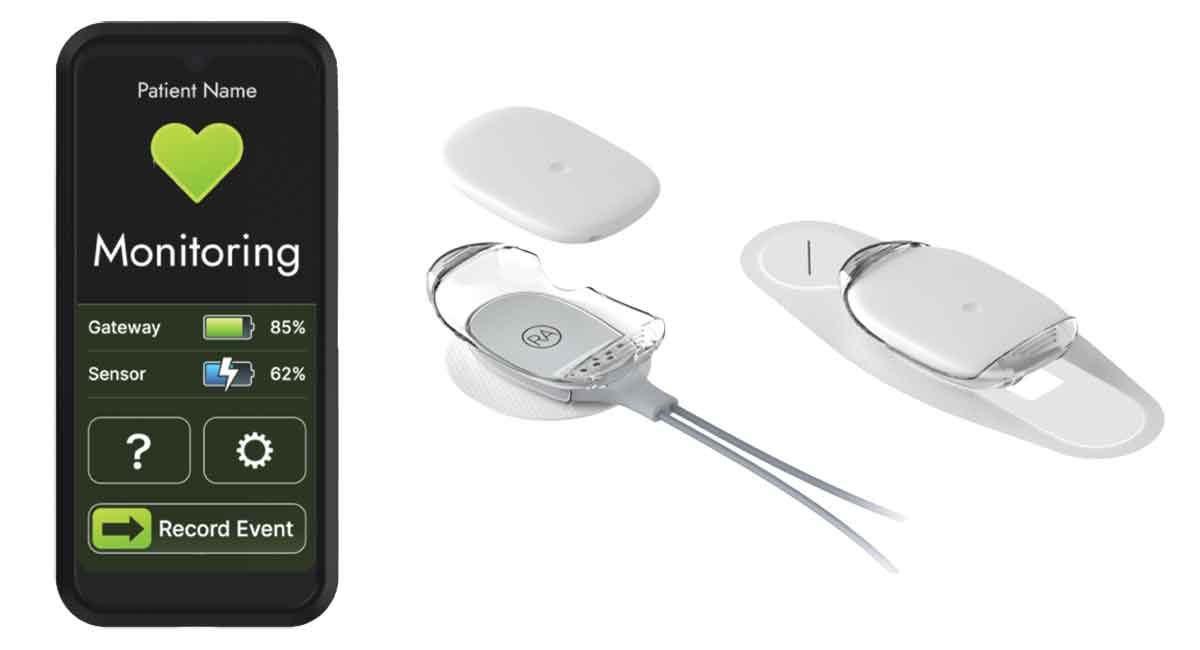
Closing this gap requires a more robust and innovative class of technology. A new generation of AI-powered, clinical-grade wearables is emerging – clinical-grade devices designed for continuous, accurate, and integrated remote cardiac monitoring. By combining advances in sensors, connectivity, and integration with AI-driven analytics, these solutions are helping providers detect arrhythmias earlier than ever, leading to more personalised treatment and reduced hospital admissions.
This article examines the five drawbacks of consumer wearables and explores five ways AI-enabled remote cardiac monitoring has the potential to transform the future of wearable medical technology.
Data quantity: periodic snapshots vs. continuous monitoring
Most consumer devices capture data in periodic snapshots. For example, a smartwatch may log resting heart rate every few minutes or trigger an alert when it detects irregularity during use – but it misses the bigger picture. Transient arrhythmias, like silent AFib episodes, can occur unpredictably and last only seconds. These often go undetected by devices that check vitals intermittently. For patients with cardiovascular disease, missed events can mean late diagnoses, delayed treatments, or worse.
Remote cardiac monitoring devices, however, are designed to continuously record ECG-quality data 24/7 over days or weeks. By capturing every heartbeat, they provide a more complete dataset that ensures even brief or asymptomatic arrhythmias are logged and reviewed. This always-on monitoring could transform cardiac care from reactive to proactive, catching issues before they escalate.
Data quality: monitoring inaccuracy vs. reliable detection
The optical sensors found in consumer wearables are prone to error. Motion artifacts, tattoos, or loose fits can distort readings. As a result, false positives are common, which can lead to unnecessary anxiety – but worse, significant arrhythmias may go totally undetected. In a clinical setting, this unreliability undermines physician trust in consumer device data.
Alternatively, clinical-grade wearable devices use advanced electrode-based sensors capable of recording diagnostic-quality ECG signals. When combined with AI-driven algorithms, these devices can filter out noise, distinguish true arrhythmias, and reduce false alarms. Automated detection tools not only enhance accuracy but also speed up analysis, giving physicians reliable insights without having to tediously sort through raw data.
Connectivity: isolated apps vs. seamless clinical integration
Consumer wearables typically store data in proprietary apps designed for the user, not the physician. While graphs and summaries may be helpful for wellness tracking, the information rarely reaches doctors in a form they are able to use for medical decision-making. Worse, the data is often locked within closed ecosystems, preventing integration with hospital systems or electronic health records (EHRs).
Clinical-grade remote cardiac monitoring systems are often built with connectivity at their core. They transmit data securely in near real-time, often using cellular or Wi-Fi networks, and deliver it directly to providers. Many solutions integrate seamlessly into EHRs, allowing clinicians to review results within their existing workflows. This interoperable data flow enables earlier intervention, sometimes preventing hospitalisation altogether.
Regulation: wellness gadgets vs. validated medical devices
Consumer devices are marketed as lifestyle or wellness tools. While some might have FDA clearance for limited functions, like single-lead ECG spot checks, most are not regulated as medical devices. This means their data is not validated for clinical accuracy, and physicians cannot rely on them to guide treatment decisions.
Many clinical-grade wearables are FDA cleared, however, and are held to rigorous standards for safety, accuracy, and reliability. They are validated in trials and trusted in diagnostic workflows. This regulatory framework ensures that the data is not only accurate but also defensible in clinical practice, giving providers confidence in their decisions.
In Europe, the regulatory pathway differs but follows the same principle of distinguishing between wellness tools and validated medical devices. Consumer wearables marketed for ‘general wellness’ are not considered medical devices under the EU Medical Device Regulation (MDR 2017/745) and therefore do not undergo clinical validation. By contrast, clinical-grade wearables and digital health tools must obtain a CE mark through assessment by a Notified Body, demonstrating compliance with EU standards for safety, accuracy, and performance.
The European Medicines Agency (EMA) oversees medicines, while medical devices fall under MDR, with enforcement by national authorities and Notified Bodies. This system ensures that only validated, clinically reliable devices can be integrated into diagnostic or therapeutic workflows – mirroring the FDA’s approach to ensuring defensible, evidence-based use in healthcare.
Personalisation: generic insights vs. AI-driven precision care
Consumer devices provide population-level averages, e.g., “Your heart rate is above normal,” or “You’ve reached your daily step goal.” While useful for personal motivation, these insights are much too generic for patients with complex or unique conditions. They fail to account for an individual’s medical history, baseline rhythms, or specific risk factors.
AI-enabled cardiac wearables can learn from patient-specific data, establishing individualised baselines and identifying subtle deviations over time. This kind of personalisation will allow clinicians to tailor treatment strategies, optimise medications, and monitor recovery with far greater precision. By analysing large datasets across patient populations, AI may be able to enhance predictive capabilities and help identify who is most at risk before an event occurs.
The road ahead: toward convergence of consumer and clinical devices
The divide between consumer and clinical wearables is narrowing. Advances in miniaturised sensors, low-power system engineering, and embedded AI are making medical-grade devices smaller, lighter, and more user-friendly, while consumer brands continue to push into health functionality. The outcome may one day be a hybrid future: devices that combine the accessibility of consumer products with the reliability and validation of regulated medical tools.
Until that convergence is fully realised, however, it is important to recognise the limits of today’s consumer wearables. While they have transformed wellness tracking, they were never designed to provide the continuous, accurate, and integrated cardiac monitoring required for patients with atrial fibrillation or other serious cardiac conditions. AI-powered, clinical-grade remote cardiac monitoring fills this gap – offering the actionable insights physicians need to effectively detect and treat arrhythmias.
As engineering innovation and AI continue to evolve, the convergence of consumer convenience and clinical rigor will ultimately define the next generation of wearable healthcare.
About the author:
Mark Goddard, Vice President of Clinical Services, InfoBionic.Ai

Mark is a registered nurse and has worked in clinical electrophysiology for over 20 years. He has created multiple clinical service lines for ambulatory electrocardiographic and remote device monitoring programs. He has successfully introduced ambulatory cardiac event monitoring, Holter electrocardiography, and mobile cardiac telemetry services in hundreds of institutions and practices. He has participated in remote cardiac device monitoring, service line implementations, including heart failure management, and subcutaneous device monitoring. Mark passed the competency in the national heart rhythm board examination as a Clinical Cardiac Device specialist.