









As fibre optic networks grow in both size and complexity, so does the need to monitor their performance in real time. The Optical Time Domain Reflectometer (OTDR) is a familiar instrument used by field technicians for analysis and fault finding, but there is a growing trend of embedding OTDR functionality directly into optical transceivers and network nodes, enabling 24/7, in-service monitoring without manual intervention or network downtime. Partly as a result of this need, the global OTDR market is forecast to grow from $215 million in 2023 to $385 million by 2032, an annual growth rate of 6.7%, according to Data Intelo.
In addition to the global expansion of optical networks, advances in OTDR devices are contributing to market growth. The devices deliver high-accuracy, real-time analytics via user-friendly interfaces, and the introduction of machine (ML) in OTDR systems is streamlining fault detection and leading to even greater diagnostic accuracy. This progress expands the functionality of OTDRs and their application scope.
Time-of-flight: the technique that underpins OTDR operation
OTDRs send short laser pulses down a fibre and measure the infrared (IR) light reflected or scattered back from points along its length. The return signals, comprising backscattered light and Fresnel reflections that occur when light passes from one medium to another with a different refractive index, are analysed to reveal the total fibre length, signal attenuation levels, and the positions of connectors, splices, bends or faults.
By measuring the time difference between the IR pulse being transmitted and the signal being received back at a sensor, OTDRs can detect the location of events with at better than one metre resolution.
Optical network field testing requires technicians to connect OTDRs to fibres at points in the network. These flexible handheld instruments are battery-powered and optimised for portability and ease of use by field technicians. One of their limitations is that they can only provide snapshots of network health at discrete points in time.
Working on the same basic principles but integrated into network equipment, real-time or line-card OTDRs deliver continuous monitoring of fibre performance automatically, eliminating the need for manual intervention.
The other benefits of Real-Time OTDRs
Real-time OTDRs instantly start to locate faults when a problem occurs, cutting response times and minimising downtime. They also facilitate predictive maintenance by assessing fibre performance over time, so any degradation can be detected early. This prompt detection and resolution of issues improves network stability. Furthermore, in-service testing can be vital for high-capacity networks where downtime is most expensive. Network security may be enhanced too because some instruments can spot and locate any unauthorised fibre tapping.
Artificial intelligence (AI) is playing an increasingly important role in analysing OTDR traces and automatically detecting and classifying events. The AI models can estimate the location and type of each event on an OTDR trace to provide faster and more accurate analysis of fibre health. AI-enabled systems can also predict potential failures by analysing historical data and identifying patterns that precede f ibre degradation.
The adoption of real-time OTDR technology is not limited to large telecom operators. Smaller regional providers and enterprise networks are also seeing the value in continuous fibre monitoring. As the technology becomes more accessible and cost-effective, it’s well on the way to becoming a standard feature in fibre optic networks of all sizes.
Why the choice of IR wavelength matters in OTDRs
Choosing the right IR wavelength for optical f ibre network monitoring significantly impacts the effectiveness and practicality of the process, particularly in live networks.
Portable OTDRs usually operate at 850nm and 1300nm when testing multimode fibre, and 1310nm and 1550nm for single-mode fibre.
Because these are the most common operating wavelengths of fibre optic communication systems, the tests deliver an accurate representation of network performance.

Fig 1. Block diagram of a typical OTDR (Graphic: VIAVI)
However, real-time OTDRs must avoid interfering with active data transmission, so to address this, some use 1625nm or 1650nm, which are far enough away from the typical communication signals to avoid the problem. Longer wavelengths are also more sensitive to fibre bends and stresses and can be better for detecting physical disturbance. In addition, where networks use wavelength-division multiplexing (WDM) to transmit multiple signals on a single fibre, 1625nm or 1650nm test signals can be multiplexed with existing traffic.
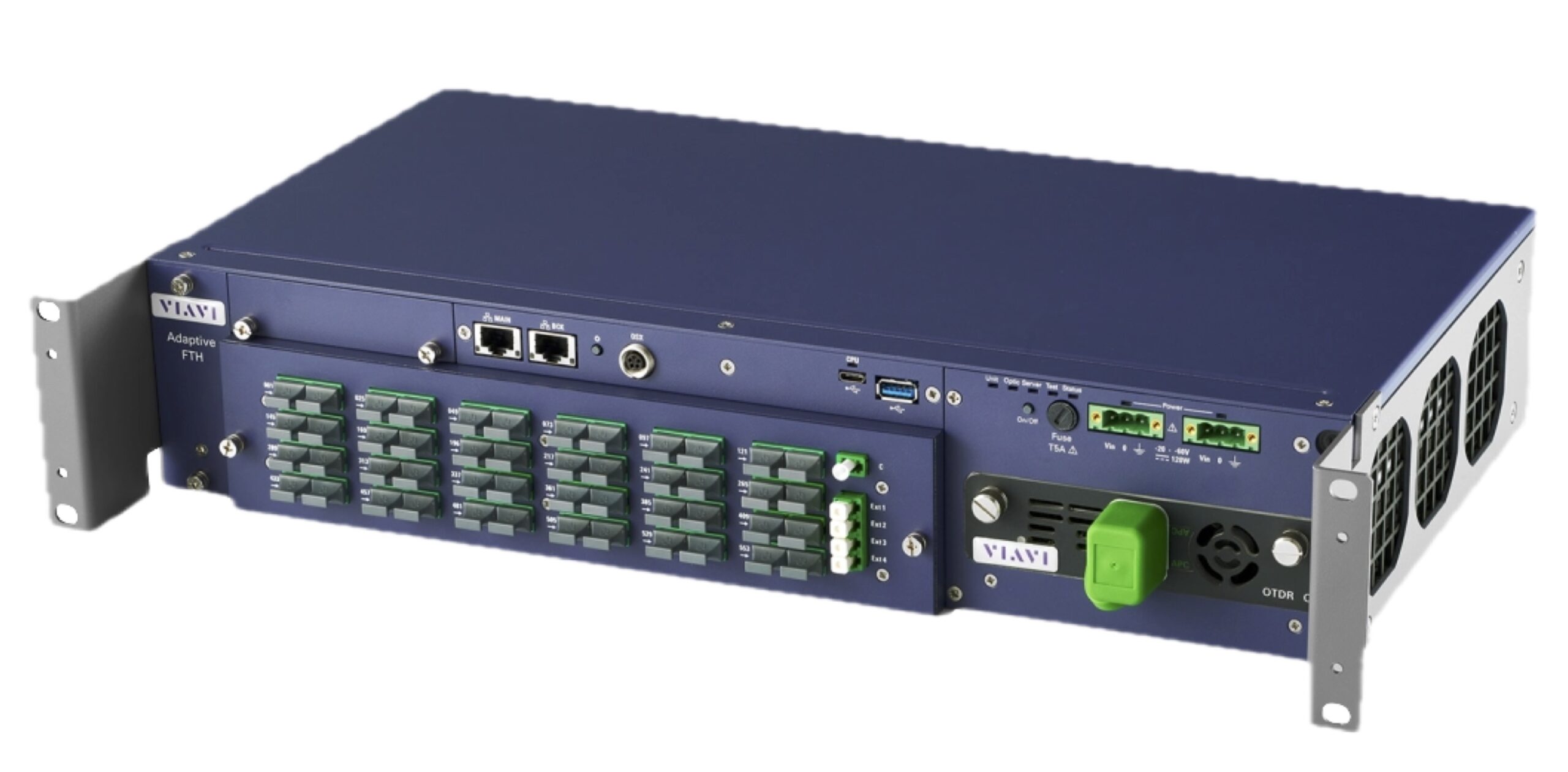
Fig 2. A modular rack-mounted OTDR for continuous network monitoring
There are downsides, not least the slightly higher attenuation compared to 1550nm, which can limit the instrument’s range, and there’s a need for careful interpretation of results because testing is not done at the communications wavelengths, so results are not a direct representation of operating conditions. In addition, where real-time OTDRs are being retrofitted to existing networks, infrastructure changes may be required to ensure that the various elements will pass or filter the test wavelengths appropriately.
Some real-time OTDRs can test at several wavelengths, including the standard communication ones, and this can produce a more holistic picture of fibre health, but may require the network to be taken offline during testing.
The choice of test wavelength in real-time OTDRs represents a careful balance between non-intrusiveness, sensitivity, and practicality. As fibre optic technology continues to evolve, we may see the development of new wavelengths and techniques that further optimise this balance, enhancing our ability to monitor and maintain these critical networks.
How a new sensor technology is impacting OTDR performance
To detect reflected signals between 1000 nm and 1650nm, OTDRs use IR sensors.

Fig 3. By using a Noiseless InGaAs APD IR sensor in an OTDR, its operating range can be boosted by up to 50%
These semiconductor components are usually fabricated on Indium Gallium Arsenide (InGaAs) and are called avalanche photodiodes (APDs). The sensitivity of these devices is limited by the internal noise generated by the diode’s operation, specifically its avalanche process.
The introduction of antimony alloys in the compound semiconductor manufacturing process, has recently led to the introduction of APD sensors that claim 12X greater sensitivity compared to traditional counterparts, the performance of which has not changed significantly over the past 20 years. This sudden and large improvement in sensitivity enables much weaker return signals to be detected when the devices are used in OTDRs. As a result, the instruments can achieve up to 50% greater operating range for OTDRs for a given laser power, or the ability to use lower laser power while maintaining range.
The new sensors, called Noiseless InGaAs APDs, also offer faster overload recovery when large signals are reflected due to faults being located close to the test instrument. The better recovery characteristics reduces ‘dead zones’ where faults might be missed due to sensor unresponsiveness after exposure to these strong reflections. The devices also exhibit lower temperature drift and stable high-temperature performance, ensuring accuracy across various environmental conditions.
In short, Noiseless InGaAs APD sensors enable more events and smaller event impacts along the optical cable to be detected over greater usually pin-compatible, drop-in replacements for traditional parts, so the OTDR performance, whatever the instrument type, is likely to see a substantial boost soon.
Looking ahead
Industry experts predict further advancements in the OTDR field. There’s a growing trend towards integrating OTDR functionality directly into optical transceivers and other network devices, which could make continuous fibre monitoring a standard feature in next-generation network equipment. This will lead to further improvements in comprehensive network health management, paving the way for more resilient, efficient, and secure communication infrastructure.
By Christian Rookes, VP Marketing, Phlux Technology
About the author

Christian Rookes is VP Marketing at Phlux Technology, a manufacturer of avalanche photodiode (APD) infrared sensors based on Sheffield, UK. He has over 25 years’ experience in technical marketing in semiconductor and optical communication f ields.
This article originally appeared in the July’25 magazine issue of Electronic Specifier Design – see ES’s Magazine Archives for more featured publications.