








Cellular service providers are under intense pressure to reduce capital (CAPEX) and operating (OPEX) expenses. Supporting trends include the need for smaller, lighter, lower power base stations such as remote radio heads (RRH) that can be mounted on the tower with the antenna; and high density, high channel-count macrocell base stations with higher efficiency; and the use of small, digital repeaters. These µModule receivers address these trends directly. At only 25% of the board space area of discrete designs, the LTM9004 and LTM9005 save critical space and also reduce the time and effort required for optimizing the design and layout of dozens of high frequency components. This leads to lower development costs, fewer components to source and stock, and faster time to market.
Two receiver architectures dominate base station designs: direct conversion and IF-sampling. Direct conversion demodulates the RF signal and downconverts to DC (0MHz in the frequency domain). This simplifies the filter, allowing low-pass filters with a 10MHz cutoff (20MHz signal bandwidth). The LTM9004 implements this architecture. Other filter options are available for different signal bandwidths. IF-sampling downconverts to an intermediate frequency (IF), 140MHz in this case, and the signal is demodulated in the digital domain. The 20MHz signal filtering is done with a surface acoustical wave (SAW) filter integrated in the LTM9005. Other filter bandwidths are available.
##IMAGE_2_C##
The LTM9004 and LTM9005 are packaged in a space-saving
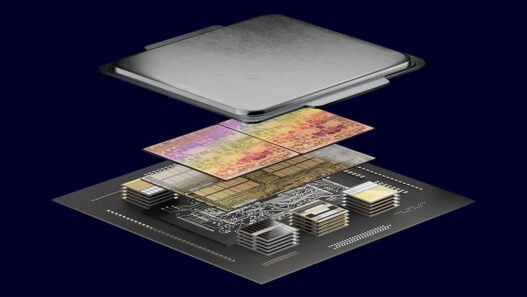
22mm x 15mm LGA package, utilizing a multilayer substrate that shields sensitive analog lines from the digital traces to minimize digital feedback. Supply and reference bypass capacitance is placed inside the µModule package, tightly coupled to the die, providing a space, cost and performance advantage over traditional packaging.